Foram encontradas 56 questões.
INSTRUCTION: Read the abstract and answer to the question.
Abstract
Scientists know greenhouse gas emissions cause climate change, but what causes greenhouse gas emissions in the first place? We assessed how many greenhouse gases are released to support the lifestyles of people living in different parts of Europe – in other words, we figured out people’s carbon footprint. We found that different lifestyle choices resulted in very different carbon footprints. In general, people with higher incomes (_____ bought more things and traveled more) had much higher carbon footprints than people ______ lived more modestly.
Understanding how our purchases affect greenhouse gas emissions is an important step to designing policies and guidelines for cutting emissions and addressing climate change.
Available at: <http://www.sciencejournalforkids.org/ uploads/5/4/2/8/54289603/footprint_article.pdf>.
Accessed on: Dec 7th, 2017.
Provas

INSTRUCTION: Read the text and answer to the question.
Marie & Pierre Curie
• Marie Curie was a chemist and physicist famous for becoming the first person to be awarded two Nobel Prizes. She was brought up in Poland before eventually moving to France and obtaining French citizenship.
Write true (T) or false (F), according to the text.
( )Marie Curie claimed that people should do research that is useful for humankind.
( )Marie and Pierre Curie were both originally French.
( )The institution founded by Marie Curie develops cancer research.
( )Pierre Curie achievements include The Curie Point and Curie’s Law.
The correct sequence is:
Provas
INSTRUCTION: Read the abstract and answer to the question.
Abstract
Scientists know greenhouse gas emissions cause climate change, but what causes greenhouse gas emissions in the first place? We assessed how many greenhouse gases are released to support the lifestyles of people living in different parts of Europe – in other words, we figured out people’s carbon footprint. We found that different lifestyle choices resulted in very different carbon footprints. In general, people with higher incomes (_____ bought more things and traveled more) had much higher carbon footprints than people ______ lived more modestly.
Understanding how our purchases affect greenhouse gas emissions is an important step to designing policies and guidelines for cutting emissions and addressing climate change.
Available at: <http://www.sciencejournalforkids.org/ uploads/5/4/2/8/54289603/footprint_article.pdf>.
Accessed on: Dec 7th, 2017.
Provas
The expression rather than means:
Provas
INSTRUCTION: Read the comic strip and answer to the question.
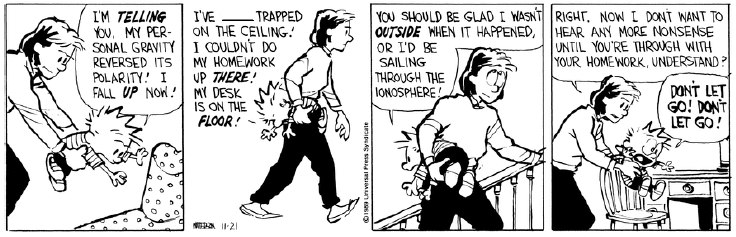
Provas
INSTRUCTION: Read the comic strip and answer to the question.
The correct verb form to complete the sentence is:
Provas
INSTRUCTION: Read the text and answer to the question.
Marie & Pierre Curie
• Marie Curie was a chemist and physicist famous for becoming the first person to be awarded two Nobel Prizes. She was brought up in Poland before eventually moving to France and obtaining French citizenship.
Provas
INSTRUÇÃO: Leia o texto a seguir para responder à questão.
As anatomias do belo
Ainda polêmico, o corpo livre sempre foi um dos elementos centrais para a produção artística, seja a serviço de padrões de beleza, seja para quebrá-los radicalmente
O corpo sempre esteve presente na arte, durante muito tempo por meio de representações que dizem bastante sobre a cultura de cada época e, também, sobre a maneira como enxergamos cada uma delas. Nas pinturas rupestres, por exemplo, as imagens ilustravam basicamente homens em lutas com animais. Eram quase dicas de sobrevivência. Naquela época, não existiam pretensões estéticas, mas hoje somos capazes de ver equilíbrio nos traços duros de uma realidade crua. Também aprendemos a apreciar as figuras humanas angulosas da Grécia antiga, reflexos de uma sociedade otimista, voltada para uma revolução filosófica e, aí sim, em busca de ideais de beleza.
Entre a violência de um e a harmonia de outro, a história da arte foi construindo o que seria a percepção da beleza através do corpo humano. Trata-se de um conceito largo mesmo, que trafega entre a barbárie e a civilização com uma facilidade enganosa: variações entre esses dois extremos estão no centro da discussão, atualíssima, de como o corpo pode expressar – ou não – o belo na arte.
Ato 1: No dia 19 de novembro de 1971, o artista norte-americano Chris Burden entrou na pequena galeria F Space, em Santa Ana, Califórnia, e se posicionou em frente a uma parede. A uma distância de cerca de quatro metros, seu assistente empunhou um rifle calibre 22 e disparou em sua direção. O plano era que o tiro pegasse de raspão o seu braço esquerdo, fazendo escorrer uma única gota de sangue. Um vermelho singelo e poético. Belo. Mas a bala acabou entrando na pele. No registro da performance, filmada em Super 8, vemos um Chris Burden assustado sair de cena.
Shoot era uma crítica aos tiroteios a que os norte-americanos assistiam diariamente na TV durante a Guerra do Vietnã. Mas foi além e garantiu ao artista um lugar de destaque entre aqueles que exploram os limites entre a arte e a vida, e questionam a repulsa ou a atração que situações extremas causam nas pessoas. Os espectadores podiam interromper o atirador a qualquer momento. Mas, como viria a acontecer outras vezes na arte, testemunharam tudo em silêncio. A possibilidade do sangue derramado se impôs como outro tipo de estética – a de uma beleza que nasce do terrível.
KATO, Gisele. Bravo. Disponível em: <http://bravo.vc/seasons/ s03e02/>. Acesso em: 28 nov. 2017 (Adaptação).
Provas
INSTRUÇÃO: Leia o texto a seguir para responder à questão.
As anatomias do belo
Ainda polêmico, o corpo livre sempre foi um dos elementos centrais para a produção artística, seja a serviço de padrões de beleza, seja para quebrá-los radicalmente
O corpo sempre esteve presente na arte, durante muito tempo por meio de representações que dizem bastante sobre a cultura de cada época e, também, sobre a maneira como enxergamos cada uma delas. Nas pinturas rupestres, por exemplo, as imagens ilustravam basicamente homens em lutas com animais. Eram quase dicas de sobrevivência. Naquela época, não existiam pretensões estéticas, mas hoje somos capazes de ver equilíbrio nos traços duros de uma realidade crua. Também aprendemos a apreciar as figuras humanas angulosas da Grécia antiga, reflexos de uma sociedade otimista, voltada para uma revolução filosófica e, aí sim, em busca de ideais de beleza.
Entre a violência de um e a harmonia de outro, a história da arte foi construindo o que seria a percepção da beleza através do corpo humano. Trata-se de um conceito largo mesmo, que trafega entre a barbárie e a civilização com uma facilidade enganosa: variações entre esses dois extremos estão no centro da discussão, atualíssima, de como o corpo pode expressar – ou não – o belo na arte.
Ato 1: No dia 19 de novembro de 1971, o artista norte-americano Chris Burden entrou na pequena galeria F Space, em Santa Ana, Califórnia, e se posicionou em frente a uma parede. A uma distância de cerca de quatro metros, seu assistente empunhou um rifle calibre 22 e disparou em sua direção. O plano era que o tiro pegasse de raspão o seu braço esquerdo, fazendo escorrer uma única gota de sangue. Um vermelho singelo e poético. Belo. Mas a bala acabou entrando na pele. No registro da performance, filmada em Super 8, vemos um Chris Burden assustado sair de cena.
Shoot era uma crítica aos tiroteios a que os norte-americanos assistiam diariamente na TV durante a Guerra do Vietnã. Mas foi além e garantiu ao artista um lugar de destaque entre aqueles que exploram os limites entre a arte e a vida, e questionam a repulsa ou a atração que situações extremas causam nas pessoas. Os espectadores podiam interromper o atirador a qualquer momento. Mas, como viria a acontecer outras vezes na arte, testemunharam tudo em silêncio. A possibilidade do sangue derramado se impôs como outro tipo de estética – a de uma beleza que nasce do terrível.
KATO, Gisele. Bravo. Disponível em: <http://bravo.vc/seasons/ s03e02/>. Acesso em: 28 nov. 2017 (Adaptação).
“Ainda polêmico, o corpo livre sempre foi um dos elementos centrais para a produção artística, seja a serviço de padrões de beleza, seja para quebrá-los radicalmente”
Em relação ao uso da estrutura “seja...seja...”, analise as afirmativas a seguir.
I. Em contextos como esse, podem aparecer sem estar separadas por vírgula. II. Nesse contexto, indica ideias incompatíveis entre si, isto é, se uma delas acontece, a outra, necessariamente, não. III. Nesse caso, pode ser substituída por estruturas similares como “quer...quer” ou “ora...ora”.
De acordo com o trecho e com a norma padrão, estão corretas as afirmativas:
Provas
Assinale a alternativa que indica uma palavra que pode ser acentuada por esse motivo.
Provas
Caderno Container