Foram encontradas 100 questões.
TEXT I
Breaking the habit: From oiloholics to e-totallers
What changes in driving habits and improved batteries might do to oil demand
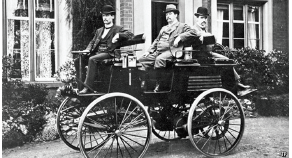
It has been a bad couple of years for those hoping for the death of driving. In America, where cars are an important part of the national psyche, a decade ago people had suddenly started to drive less, which had not happened since the oil shocks of the 1970s. Academics started to talk excitedly about “peak driving”, offering explanations such as urbanisation, ageing baby-boomers, car-shy millennials, ride-sharing apps such as Uber and even the distraction of Facebook.
Yet the causes may have been more prosaic: a combination of higher petrol prices and lower incomes in the wake of the 2008-09 financial crisis. Since the drop in oil prices in 2014, and a recovery in employment, the number of vehicle-miles travelled has rebounded, and sales of trucks and SUVs, which are less fuel-efficient than cars, have hit record highs.
This sensitivity to prices and incomes is important for global oil demand. More than half the world’s oil is used for transport, and of that, 46% goes into passenger cars. But the response to lower prices has been partially offset by dramatic improvements in fuel efficiency in America and elsewhere, thanks to standards like America’s Corporate Average Fuel Economy (CAFE.), the EU’s rules on CO2 emissions and those in place in China since 2012.
The IEA says that such measures cut oil consumption in 2015 by a whopping 2.3m b/d. This is particularly impressive because interest in fuel efficiency usually wanes when prices are low. If best practice were applied to all the world’s vehicles, the savings would be 4.3m b/d, roughly equivalent to the crude output of Canada. This helps explain why some forecasters think demand for petrol may peak within the next 10-15 years even if the world’s vehicle fleet keeps growing.
Occo Roelofsen of McKinsey, a consultancy, goes further. Hereckons that thanks to the decline in the use of oil in light vehicles, total consumption of liquid fuels will begin to fall within a decade, and that in the next few decades driving will be shaken up by electric vehicles (EVs), self-driving cars and car-sharing. […]
(Dated Nov 24th, 2016. From https://www.economist.com/news/
specialreport/ 21710635-what-changes-driving-habits-and-improved-batteries-might-dooil- demand-coming. Accessed July 18th, 2017)
The verb phrase in “such measures cut oil consumption” is in the:
Provas

TEXT I
Breaking the habit: From oiloholics to e-totallers
What changes in driving habits and improved batteries might do to oil demand
It has been a bad couple of years for those hoping for the death of driving. In America, where cars are an important part of the national psyche, a decade ago people had suddenly started to drive less, which had not happened since the oil shocks of the 1970s. Academics started to talk excitedly about “peak driving”, offering explanations such as urbanisation, ageing baby-boomers, car-shy millennials, ride-sharing apps such as Uber and even the distraction of Facebook.
Yet the causes may have been more prosaic: a combination of higher petrol prices and lower incomes in the wake of the 2008-09 financial crisis. Since the drop in oil prices in 2014, and a recovery in employment, the number of vehicle-miles travelled has rebounded, and sales of trucks and SUVs, which are less fuel-efficient than cars, have hit record highs.
This sensitivity to prices and incomes is important for global oil demand. More than half the world’s oil is used for transport, and of that, 46% goes into passenger cars. But the response to lower prices has been partially offset by dramatic improvements in fuel efficiency in America and elsewhere, thanks to standards like America’s Corporate Average Fuel Economy (CAFE.), the EU’s rules on CO2 emissions and those in place in China since 2012.
The IEA says that such measures cut oil consumption in 2015 by a whopping 2.3m b/d. This is particularly impressive because interest in fuel efficiency usually wanes when prices are low. If best practice were applied to all the world’s vehicles, the savings would be 4.3m b/d, roughly equivalent to the crude output of Canada. This helps explain why some forecasters think demand for petrol may peak within the next 10-15 years even if the world’s vehicle fleet keeps growing.
Occo Roelofsen of McKinsey, a consultancy, goes further. Hereckons that thanks to the decline in the use of oil in light vehicles, total consumption of liquid fuels will begin to fall within a decade, and that in the next few decades driving will be shaken up by electric vehicles (EVs), self-driving cars and car-sharing. […]
(Dated Nov 24th, 2016. From https://www.economist.com/news/
specialreport/ 21710635-what-changes-driving-habits-and-improved-batteries-might-dooil- demand-coming. Accessed July 18th, 2017)
The word “offset” in “has been partially offset” means:
Provas
TEXT I
Breaking the habit: From oiloholics to e-totallers
What changes in driving habits and improved batteries might do to oil demand
It has been a bad couple of years for those hoping for the death of driving. In America, where cars are an important part of the national psyche, a decade ago people had suddenly started to drive less, which had not happened since the oil shocks of the 1970s. Academics started to talk excitedly about “peak driving”, offering explanations such as urbanisation, ageing baby-boomers, car-shy millennials, ride-sharing apps such as Uber and even the distraction of Facebook.
Yet the causes may have been more prosaic: a combination of higher petrol prices and lower incomes in the wake of the 2008-09 financial crisis. Since the drop in oil prices in 2014, and a recovery in employment, the number of vehicle-miles travelled has rebounded, and sales of trucks and SUVs, which are less fuel-efficient than cars, have hit record highs.
This sensitivity to prices and incomes is important for global oil demand. More than half the world’s oil is used for transport, and of that, 46% goes into passenger cars. But the response to lower prices has been partially offset by dramatic improvements in fuel efficiency in America and elsewhere, thanks to standards like America’s Corporate Average Fuel Economy (CAFE.), the EU’s rules on CO2 emissions and those in place in China since 2012.
The IEA says that such measures cut oil consumption in 2015 by a whopping 2.3m b/d. This is particularly impressive because interest in fuel efficiency usually wanes when prices are low. If best practice were applied to all the world’s vehicles, the savings would be 4.3m b/d, roughly equivalent to the crude output of Canada. This helps explain why some forecasters think demand for petrol may peak within the next 10-15 years even if the world’s vehicle fleet keeps growing.
Occo Roelofsen of McKinsey, a consultancy, goes further. Hereckons that thanks to the decline in the use of oil in light vehicles, total consumption of liquid fuels will begin to fall within a decade, and that in the next few decades driving will be shaken up by electric vehicles (EVs), self-driving cars and car-sharing. […]
(Dated Nov 24th, 2016. From https://www.economist.com/news/
specialreport/ 21710635-what-changes-driving-habits-and-improved-batteries-might-dooil- demand-coming. Accessed July 18th, 2017)
The use of “yet” in the opening of the second paragraph indicates that the author will provide a(n):
Provas
TEXT I
Breaking the habit: From oiloholics to e-totallers
What changes in driving habits and improved batteries might do to oil demand
It has been a bad couple of years for those hoping for the death of driving. In America, where cars are an important part of the national psyche, a decade ago people had suddenly started to drive less, which had not happened since the oil shocks of the 1970s. Academics started to talk excitedly about “peak driving”, offering explanations such as urbanisation, ageing baby-boomers, car-shy millennials, ride-sharing apps such as Uber and even the distraction of Facebook.
Yet the causes may have been more prosaic: a combination of higher petrol prices and lower incomes in the wake of the 2008-09 financial crisis. Since the drop in oil prices in 2014, and a recovery in employment, the number of vehicle-miles travelled has rebounded, and sales of trucks and SUVs, which are less fuel-efficient than cars, have hit record highs.
This sensitivity to prices and incomes is important for global oil demand. More than half the world’s oil is used for transport, and of that, 46% goes into passenger cars. But the response to lower prices has been partially offset by dramatic improvements in fuel efficiency in America and elsewhere, thanks to standards like America’s Corporate Average Fuel Economy (CAFE.), the EU’s rules on CO2 emissions and those in place in China since 2012.
The IEA says that such measures cut oil consumption in 2015 by a whopping 2.3m b/d. This is particularly impressive because interest in fuel efficiency usually wanes when prices are low. If best practice were applied to all the world’s vehicles, the savings would be 4.3m b/d, roughly equivalent to the crude output of Canada. This helps explain why some forecasters think demand for petrol may peak within the next 10-15 years even if the world’s vehicle fleet keeps growing.
Occo Roelofsen of McKinsey, a consultancy, goes further. Hereckons that thanks to the decline in the use of oil in light vehicles, total consumption of liquid fuels will begin to fall within a decade, and that in the next few decades driving will be shaken up by electric vehicles (EVs), self-driving cars and car-sharing. […]
(Dated Nov 24th, 2016. From https://www.economist.com/news/
specialreport/ 21710635-what-changes-driving-habits-and-improved-batteries-might-dooil- demand-coming. Accessed July 18th, 2017)
In the first paragraph, one of the reasons provided for the fact that driving was reduced in America a decade ago is:
Provas
TEXT I
Breaking the habit: From oiloholics to e-totallers
What changes in driving habits and improved batteries might do to oil demand
It has been a bad couple of years for those hoping for the death of driving. In America, where cars are an important part of the national psyche, a decade ago people had suddenly started to drive less, which had not happened since the oil shocks of the 1970s. Academics started to talk excitedly about “peak driving”, offering explanations such as urbanisation, ageing baby-boomers, car-shy millennials, ride-sharing apps such as Uber and even the distraction of Facebook.
Yet the causes may have been more prosaic: a combination of higher petrol prices and lower incomes in the wake of the 2008-09 financial crisis. Since the drop in oil prices in 2014, and a recovery in employment, the number of vehicle-miles travelled has rebounded, and sales of trucks and SUVs, which are less fuel-efficient than cars, have hit record highs.
This sensitivity to prices and incomes is important for global oil demand. More than half the world’s oil is used for transport, and of that, 46% goes into passenger cars. But the response to lower prices has been partially offset by dramatic improvements in fuel efficiency in America and elsewhere, thanks to standards like America’s Corporate Average Fuel Economy (CAFE.), the EU’s rules on CO2 emissions and those in place in China since 2012.
The IEA says that such measures cut oil consumption in 2015 by a whopping 2.3m b/d. This is particularly impressive because interest in fuel efficiency usually wanes when prices are low. If best practice were applied to all the world’s vehicles, the savings would be 4.3m b/d, roughly equivalent to the crude output of Canada. This helps explain why some forecasters think demand for petrol may peak within the next 10-15 years even if the world’s vehicle fleet keeps growing.
Occo Roelofsen of McKinsey, a consultancy, goes further. Hereckons that thanks to the decline in the use of oil in light vehicles, total consumption of liquid fuels will begin to fall within a decade, and that in the next few decades driving will be shaken up by electric vehicles (EVs), self-driving cars and car-sharing. […]
(Dated Nov 24th, 2016. From https://www.economist.com/news/
specialreport/ 21710635-what-changes-driving-habits-and-improved-batteries-might-dooil- demand-coming. Accessed July 18th, 2017)
The title of Text I implies a(n):
Provas
Considerando a produção de gás em uma UEP onde foi identificada a presença de CO2 como seu principal contaminante, é correto afirmar que:
Provas
Considerando que o gás produzido em uma UEP pode ter os contaminantes CO2 ou H2S em sua corrente, podemos afirmar que, EXCETO:
Provas
O Regulamento Técnico que orienta a implementação do SGSO (Sistema de Gerenciamento da Segurança Operacional), publicado pela ANP, estabelece requisitos que visam proteger a vida humana e o meio ambiente durante as operações nas instalações marítimas de perfuração e produção de petróleo. Dentre as orientações transcritas abaixo, a afirmativa INCORRETA é:
Provas
No caso de queda de geração de uma UEP em operação, a produção é interrompida e as válvulas de emergência são posicionadas automaticamente no modo failsafe. Nesse caso, são corretas as afirmativas abaixo, EXCETO:
Provas
Num incidente operacional na UEP foi deflagrado um ESD (Emergency ShutDown) que levou ao fechamento da DHSV (Down Hole Safety Valve) dos poços produtores. O nível desse ESD foi:
Provas
Caderno Container