Magna Concursos

Foram encontradas 280 questões.

1509079 Ano: 2018
Disciplina: Inglês (Língua Inglesa)
Banca: ACEP
Orgão: Pref. Aracati-CE
Provas:
Texto II
Argentina’s Abortion Vote Was a Stepping Stone Not a Setback
By Mariela Belski/Buenos Aires
August 10, 2018
Late Wednesday night, Argentina’s Senate voted against legalizing abortion during the first 14 weeks of pregnancy. After a marathon 16-hour debate senators decided to reject a law, it would save countless lives. For now, people who need to terminate pregnancies in Argentina will have to continue to risk death or incarceration.
But something has irrevocably changed. That night, hundreds of thousands of people, mostly women, stood together in the streets outside the Senate in Buenos Aires. We stood there for hours in the rain, wearing the emerald green handkerchiefs that have become the symbol of the pro-choice movements that are sweeping Latin America. We knew that the majority of Senators were planning to vote against the law, and that as the night wore on our chances of winning were slim. Still we stood there in the cold, with rain and green paint running down our faces.
That mass gathering was momentous. It showed that the stigma, shame and secrecy that have surrounded abortion for so long are disintegrating.
Now, with the legislation blocked, Argentina is stuck with a 1921 law that only allows abortion in cases of rape or when the life or health of the woman is in danger. People who have to terminate their pregnancies for other reasons must do so in secret and in unsafe conditions.
Despite this setback, change is inevitable. In today’s Argentina, women can stand proudly together and demand the freedom to make decisions about their. bodies.
“Now that we are together, now they see us,” women and girls sing in the streets, because they finally feel empowered to express themselves and claim their rights. Now that this topic has been loudly debated in Congress, it can no longer be kept quiet.
Much of the change in attitudes has come from a younger generation of women. On the streets, in schools, on buses and in nightclubs, the green wave is unstoppable.
In recent weeks, Argentina’s mainstream media has even been publishing articles explaining young people’s inclusive new language. Instead of using the female pronoun “la” or the male “el”, many are now using the gender neutral “les.”
Young women have worked quickly and passionately to push reproductive rights to the top of the political agenda, opening up conversations about sexual harassment and gender-based violence at the same time.
The women and girls standing up today are able to do so thanks to previous generations of feminists who have been fighting for women’s rights for years. Ask Nelly Minyersky, a tireless activist and still an iconic leader at 89 years old. The Senate will not stop her or this movement by blocking a reform.
Our momentum is unstoppable. The National Campaign for the Right to Legal, Safe and Free Abortion, a broad coalition of feminist groups, civil society organizations and sympathisers, started in 2005 and has since presented seven bills to legalize abortion. Hundreds of thousands of people took part in two massive vigils during the recent votes in both chambers of Congress, with the lower house approving the bill in June. And the movement has put previously taboo topics, such as sex education in schools and access to contraceptives, on the national agenda. Shortly after the abortion law was rejected, President Mauricio Macri said that his government was working on improving policies around reproduction and family planning.
This is historic. We have made our voices heard.
And we did this in the face of powerful opposition. Last month, Pope Francis, who retains significant influence in his home country, compared abortion to eugenics carried out in Nazi concentration camps. Senators publicly denounced pressures by the Church and as they were debating the bill, the Catholic Church in Buenos Aires held a “mass for life.”
The women in green know that legalizing abortion is actually about protecting lives, about stopping all those preventable deaths that result from anti-abortion laws. They know that opposition to abortion is often about policing women’s bodies and ensuring that they enjoy fewer freedoms than men. ( While female senators were evenly split on the vote, with 14 women opposing the bill and 14 in favor, the majority of male senators voted against it.)
Above all, these young activists understand that this was not a vote on whether there should be abortions in Argentina. Abortions will always happen, regardless of the law. This was a vote on whether these abortions should continue to be life-threatening, or whether they should be carried out safely and legally. Sadly, most senators chose to continue criminalizing women who have abortions—despite the risk of more deaths and injuries. But what they cannot do is take us back to the era of secrecy.
Human rights change happens gradually. Many women stood outside the Senate on Wednesday night and gave statements of resilience and hope, despite how crushed they felt. A group of students at the rally held megaphones and chanted: “Beware, beware, beware machistas, all Latin America will be feminist.” These are the people who will be voting and setting the agenda for years to come.
We may have lost the vote, but everybody who campaigned for this change in Argentina should feel proud of how far they have brought us. They have rallied in their millions to support women’s rights.
The bill cannot be debated again until Argentina’s next legislative period, which begins next March, but in the meantime, similar movements are surging across Latin America. People in Mexico, Ecuador, Chile, Colombia and Peru have already prepared their own handkerchiefs to campaign for access to legal abortion in their countries. The solidarity movement in Europe has also been immense.
Despite Argentina’s senators closing a door to women’s rights here, this movement has opened a huge window to the entire continent and beyond. Now they see us all over the world. It won’t be long until we win.
Available at:< http://time.com/5363764/argentina-abortion-vote-progress/html>. Access on: Aug. 10, 2018
De acordo com o texto, assinale a alternativa correta.
 

Provas

Questão presente nas seguintes provas
1508973 Ano: 2018
Disciplina: História
Banca: ACEP
Orgão: Pref. Aracati-CE
A formação da sociedade colonial brasileira teve, fundamentalmente, três grandes grupos étnicos: o índio americano; o negro africano; o branco europeu. Como resultado da miscigenação entre estes três grupos foram originados vários tipos de mestiços. A miscigenação de que resultou o mameluco foi:
 

Provas

Questão presente nas seguintes provas
1508085 Ano: 2018
Disciplina: Português
Banca: ACEP
Orgão: Pref. Aracati-CE
Provas:
TEXTO I
Pisa 2018: mais de 10 mil estudantes participam do programa
Exame mensura desenvoltura na Leitura e conhecimentos em Matemática e Ciências Aplicadas
O Programa Internacional de Avaliação de Estudantes, o Pisa 2018, foi aplicado em 661 escolas brasileiras para até 33 estudantes que cursavam a partir do 7º ano do ensino fundamental e nascidos a partir de 2002. Os exames avaliaram o conhecimento em termos de Leitura, Matemática e Ciências Aplicadas e foram aplicados em mais de 80 países. Com isto, cerca de 13 mil pessoas participaram em todo o Brasil.
Apesar de o resultado ser disponibilizado apenas em 2019, o Pisa contribui para avaliar, a partir de parâmetros internacionais, a qualidade da educação e a iniciativa do estudante em buscar, interpretar e analisar conteúdos associados a situações que ultrapassam a esfera escolar. Nos países em geral, a maioria dos participantes têm 15 anos, idade em que é encerrada a educação básica obrigatória.
A leitura foi o tema do Pisa 2018. Diante da importância para o desenvolvimento do aluno, o universo escolar é importante por desenvolver diversas iniciativas que estimulam as competências associadas à leitura. “Através das atividades lúdicas, rodas de leitura dentre outras práticas, identificamos como o aluno está em seu processo de aprendizagem. Ele é incentivado a desenvolver sua autonomia, confiança e compreensão diante de situações do dia a dia que necessitam da leitura e da interpretação. Isto favorece o crescimento intelectual do aluno enquanto cidadão”, destaca a pedagoga Marina Rhein dos Reis.
Segundo o Instituto Nacional de Estudos e Pesquisas Educacionais Anísio Teixeira (Inep), “a proposta para esta área [de Leitura] foi de analisar o conhecimento dos estudantes tendo como base a diversidade de um mundo globalizado, incluindo as habilidades de leitura necessárias, na atualidade, para crescimento individual, sucesso educacional, participação econômica e cidadania”.
A criação de projetos literários que destaquem autores importantes, além dos clássicos da literatura nacional e internacional, ou a “simples” adoção de livros paradidáticos para trabalhar ao longo do ano são válidas. “A cada trimestre adotamos um livro paradidático o qual servirá de base para atividades que resultam, entre outras, em apresentação de dança, pinturas e livros”, pontua Reis ao citar as atividades desenvolvidas no âmbito escolar.
As provas do Pisa também incluem questões sobre letramento financeiro para avaliar o conhecimento dos jovens no que tange a dinheiro e investimentos, bem como compreender os critérios adotados para a tomada de decisões que envolvam tais questões.
Fonte: Tunísia Cores - Ascom Educa Mais Brasil https://www.educamaisbrasil.com.br/educacao/noticias/pisa-2018-mais-de-10-mil estudantes-participam-doprograma Acesso em 01/09/2018.
Para Castilho (2000, p.12) a língua “é um fenômeno funcionalmente heterogêneo, representável por meio de regras variáveis socialmente motivadas.”, o que sugere uma concepção de língua como atividade social. Isso implica que, ao lado de regras categóricas, o sistema linguístico é constituído de regras variáveis, que são descritas pela sociolinguística. Analise os tipos de variação linguística e relacione segunda coluna de acordo com a primeira.
(1) Variação geográfica ( ) Variação diastrática
(2) Variação social ( ) Variação diafásica
(3) Variações histórica ( ) Variação regional ou diatópica
(4) Variações situacionais ( ) Variação diacrônica
Assinale a alternativa com a sequencia correta:
 

Provas

Questão presente nas seguintes provas
1506962 Ano: 2018
Disciplina: Português
Banca: ACEP
Orgão: Pref. Aracati-CE
Provas:
TEXTO II
O DIPLOMA
Olha o diploma da mamãe! Quem tem sua mamãe, deve lhe oferecer este diploma! Era atrás do edifício da Noite, na passagem lamacenta onde se aglomeram vendedores de canetas automáticas de dez cores, e outros artigos. O rapaz aproximou-se da banca onde se exibiam os diplomas. Pediu licença para pegar um deles, enquanto o vendedor continuava gritando a mercadoria sentimental. Mirou e remirou o papel com atenção. – Onde é que bota o retrato? – Que retrato? – inquiriu o camelô. – O meu, para oferecer a ela!$ ^{(A)} !$... – Ah, compreendo, o cavalheiro quer dar um retratinho a sua mamãe. Muito bem, pode colocar sua bonita estampa nas costas do diploma, está vendo? Timidamente, o rapaz formulou a objeção: – Mas, se ela enquadrar o diploma e pendurar na parede, o retrato fica escondido nas costas. – Perfeitamente, nesse caso, ela pode pendurar o quadro de costas e o amigo fica aparecendo. – Isso não. Eu queria botar meu retrato na frente do diploma, junto disso tudo que está aí escrito. – Não tem problema, cola aqui neste canto, fica mais interessante!$ ^{(B)} !$. O rapaz tirou um embrulhinho do bolso, tirou do embrulhinho sua fotografia em tamanho postal, aplicou-a sobre o diploma, no lugar indicado pelo vendedor. Reconheceu aborrecido: – Cabe não. – Cabe sim. Com licença, cavalheiro. Olhe como ficou bacana. – Assim ele tapa as letras da escrita!$ ^{(C)} !$. – Ora, só umas letrinhas. A maioria das palavras continua visível. Que importância tem tapar algumas palavras? O cavalheiro cobre elas com o carinho de sua fotografia. O rapaz continuava indeciso. Dar um diploma a sua mãe, no dia das Mães, era ideia nova, excitante. Não entendia bem o que fosse diploma, porém, certamente, sua mãe o merecia; e se o diploma levasse o retrato dele, deixava de ser um diploma qualquer, oferecido a qualquer mãe. Mas, como, se não tinham previsto o lugar para o retrato do filho? – Vai levar? – perguntou o camelô, desejoso de fechar o negócio e voltar à pregação oratória – pois eles gostam ainda mais de falar à multidão do que de vender. – Bem… eu levo. Corto o peito do meu retrato, assim ele cabe sem ofender as palavras. E como eu faço para mandar para Inajaroba? – Onde fica isso, meu chapa? – Sergipe, então não sabe? – Até este momento não sabia, mas não tem problema. Enrola, bota no Correio, vai de avião. – Chega todo esbandalhado!$ ^{(D)} !$. – Então, passa ali na papelaria e pede para botar enchimento, fazer um embrulho bem legal. – Mais
um favorzinho, moço – e o rapaz baixou a voz e a cabeça. – Vai dizendo, vai dizendo. – Pode ler para mim o que está escrito aí? Eu não gostava que minha mãe recebesse o diploma sem eu saber o que estou mandando dizer nele... – Como todo prazer - ele leu com ênfase, para o rapaz e para o grupo em redor, a declaração de amor de um filho à sua mãe, em forma de diploma.
Fonte: ANDRADE, C. Drummond de, et al. Para gostar de ler. São Paulo: Ática, 1980. v. 2.
Indique a alternativa na qual se encontra uma expressão que descreve ou se refere à palavra diploma.
 

Provas

Questão presente nas seguintes provas
1502168 Ano: 2018
Disciplina: Inglês (Língua Inglesa)
Banca: ACEP
Orgão: Pref. Aracati-CE
Provas:
Texto II
Argentina’s Abortion Vote Was a Stepping Stone Not a Setback
By Mariela Belski/Buenos Aires
August 10, 2018
Late Wednesday night, Argentina’s Senate voted against legalizing abortion during the first 14 weeks of pregnancy. After a marathon 16-hour debate senators decided to reject a law, it would save countless lives. For now, people who need to terminate pregnancies in Argentina will have to continue to risk death or incarceration.
But something has irrevocably changed. That night, hundreds of thousands of people, mostly women, stood together in the streets outside the Senate in Buenos Aires. We stood there for hours in the rain, wearing the emerald green handkerchiefs that have become the symbol of the pro-choice movements that are sweeping Latin America. We knew that the majority of Senators were planning to vote against the law, and that as the night wore on our chances of winning were slim. Still we stood there in the cold, with rain and green paint running down our faces.
That mass gathering was momentous. It showed that the stigma, shame and secrecy that have surrounded abortion for so long are disintegrating.
Now, with the legislation blocked, Argentina is stuck with a 1921 law that only allows abortion in cases of rape or when the life or health of the woman is in danger. People who have to terminate their pregnancies for other reasons must do so in secret and in unsafe conditions.
Despite this setback, change is inevitable. In today’s Argentina, women can stand proudly together and demand the freedom to make decisions about their. bodies.
“Now that we are together, now they see us,” women and girls sing in the streets, because they finally feel empowered to express themselves and claim their rights. Now that this topic has been loudly debated in Congress, it can no longer be kept quiet.
Much of the change in attitudes has come from a younger generation of women. On the streets, in schools, on buses and in nightclubs, the green wave is unstoppable.
In recent weeks, Argentina’s mainstream media has even been publishing articles explaining young people’s inclusive new language. Instead of using the female pronoun “la” or the male “el”, many are now using the gender neutral “les.”
Young women have worked quickly and passionately to push reproductive rights to the top of the political agenda, opening up conversations about sexual harassment and gender-based violence at the same time.
The women and girls standing up today are able to do so thanks to previous generations of feminists who have been fighting for women’s rights for years. Ask Nelly Minyersky, a tireless activist and still an iconic leader at 89 years old. The Senate will not stop her or this movement by blocking a reform.
Our momentum is unstoppable. The National Campaign for the Right to Legal, Safe and Free Abortion, a broad coalition of feminist groups, civil society organizations and sympathisers, started in 2005 and has since presented seven bills to legalize abortion. Hundreds of thousands of people took part in two massive vigils during the recent votes in both chambers of Congress, with the lower house approving the bill in June. And the movement has put previously taboo topics, such as sex education in schools and access to contraceptives, on the national agenda. Shortly after the abortion law was rejected, President Mauricio Macri said that his government was working on improving policies around reproduction and family planning.
This is historic. We have made our voices heard.
And we did this in the face of powerful opposition. Last month, Pope Francis, who retains significant influence in his home country, compared abortion to eugenics carried out in Nazi concentration camps. Senators publicly denounced pressures by the Church and as they were debating the bill, the Catholic Church in Buenos Aires held a “mass for life.”
The women in green know that legalizing abortion is actually about protecting lives, about stopping all those preventable deaths that result from anti-abortion laws. They know that opposition to abortion is often about policing women’s bodies and ensuring that they enjoy fewer freedoms than men. ( While female senators were evenly split on the vote, with 14 women opposing the bill and 14 in favor, the majority of male senators voted against it.)
Above all, these young activists understand that this was not a vote on whether there should be abortions in Argentina. Abortions will always happen, regardless of the law. This was a vote on whether these abortions should continue to be life-threatening, or whether they should be carried out safely and legally. Sadly, most senators chose to continue criminalizing women who have abortions—despite the risk of more deaths and injuries. But what they cannot do is take us back to the era of secrecy.
Human rights change happens gradually. Many women stood outside the Senate on Wednesday night and gave statements of resilience and hope, despite how crushed they felt. A group of students at the rally held megaphones and chanted: “Beware, beware, beware machistas, all Latin America will be feminist.” These are the people who will be voting and setting the agenda for years to come.
We may have lost the vote, but everybody who campaigned for this change in Argentina should feel proud of how far they have brought us. They have rallied in their millions to support women’s rights.
The bill cannot be debated again until Argentina’s next legislative period, which begins next March, but in the meantime, similar movements are surging across Latin America. People in Mexico, Ecuador, Chile, Colombia and Peru have already prepared their own handkerchiefs to campaign for access to legal abortion in their countries. The solidarity movement in Europe has also been immense.
Despite Argentina’s senators closing a door to women’s rights here, this movement has opened a huge window to the entire continent and beyond. Now they see us all over the world. It won’t be long until we win.
Available at:< http://time.com/5363764/argentina-abortion-vote-progress/html>. Access on: Aug. 10, 2018
A expressão “we did this in the face of powerful opposition” remete:
 

Provas

Questão presente nas seguintes provas
1500404 Ano: 2018
Disciplina: Português
Banca: ACEP
Orgão: Pref. Aracati-CE
Provas:

TEXTO II

O DIPLOMA

Olha o diploma da mamãe! Quem tem sua mamãe, deve lhe oferecer este diploma! Era atrás do edifício da Noite, na passagem lamacenta onde se aglomeram vendedores de canetas automáticas de dez cores, e outros artigos. O rapaz aproximou-se da banca onde se exibiam os diplomas. Pediu licença para pegar um deles, enquanto o vendedor continuava gritando a mercadoria sentimental. Mirou e remirou o papel com atenção. – Onde é que bota o retrato? – Que retrato? – inquiriu o camelô. – O meu, para oferecer a ela... – Ah, compreendo, o cavalheiro quer dar um retratinho a sua mamãe. Muito bem, pode colocar sua bonita estampa nas costas do diploma, está vendo? Timidamente, o rapaz formulou a objeção: – Mas se ela enquadrar o diploma e pendurar na parede, o retrato fica escondido nas costas. – Perfeitamente, nesse caso, ela pode pendurar o quadro de costas e o amigo fica aparecendo. – Isso não. Eu queria botar meu retrato na frente do diploma, junto disso tudo que está aí escrito. – Não tem problema, cola aqui neste canto, fica mais interessante. O rapaz tirou um embrulhinho do bolso, tirou do embrulhinho sua fotografia em tamanho postal, aplicou-a sobre o diploma, no lugar indicado pelo vendedor. Reconheceu aborrecido: – Cabe não. – Cabe sim. Com licença, cavalheiro. Olhe como ficou bacana. – Assim ele tapa as letras da escrita. – Ora, só umas letrinhas. A maioria das palavras continua visível. Queimportância tem tapar algumas palavras? O cavalheiro cobre elas com o carinho de sua fotografia. O rapaz continuava indeciso. Dar um diploma a sua mãe, no dia das Mães, era ideia nova, excitante. Não entendia bem o que fosse diploma, porém, certamente, sua mãe o merecia; e se o diploma levasse o retrato dele, deixava de ser um diploma qualquer, oferecido a qualquer mãe. Mas, como se não tinham previsto o lugar para o retrato do filho? – Vai levar? – perguntou o camelô, desejoso de fechar o negócio e voltar à pregação oratória – pois eles gostam ainda mais de falar à multidão do que de vender. – Bem… eu levo. Corto o peito do meu retrato, assim ele cabe sem ofender as palavras. E como eu faço para mandar para Inajaroba? – Onde fica isso, meu chapa? – Sergipe, então não sabe? – Até este momento não sabia, mas não tem problema. Enrola, bota no Correio, vai de avião. – Chega todo esbandalhado. – Então, passa ali na papelaria e pede para botar enchimento, fazer um embrulho bem legal. – Mais um favorzinho, moço – e o rapaz baixou a voz e a cabeça. – Vai dizendo, vai dizendo. – Pode ler para mim o que está escrito aí? Eu não gostava que minha mãe recebesse o diploma sem eu saber o que estou mandando dizer nele... – Como todo prazer - ele leu com ênfase, para o rapaz e para o grupo em redor, a declaração de amor de um filho à sua mãe, em forma de diploma.

Fonte: ANDRADE, C. Drummond de, et al. Para gostar de ler. São Paulo: Ática, 1980. v. 2.

Sobre os processos de estruturação sintática e conexão de orações, assinale a alternativa correta.


Provas

Questão presente nas seguintes provas
1498489 Ano: 2018
Disciplina: Biologia
Banca: ACEP
Orgão: Pref. Aracati-CE
O ar é uma mistura de vários gases: nitrogênio (78%), oxigênio (21%), gases raros (0,97%) e gás carbônico (0,03%), sendo essa composição alterada quando o ar é contaminado com vapor de inseticidas, solventes, fuligem, gases tóxicos etc. O acúmulo de gases poluentes impede que o calor atravesse a atmosfera em direção ao espaço, com consequente aquecimento global do planeta. Esse fenômeno é denominado:
 

Provas

Questão presente nas seguintes provas
1327587 Ano: 2018
Disciplina: Informática
Banca: ACEP
Orgão: Pref. Aracati-CE
Provas:
Um Software Educacional Livre (ou Software Livre Educativo) é um artefato de software desenvolvido para o apoio pedagógico no processo de ensino e aprendizagem, seja em sala de aula ou não. Estes softwares são disponibilizados publicamente como Softwares Livres. A modalidade de licença de software mais comum para Software Livres é a GNU GPL (GNU General Public License). A variedade comum desta licença é bastante permissiva. Sobre esta licença, é correto afirmar que:
 

Provas

Questão presente nas seguintes provas
1321078 Ano: 2018
Disciplina: Informática
Banca: ACEP
Orgão: Pref. Aracati-CE
Provas:
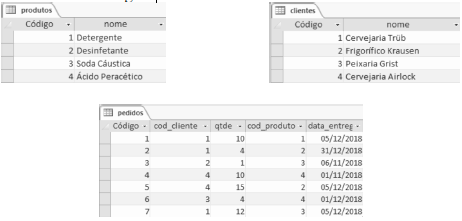
Uma empresa fornecedora de material de limpeza utiliza o Microsoft® Access 2013 sobre o sistema operacional Windows 7, ambos em Língua Portuguesa do Brasil. Nesta ferramenta, a empresa mantém cadastros dos seus clientes, produtos e pedidos em tabelas, conforme mostrado a seguir:
Enunciado 1321078-1
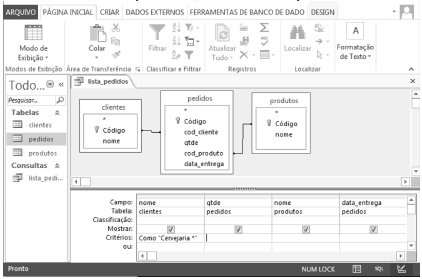
Foi, então, construída uma consulta chamada “lista_pedidos”, conforme a captura de tela abaixo:
Enunciado 1321078-2
A execução da consulta “lista_pedidos” resulta em:
 

Provas

Questão presente nas seguintes provas
1312604 Ano: 2018
Disciplina: Biologia
Banca: ACEP
Orgão: Pref. Aracati-CE
Suponha que em uma pequena cidade no interior do Brasil um meteorito foi encontrado. Neste pedaço de rocha estava disposto um líquido com aspecto gosmento que foi coletado e encaminhado para análise na melhor e maior Universidade do País. Realizou-se, então, estudo citológico com o auxílio de microscópio óptico binocular. O laudo emitido pela Universidade dizia que, na gosma coletada, havia presença de algo semelhante a uma célula que apresentava parede celular, material genético compartimentalizado e várias vesículas de diferentes tamanhos no meio interno. Considerando a hipótese de terem sido utilizados os conhecimentos sobre a classificação dos seres vivos na Terra, para tentar interpretar o resultado do estudo mencionado, a célula analisada poderia ser pertencente a indivíduos do reino:
 

Provas

Questão presente nas seguintes provas