Foram encontradas 625 questões.
Read the text 2 to answer the question.
Text 2
New Technologies in the English Language Classroom
The integration of cutting-edge technologies into English language pedagogy has profoundly transformed traditional
instructional paradigms. Digital tools such as language-learning apps, interactive whiteboards, and AI-driven writing assistants have
facilitated a multimodal learning environment that enhances linguistic acquisition through immediate feedback, gamified tasks, and
adaptive content delivery. These technologies foster learner autonomy and accommodate diverse learning styles, thereby mitigating
the one-size-fits-all limitations of conventional classrooms. Moreover, virtual and augmented reality platforms offer immersive
experiences that simulate authentic linguistic contexts, catalyzing communicative competence and cultural awareness in ways
previously unattainable.
Nonetheless, the pedagogical efficacy of such technologies hinges on their judicious implementation. Teachers must cultivate
digital literacy and pedagogical adaptability to curate meaningful interactions that transcend superficial engagement. The risk of
cognitive overload and techno-centrism necessitates a balanced approach, wherein technology functions as a scaffold rather than a
surrogate for effective teaching. As Warschauer (2013) argues, the goal should not be to merely digitize instruction but to
reconceptualize the classroom as a dynamic ecosystem where technology amplifies, rather than replaces, human-centered learning.
Source: Warschauer, M. (2013). Learning in the Cloud: How (and Why) to Transform Schools with Digital Media. Teachers College Press.
Provas
Questão presente nas seguintes provas

- Interpretação de texto | Reading comprehension
- Gramática - Língua InglesaPalavras conectivas | Connective words
Read the text 2 to answer the question.
Text 2
New Technologies in the English Language Classroom
The integration of cutting-edge technologies into English language pedagogy has profoundly transformed traditional
instructional paradigms. Digital tools such as language-learning apps, interactive whiteboards, and AI-driven writing assistants have
facilitated a multimodal learning environment that enhances linguistic acquisition through immediate feedback, gamified tasks, and
adaptive content delivery. These technologies foster learner autonomy and accommodate diverse learning styles, thereby mitigating
the one-size-fits-all limitations of conventional classrooms. Moreover, virtual and augmented reality platforms offer immersive
experiences that simulate authentic linguistic contexts, catalyzing communicative competence and cultural awareness in ways
previously unattainable.
Nonetheless, the pedagogical efficacy of such technologies hinges on their judicious implementation. Teachers must cultivate
digital literacy and pedagogical adaptability to curate meaningful interactions that transcend superficial engagement. The risk of
cognitive overload and techno-centrism necessitates a balanced approach, wherein technology functions as a scaffold rather than a
surrogate for effective teaching. As Warschauer (2013) argues, the goal should not be to merely digitize instruction but to
reconceptualize the classroom as a dynamic ecosystem where technology amplifies, rather than replaces, human-centered learning.
Source: Warschauer, M. (2013). Learning in the Cloud: How (and Why) to Transform Schools with Digital Media. Teachers College Press.
Provas
Questão presente nas seguintes provas
Read the text 2 to answer the question.
Text 2
New Technologies in the English Language Classroom
The integration of cutting-edge technologies into English language pedagogy has profoundly transformed traditional
instructional paradigms. Digital tools such as language-learning apps, interactive whiteboards, and AI-driven writing assistants have
facilitated a multimodal learning environment that enhances linguistic acquisition through immediate feedback, gamified tasks, and
adaptive content delivery. These technologies foster learner autonomy and accommodate diverse learning styles, thereby mitigating
the one-size-fits-all limitations of conventional classrooms. Moreover, virtual and augmented reality platforms offer immersive
experiences that simulate authentic linguistic contexts, catalyzing communicative competence and cultural awareness in ways
previously unattainable.
Nonetheless, the pedagogical efficacy of such technologies hinges on their judicious implementation. Teachers must cultivate
digital literacy and pedagogical adaptability to curate meaningful interactions that transcend superficial engagement. The risk of
cognitive overload and techno-centrism necessitates a balanced approach, wherein technology functions as a scaffold rather than a
surrogate for effective teaching. As Warschauer (2013) argues, the goal should not be to merely digitize instruction but to
reconceptualize the classroom as a dynamic ecosystem where technology amplifies, rather than replaces, human-centered learning.
Source: Warschauer, M. (2013). Learning in the Cloud: How (and Why) to Transform Schools with Digital Media. Teachers College Press.
Provas
Questão presente nas seguintes provas
Which of the following sentences from the text is written in the passive voice?
Provas
Questão presente nas seguintes provas
Read the text 1 to answer the question.
Text 1
In the Digital Era, OurDictionaries Read Us
Merriam-Webster
Peter Sokolowski, editor at large at Merriam-Webster Inc.
By Jennifer Howard MARCH 11, 2013
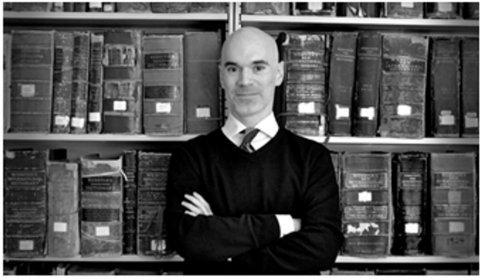
Merriam-Webster
Peter Sokolowski, editor at large at Merriam-Webster Inc.
For Peter Sokolowski, a high-profile event like the 9/11 attacks or the 2012 vice-presidential debate is not just news. It's a
“vocabulary event” that sends readers racing to their dictionaries.
Sokolowski is editor at large for Merriam-Webster, whose red-and-blue-jacketed Collegiate Dictionary still sits on the desk
of many a student and editor. In a print-only era, it would have been next to impossible for him to track vocabulary events. Samuel
Johnson, the grand old man of the modern dictionary, “could have spent a week or a month writing a given word's definition and could
never have known if anyone read it”, he says.
Today, Sokolowski can and does monitor what visitors to the Merriam-Webster Web site look up—as they're doing it.
With the spread of digital technologies, dictionaries have become a two-way mirror, a record not just of words' meanings but
of what we want to know. Digital dictionaries read us.
The days of displaying a thick Webster's in the parlor may be past, but dictionaries inhabit our daily lives more than we realize.
"There are many more times during a day that you are interacting with a dictionary" now than ever before, says Katherine Connor
Martin, head of U.S. dictionaries for Oxford University Press. Whenever you send a text or an e-mail, or read an e-book on your Nook,
Kindle, or iPad, a dictionary is at your fingertips, whether or not you're aware of it.
For dictionary makers, going electronic opens up all kinds of possibilities. It's not just that digital dictionaries can be
embedded in the operating systems of computers and e-readers so that they're always at hand. They can be updated far more easily and
often than their print cousins, and they can incorporate material like audio pronunciations and thesauruses. Unsuccessful word "lookups," or searches that don't produce satisfying results, can point lexicographers to terms that haven't yet made their way into a particular
dictionary or whose definitions need to be amended or freshened. Online readers can click a button and contribute their own word lore,
extending a tradition that dates back at least as far as the late 19th century, when James Murray and his team compiled the first Oxford
English Dictionary with the help of thousands of word slips sent in by the public.
Source: < https://www.chronicle.com/article/In-the-Digital-Era-Our/137719> Access on 30 April, 2018.Adapted.
Provas
Questão presente nas seguintes provas
Read the text 1 to answer the question.
Text 1
In the Digital Era, OurDictionaries Read Us
Merriam-Webster
Peter Sokolowski, editor at large at Merriam-Webster Inc.
By Jennifer Howard MARCH 11, 2013
Merriam-Webster
Peter Sokolowski, editor at large at Merriam-Webster Inc.
For Peter Sokolowski, a high-profile event like the 9/11 attacks or the 2012 vice-presidential debate is not just news. It's a
“vocabulary event” that sends readers racing to their dictionaries.
Sokolowski is editor at large for Merriam-Webster, whose red-and-blue-jacketed Collegiate Dictionary still sits on the desk
of many a student and editor. In a print-only era, it would have been next to impossible for him to track vocabulary events. Samuel
Johnson, the grand old man of the modern dictionary, “could have spent a week or a month writing a given word's definition and could
never have known if anyone read it”, he says.
Today, Sokolowski can and does monitor what visitors to the Merriam-Webster Web site look up—as they're doing it.
With the spread of digital technologies, dictionaries have become a two-way mirror, a record not just of words' meanings but
of what we want to know. Digital dictionaries read us.
The days of displaying a thick Webster's in the parlor may be past, but dictionaries inhabit our daily lives more than we realize.
"There are many more times during a day that you are interacting with a dictionary" now than ever before, says Katherine Connor
Martin, head of U.S. dictionaries for Oxford University Press. Whenever you send a text or an e-mail, or read an e-book on your Nook,
Kindle, or iPad, a dictionary is at your fingertips, whether or not you're aware of it.
For dictionary makers, going electronic opens up all kinds of possibilities. It's not just that digital dictionaries can be
embedded in the operating systems of computers and e-readers so that they're always at hand. They can be updated far more easily and
often than their print cousins, and they can incorporate material like audio pronunciations and thesauruses. Unsuccessful word "lookups," or searches that don't produce satisfying results, can point lexicographers to terms that haven't yet made their way into a particular
dictionary or whose definitions need to be amended or freshened. Online readers can click a button and contribute their own word lore,
extending a tradition that dates back at least as far as the late 19th century, when James Murray and his team compiled the first Oxford
English Dictionary with the help of thousands of word slips sent in by the public.
Source: < https://www.chronicle.com/article/In-the-Digital-Era-Our/137719> Access on 30 April, 2018.Adapted.
Provas
Questão presente nas seguintes provas
Read the text 1 to answer the question.
Text 1
In the Digital Era, OurDictionaries Read Us
Merriam-Webster
Peter Sokolowski, editor at large at Merriam-Webster Inc.
By Jennifer Howard MARCH 11, 2013
Merriam-Webster
Peter Sokolowski, editor at large at Merriam-Webster Inc.
For Peter Sokolowski, a high-profile event like the 9/11 attacks or the 2012 vice-presidential debate is not just news. It's a
“vocabulary event” that sends readers racing to their dictionaries.
Sokolowski is editor at large for Merriam-Webster, whose red-and-blue-jacketed Collegiate Dictionary still sits on the desk
of many a student and editor. In a print-only era, it would have been next to impossible for him to track vocabulary events. Samuel
Johnson, the grand old man of the modern dictionary, “could have spent a week or a month writing a given word's definition and could
never have known if anyone read it”, he says.
Today, Sokolowski can and does monitor what visitors to the Merriam-Webster Web site look up—as they're doing it.
With the spread of digital technologies, dictionaries have become a two-way mirror, a record not just of words' meanings but
of what we want to know. Digital dictionaries read us.
The days of displaying a thick Webster's in the parlor may be past, but dictionaries inhabit our daily lives more than we realize.
"There are many more times during a day that you are interacting with a dictionary" now than ever before, says Katherine Connor
Martin, head of U.S. dictionaries for Oxford University Press. Whenever you send a text or an e-mail, or read an e-book on your Nook,
Kindle, or iPad, a dictionary is at your fingertips, whether or not you're aware of it.
For dictionary makers, going electronic opens up all kinds of possibilities. It's not just that digital dictionaries can be
embedded in the operating systems of computers and e-readers so that they're always at hand. They can be updated far more easily and
often than their print cousins, and they can incorporate material like audio pronunciations and thesauruses. Unsuccessful word "lookups," or searches that don't produce satisfying results, can point lexicographers to terms that haven't yet made their way into a particular
dictionary or whose definitions need to be amended or freshened. Online readers can click a button and contribute their own word lore,
extending a tradition that dates back at least as far as the late 19th century, when James Murray and his team compiled the first Oxford
English Dictionary with the help of thousands of word slips sent in by the public.
Source: < https://www.chronicle.com/article/In-the-Digital-Era-Our/137719> Access on 30 April, 2018.Adapted.
Provas
Questão presente nas seguintes provas
Read the text 1 to answer the question.
Text 1
In the Digital Era, OurDictionaries Read Us
Merriam-Webster
Peter Sokolowski, editor at large at Merriam-Webster Inc.
By Jennifer Howard MARCH 11, 2013
Merriam-Webster
Peter Sokolowski, editor at large at Merriam-Webster Inc.
For Peter Sokolowski, a high-profile event like the 9/11 attacks or the 2012 vice-presidential debate is not just news. It's a
“vocabulary event” that sends readers racing to their dictionaries.
Sokolowski is editor at large for Merriam-Webster, whose red-and-blue-jacketed Collegiate Dictionary still sits on the desk
of many a student and editor. In a print-only era, it would have been next to impossible for him to track vocabulary events. Samuel
Johnson, the grand old man of the modern dictionary, “could have spent a week or a month writing a given word's definition and could
never have known if anyone read it”, he says.
Today, Sokolowski can and does monitor what visitors to the Merriam-Webster Web site look up—as they're doing it.
With the spread of digital technologies, dictionaries have become a two-way mirror, a record not just of words' meanings but
of what we want to know. Digital dictionaries read us.
The days of displaying a thick Webster's in the parlor may be past, but dictionaries inhabit our daily lives more than we realize.
"There are many more times during a day that you are interacting with a dictionary" now than ever before, says Katherine Connor
Martin, head of U.S. dictionaries for Oxford University Press. Whenever you send a text or an e-mail, or read an e-book on your Nook,
Kindle, or iPad, a dictionary is at your fingertips, whether or not you're aware of it.
For dictionary makers, going electronic opens up all kinds of possibilities. It's not just that digital dictionaries can be
embedded in the operating systems of computers and e-readers so that they're always at hand. They can be updated far more easily and
often than their print cousins, and they can incorporate material like audio pronunciations and thesauruses. Unsuccessful word "lookups," or searches that don't produce satisfying results, can point lexicographers to terms that haven't yet made their way into a particular
dictionary or whose definitions need to be amended or freshened. Online readers can click a button and contribute their own word lore,
extending a tradition that dates back at least as far as the late 19th century, when James Murray and his team compiled the first Oxford
English Dictionary with the help of thousands of word slips sent in by the public.
Source: < https://www.chronicle.com/article/In-the-Digital-Era-Our/137719> Access on 30 April, 2018.Adapted.
Provas
Questão presente nas seguintes provas
Read the text 1 to answer the question.
Text 1
In the Digital Era, OurDictionaries Read Us
Merriam-Webster
Peter Sokolowski, editor at large at Merriam-Webster Inc.
By Jennifer Howard MARCH 11, 2013
Merriam-Webster
Peter Sokolowski, editor at large at Merriam-Webster Inc.
For Peter Sokolowski, a high-profile event like the 9/11 attacks or the 2012 vice-presidential debate is not just news. It's a
“vocabulary event” that sends readers racing to their dictionaries.
Sokolowski is editor at large for Merriam-Webster, whose red-and-blue-jacketed Collegiate Dictionary still sits on the desk
of many a student and editor. In a print-only era, it would have been next to impossible for him to track vocabulary events. Samuel
Johnson, the grand old man of the modern dictionary, “could have spent a week or a month writing a given word's definition and could
never have known if anyone read it”, he says.
Today, Sokolowski can and does monitor what visitors to the Merriam-Webster Web site look up—as they're doing it.
With the spread of digital technologies, dictionaries have become a two-way mirror, a record not just of words' meanings but
of what we want to know. Digital dictionaries read us.
The days of displaying a thick Webster's in the parlor may be past, but dictionaries inhabit our daily lives more than we realize.
"There are many more times during a day that you are interacting with a dictionary" now than ever before, says Katherine Connor
Martin, head of U.S. dictionaries for Oxford University Press. Whenever you send a text or an e-mail, or read an e-book on your Nook,
Kindle, or iPad, a dictionary is at your fingertips, whether or not you're aware of it.
For dictionary makers, going electronic opens up all kinds of possibilities. It's not just that digital dictionaries can be
embedded in the operating systems of computers and e-readers so that they're always at hand. They can be updated far more easily and
often than their print cousins, and they can incorporate material like audio pronunciations and thesauruses. Unsuccessful word "lookups," or searches that don't produce satisfying results, can point lexicographers to terms that haven't yet made their way into a particular
dictionary or whose definitions need to be amended or freshened. Online readers can click a button and contribute their own word lore,
extending a tradition that dates back at least as far as the late 19th century, when James Murray and his team compiled the first Oxford
English Dictionary with the help of thousands of word slips sent in by the public.
Source: < https://www.chronicle.com/article/In-the-Digital-Era-Our/137719> Access on 30 April, 2018.Adapted.
Provas
Questão presente nas seguintes provas
Read the text 1 to answer the question.
Text 1
In the Digital Era, OurDictionaries Read Us
Merriam-Webster
Peter Sokolowski, editor at large at Merriam-Webster Inc.
By Jennifer Howard MARCH 11, 2013
Merriam-Webster
Peter Sokolowski, editor at large at Merriam-Webster Inc.
For Peter Sokolowski, a high-profile event like the 9/11 attacks or the 2012 vice-presidential debate is not just news. It's a
“vocabulary event” that sends readers racing to their dictionaries.
Sokolowski is editor at large for Merriam-Webster, whose red-and-blue-jacketed Collegiate Dictionary still sits on the desk
of many a student and editor. In a print-only era, it would have been next to impossible for him to track vocabulary events. Samuel
Johnson, the grand old man of the modern dictionary, “could have spent a week or a month writing a given word's definition and could
never have known if anyone read it”, he says.
Today, Sokolowski can and does monitor what visitors to the Merriam-Webster Web site look up—as they're doing it.
With the spread of digital technologies, dictionaries have become a two-way mirror, a record not just of words' meanings but
of what we want to know. Digital dictionaries read us.
The days of displaying a thick Webster's in the parlor may be past, but dictionaries inhabit our daily lives more than we realize.
"There are many more times during a day that you are interacting with a dictionary" now than ever before, says Katherine Connor
Martin, head of U.S. dictionaries for Oxford University Press. Whenever you send a text or an e-mail, or read an e-book on your Nook,
Kindle, or iPad, a dictionary is at your fingertips, whether or not you're aware of it.
For dictionary makers, going electronic opens up all kinds of possibilities. It's not just that digital dictionaries can be
embedded in the operating systems of computers and e-readers so that they're always at hand. They can be updated far more easily and
often than their print cousins, and they can incorporate material like audio pronunciations and thesauruses. Unsuccessful word "lookups," or searches that don't produce satisfying results, can point lexicographers to terms that haven't yet made their way into a particular
dictionary or whose definitions need to be amended or freshened. Online readers can click a button and contribute their own word lore,
extending a tradition that dates back at least as far as the late 19th century, when James Murray and his team compiled the first Oxford
English Dictionary with the help of thousands of word slips sent in by the public.
Source: < https://www.chronicle.com/article/In-the-Digital-Era-Our/137719> Access on 30 April, 2018.Adapted.
Provas
Questão presente nas seguintes provas
Cadernos
Caderno Container