Foram encontradas 40 questões.
São competências gerais da educação básica,
EXCETO:
Provas
Questão presente nas seguintes provas

O Plano Nacional de Educação (PNE) LEI nº
13.005/2014 composto por 20 metas são
acompanhadas de um delineamento de prazos
específicos para cada uma delas. No que se refere a
PNE marque a alterna INCORRETA
Provas
Questão presente nas seguintes provas
De acordo com o que estabelece as diretrizes e
bases da educação nacional os conteúdos
curriculares da educação básica observarão as
seguintes diretrizes abaixo listadas, EXCETO:
Provas
Questão presente nas seguintes provas
A Lei nº 9.394/96, de 20 de dezembro, publicada pelo Ministério da Educação, conhecida como Lei de Diretrizes e Bases da Educação (LDB), expressa a política e o planejamento educacional do país. Essas diretrizes são fundamentadas em relação à Constituição Federal, cujo Art. 206 define que o ensino será ministrado com base nos princípios abaixo listado, EXCETO:
Provas
Questão presente nas seguintes provas
Marque a alternativa CORRETA diante da
afirmação ―A demanda cognitiva das atividades de
leitura deve aumentar progressivamente desde os
anos iniciais do Ensino Fundamental até o Ensino
Médio‖. Esta complexidade se expressa pela articulação:
Provas
Questão presente nas seguintes provas
Considere a seguinte tabela verdade.

A proposição lógica que pode ser substituída pelo símbolo “?” é
Provas
Questão presente nas seguintes provas
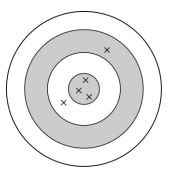
Um arqueiro tem 35% de probabilidade de
acertar o alvo em cada uma das 5 tentativas
independentes durante uma competição. A
probabilidade dele acertar exatamente 3 vezes o alvo
é, aproximadamente:
Provas
Questão presente nas seguintes provas
Text
CrashDetech: The app that could save your life in
a car crash
(CNN) It's the killer that, by some measures,
takes more young lives each year than conflict or
some forms of cancer. Every 30 seconds a person is
killed in a road crash, according to figures from the
Global Road Safety Partnership. That's more than
3,400 people per day and 1.25 million people per
year. Perhaps even more arresting is World Health
Organization (WHO) analysis which says that 90% of
all road based fatalities occur in low to middle income
countries, despite such nations having only half of the
world's vehicles. It's a tragedy that even takes a toll
on development costing some nations up to 5% of
GDP, according to the International Road
Assessment Programme (iRAP). The problem is so pressing that the U.N. declared the years between
2011 and 2020 as the "Decade of Action for Road
Safety," with over 100 countries pledging to reduce
killer car accidents. Some of the highest rates of road
deaths can be found in Africa. According to the
WHO's 2015 Global Status on Road safety report,
Libya is at the top of the table (73 deaths per 100,000
people), followed by Thailand (36) and Malawi (35).
Automatic detection
Yet one South African company has
designed a system that it believes can help cut
Africa's dismal rate of road fatalities. CrashDetech is
a smartphone application designed by
Johannesburg- based entrepreneur Jaco Gerrits. It
operates while a user is driving and detects the
sudden motion and G-forces of a car crash. The app
then pinpoints the location of the accident and
automatically calls an emergency response center,
which will dispatch the nearest medical emergency
team. CrashDetechs also sends personal medical
information, such as allergies and blood type, to
enable doctors and paramedics to offer more
effective treatment. The aim is to reduce waiting
times, and in doing so, save lives.
Race against time
In South Africa, the WHO estimate that
roughly 38 people are killed in road accidents each
day. "It's a major global public health problem,"
Gerrits told CNN. "They [the WHO] have identified
that how quickly you respond to a crash and how
effectively obviously can make a massive difference‖.
Let's say in a rural area you're involved in a crash
and you're off the road. There's a good chance that
nobody might even notice the crash. You can't speak
for yourself, and those patients will probably never
get the right kind of treatment to them in time."
According to Dr Pieter Venter of the Global Road
Safety partnership, mobile technology start-up's like
CrashDetech have exciting potential. "A number of
providers of such services have launched both here
in South Africa and right around the world, and there
is a growing body of anecdotal evidence which
supports the position that this technology can play a
key role in helping to save lives," Venter said. But
Venter also states that changing attitudes to the
wearing of seatbelts and highlighting the dangers of
drink-driving are also important factors in reducing
road fatalities in the likes of South Africa.
One of the app's key advantages is it has
grouped together 113 different private emergency
medical providers in South Africa, meaning its
customers have a greater chance of accessing an
ambulance that's near. "You might be familiar with
one specific [ambulance] number, for example ER24, [but] there's a good chance they're half an hour away.
Whereas let's say Netcare 911 might be 5 minutes
away," Gerrits continued "If you've got medical aid
[insurance], it normally has a relationship with one of
the private companies. They'll typically try and
dispatch the company's resources that they have a
relationship with," said Gerrits.
Adaptado de
(http://edition.cnn.com/2016/08/08/africa/crashdetech-appcar-crash/index.html)
Provas
Questão presente nas seguintes provas
Text
CrashDetech: The app that could save your life in
a car crash
(CNN) It's the killer that, by some measures,
takes more young lives each year than conflict or
some forms of cancer. Every 30 seconds a person is
killed in a road crash, according to figures from the
Global Road Safety Partnership. That's more than
3,400 people per day and 1.25 million people per
year. Perhaps even more arresting is World Health
Organization (WHO) analysis which says that 90% of
all road based fatalities occur in low to middle income
countries, despite such nations having only half of the
world's vehicles. It's a tragedy that even takes a toll
on development costing some nations up to 5% of
GDP, according to the International Road
Assessment Programme (iRAP). The problem is so pressing that the U.N. declared the years between
2011 and 2020 as the "Decade of Action for Road
Safety," with over 100 countries pledging to reduce
killer car accidents. Some of the highest rates of road
deaths can be found in Africa. According to the
WHO's 2015 Global Status on Road safety report,
Libya is at the top of the table (73 deaths per 100,000
people), followed by Thailand (36) and Malawi (35).
Automatic detection
Yet one South African company has
designed a system that it believes can help cut
Africa's dismal rate of road fatalities. CrashDetech is
a smartphone application designed by
Johannesburg- based entrepreneur Jaco Gerrits. It
operates while a user is driving and detects the
sudden motion and G-forces of a car crash. The app
then pinpoints the location of the accident and
automatically calls an emergency response center,
which will dispatch the nearest medical emergency
team. CrashDetechs also sends personal medical
information, such as allergies and blood type, to
enable doctors and paramedics to offer more
effective treatment. The aim is to reduce waiting
times, and in doing so, save lives.
Race against time
In South Africa, the WHO estimate that
roughly 38 people are killed in road accidents each
day. "It's a major global public health problem,"
Gerrits told CNN. "They [the WHO] have identified
that how quickly you respond to a crash and how
effectively obviously can make a massive difference‖.
Let's say in a rural area you're involved in a crash
and you're off the road. There's a good chance that
nobody might even notice the crash. You can't speak
for yourself, and those patients will probably never
get the right kind of treatment to them in time."
According to Dr Pieter Venter of the Global Road
Safety partnership, mobile technology start-up's like
CrashDetech have exciting potential. "A number of
providers of such services have launched both here
in South Africa and right around the world, and there
is a growing body of anecdotal evidence which
supports the position that this technology can play a
key role in helping to save lives," Venter said. But
Venter also states that changing attitudes to the
wearing of seatbelts and highlighting the dangers of
drink-driving are also important factors in reducing
road fatalities in the likes of South Africa.
One of the app's key advantages is it has
grouped together 113 different private emergency
medical providers in South Africa, meaning its
customers have a greater chance of accessing an
ambulance that's near. "You might be familiar with
one specific [ambulance] number, for example ER24, [but] there's a good chance they're half an hour away.
Whereas let's say Netcare 911 might be 5 minutes
away," Gerrits continued "If you've got medical aid
[insurance], it normally has a relationship with one of
the private companies. They'll typically try and
dispatch the company's resources that they have a
relationship with," said Gerrits.
Adaptado de
(http://edition.cnn.com/2016/08/08/africa/crashdetech-appcar-crash/index.html)
Provas
Questão presente nas seguintes provas
Talking about money, don’t count on Pedro. He is
such a deadbeat.
Count on means:Provas
Questão presente nas seguintes provas
Cadernos
Caderno Container