Foram encontradas 60 questões.
Analise o trecho de uma planilha MS Excel na qual foram aplicados filtros em quatro colunas.
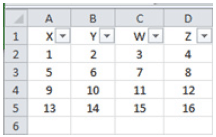
Foram selecionados os seguintes valores.
Coluna A: 1, 5, 13;
Coluna B: 2;
Coluna C: todos os valores;
Coluna D: todos os valores.
Assinale o número de linhas exibidas após as seleções, sem contar a linha de títulos.
Provas

TEXT III
Inclusive teaching in secondary ELT
Building an inclusive secondary ELT classroom is not based on a set of steps to follow. It is rather a teaching mindset. When teachers provide teenage students with opportunities to share information about their identities and backgrounds, and show genuine interest, they are building a safe environment for all learners. Such personalised sharing in the English classroom is part of ‘diversity embracing’ that extends far beyond ‘a once a year fair’ about different cultures and backgrounds. Personalisation which includes diversity therefore becomes a process, not a one-off event which enables us to incorporate teenage students’ realities in our English teaching on a lesson by lesson basis. Thereby involving them (and their lives beyond the classroom) much more deeply in the language learning process.
Another key aspect of inclusive teaching relates to secondary English teachers’ expectations and attitudes towards diversity. As educators of teenagers, we need to ensure we have the same high expectations of all our learners. We have to acknowledge and fight our own biases, bearing in mind that we are part of society with stereotypes, and are not free from making assumptions unconsciously about minority groups. As teachers are the model in the secondary classroom, not reproducing behaviors and roles that offend or oppress is part of our wider role as educators. Also, any comment that reinforces stereotypes or reproduces discriminatory speech should be tackled and deconstructed so that there is no ‘space’ for prejudice in our secondary English classrooms.
Finally, inclusion should extend beyond the classroom. As Lekh maintains, ‘An inclusive school or classroom can only be successful when all students feel that they are truly part of the school community. This can only happen through open, honest discussion about differences and understanding and respecting people from all abilities and backgrounds. An inclusive environment is one where everyone feels valued’. Teaching inclusively at the secondary level requires a holistic approach with active learner involvement, constant questioning of ourselves and our materials, and full participation of the whole school community.
Source: https://yltsig.iatefl.org/2020/03/06/bringing-diversity-into-thesecondary- english-classroom-ila-coimbra-and-james-taylor/
In the phrase “safe environment” , the word “safe” is to “safety” as
Provas
TEXT III
Inclusive teaching in secondary ELT
Building an inclusive secondary ELT classroom is not based on a set of steps to follow. It is rather a teaching mindset. When teachers provide teenage students with opportunities to share information about their identities and backgrounds, and show genuine interest, they are building a safe environment for all learners. Such personalised sharing in the English classroom is part of ‘diversity embracing’ that extends far beyond ‘a once a year fair’ about different cultures and backgrounds. Personalisation which includes diversity therefore becomes a process, not a one-off event which enables us to incorporate teenage students’ realities in our English teaching on a lesson by lesson basis. Thereby involving them (and their lives beyond the classroom) much more deeply in the language learning process.
Another key aspect of inclusive teaching relates to secondary English teachers’ expectations and attitudes towards diversity. As educators of teenagers, we need to ensure we have the same high expectations of all our learners. We have to acknowledge and fight our own biases, bearing in mind that we are part of society with stereotypes, and are not free from making assumptions unconsciously about minority groups. As teachers are the model in the secondary classroom, not reproducing behaviors and roles that offend or oppress is part of our wider role as educators. Also, any comment that reinforces stereotypes or reproduces discriminatory speech should be tackled and deconstructed so that there is no ‘space’ for prejudice in our secondary English classrooms.
Finally, inclusion should extend beyond the classroom. As Lekh maintains, ‘An inclusive school or classroom can only be successful when all students feel that they are truly part of the school community. This can only happen through open, honest discussion about differences and understanding and respecting people from all abilities and backgrounds. An inclusive environment is one where everyone feels valued’. Teaching inclusively at the secondary level requires a holistic approach with active learner involvement, constant questioning of ourselves and our materials, and full participation of the whole school community.
Source: https://yltsig.iatefl.org/2020/03/06/bringing-diversity-into-thesecondary- english-classroom-ila-coimbra-and-james-taylor/
A “key aspect” is one that is
Provas
TEXT III
Inclusive teaching in secondary ELT
Building an inclusive secondary ELT classroom is not based on a set of steps to follow. It is rather a teaching mindset. When teachers provide teenage students with opportunities to share information about their identities and backgrounds, and show genuine interest, they are building a safe environment for all learners. Such personalised sharing in the English classroom is part of ‘diversity embracing’ that extends far beyond ‘a once a year fair’ about different cultures and backgrounds. Personalisation which includes diversity therefore becomes a process, not a one-off event which enables us to incorporate teenage students’ realities in our English teaching on a lesson by lesson basis. Thereby involving them (and their lives beyond the classroom) much more deeply in the language learning process.
Another key aspect of inclusive teaching relates to secondary English teachers’ expectations and attitudes towards diversity. As educators of teenagers, we need to ensure we have the same high expectations of all our learners. We have to acknowledge and fight our own biases, bearing in mind that we are part of society with stereotypes, and are not free from making assumptions unconsciously about minority groups. As teachers are the model in the secondary classroom, not reproducing behaviors and roles that offend or oppress is part of our wider role as educators. Also, any comment that reinforces stereotypes or reproduces discriminatory speech should be tackled and deconstructed so that there is no ‘space’ for prejudice in our secondary English classrooms.
Finally, inclusion should extend beyond the classroom. As Lekh maintains, ‘An inclusive school or classroom can only be successful when all students feel that they are truly part of the school community. This can only happen through open, honest discussion about differences and understanding and respecting people from all abilities and backgrounds. An inclusive environment is one where everyone feels valued’. Teaching inclusively at the secondary level requires a holistic approach with active learner involvement, constant questioning of ourselves and our materials, and full participation of the whole school community.
Source: https://yltsig.iatefl.org/2020/03/06/bringing-diversity-into-thesecondary- english-classroom-ila-coimbra-and-james-taylor/
The adjective in “show genuine interest” is similar to
Provas
TEXT III
Inclusive teaching in secondary ELT
Building an inclusive secondary ELT classroom is not based on a set of steps to follow. It is rather a teaching mindset. When teachers provide teenage students with opportunities to share information about their identities and backgrounds, and show genuine interest, they are building a safe environment for all learners. Such personalised sharing in the English classroom is part of ‘diversity embracing’ that extends far beyond ‘a once a year fair’ about different cultures and backgrounds. Personalisation which includes diversity therefore becomes a process, not a one-off event which enables us to incorporate teenage students’ realities in our English teaching on a lesson by lesson basis. Thereby involving them (and their lives beyond the classroom) much more deeply in the language learning process.
Another key aspect of inclusive teaching relates to secondary English teachers’ expectations and attitudes towards diversity. As educators of teenagers, we need to ensure we have the same high expectations of all our learners. We have to acknowledge and fight our own biases, bearing in mind that we are part of society with stereotypes, and are not free from making assumptions unconsciously about minority groups. As teachers are the model in the secondary classroom, not reproducing behaviors and roles that offend or oppress is part of our wider role as educators. Also, any comment that reinforces stereotypes or reproduces discriminatory speech should be tackled and deconstructed so that there is no ‘space’ for prejudice in our secondary English classrooms.
Finally, inclusion should extend beyond the classroom. As Lekh maintains, ‘An inclusive school or classroom can only be successful when all students feel that they are truly part of the school community. This can only happen through open, honest discussion about differences and understanding and respecting people from all abilities and backgrounds. An inclusive environment is one where everyone feels valued’. Teaching inclusively at the secondary level requires a holistic approach with active learner involvement, constant questioning of ourselves and our materials, and full participation of the whole school community.
Source: https://yltsig.iatefl.org/2020/03/06/bringing-diversity-into-thesecondary- english-classroom-ila-coimbra-and-james-taylor/
The extract that offers an addition to previously given information is:
Provas
TEXT III
Inclusive teaching in secondary ELT
Building an inclusive secondary ELT classroom is not based on a set of steps to follow. It is rather a teaching mindset. When teachers provide teenage students with opportunities to share information about their identities and backgrounds, and show genuine interest, they are building a safe environment for all learners. Such personalised sharing in the English classroom is part of ‘diversity embracing’ that extends far beyond ‘a once a year fair’ about different cultures and backgrounds. Personalisation which includes diversity therefore becomes a process, not a one-off event which enables us to incorporate teenage students’ realities in our English teaching on a lesson by lesson basis. Thereby involving them (and their lives beyond the classroom) much more deeply in the language learning process.
Another key aspect of inclusive teaching relates to secondary English teachers’ expectations and attitudes towards diversity. As educators of teenagers, we need to ensure we have the same high expectations of all our learners. We have to acknowledge and fight our own biases, bearing in mind that we are part of society with stereotypes, and are not free from making assumptions unconsciously about minority groups. As teachers are the model in the secondary classroom, not reproducing behaviors and roles that offend or oppress is part of our wider role as educators. Also, any comment that reinforces stereotypes or reproduces discriminatory speech should be tackled and deconstructed so that there is no ‘space’ for prejudice in our secondary English classrooms.
Finally, inclusion should extend beyond the classroom. As Lekh maintains, ‘An inclusive school or classroom can only be successful when all students feel that they are truly part of the school community. This can only happen through open, honest discussion about differences and understanding and respecting people from all abilities and backgrounds. An inclusive environment is one where everyone feels valued’. Teaching inclusively at the secondary level requires a holistic approach with active learner involvement, constant questioning of ourselves and our materials, and full participation of the whole school community.
Source: https://yltsig.iatefl.org/2020/03/06/bringing-diversity-into-thesecondary- english-classroom-ila-coimbra-and-james-taylor/
The approach discussed in the text assumes that students should
Provas
TEXT III
Inclusive teaching in secondary ELT
Building an inclusive secondary ELT classroom is not based on a set of steps to follow. It is rather a teaching mindset. When teachers provide teenage students with opportunities to share information about their identities and backgrounds, and show genuine interest, they are building a safe environment for all learners. Such personalised sharing in the English classroom is part of ‘diversity embracing’ that extends far beyond ‘a once a year fair’ about different cultures and backgrounds. Personalisation which includes diversity therefore becomes a process, not a one-off event which enables us to incorporate teenage students’ realities in our English teaching on a lesson by lesson basis. Thereby involving them (and their lives beyond the classroom) much more deeply in the language learning process.
Another key aspect of inclusive teaching relates to secondary English teachers’ expectations and attitudes towards diversity. As educators of teenagers, we need to ensure we have the same high expectations of all our learners. We have to acknowledge and fight our own biases, bearing in mind that we are part of society with stereotypes, and are not free from making assumptions unconsciously about minority groups. As teachers are the model in the secondary classroom, not reproducing behaviors and roles that offend or oppress is part of our wider role as educators. Also, any comment that reinforces stereotypes or reproduces discriminatory speech should be tackled and deconstructed so that there is no ‘space’ for prejudice in our secondary English classrooms.
Finally, inclusion should extend beyond the classroom. As Lekh maintains, ‘An inclusive school or classroom can only be successful when all students feel that they are truly part of the school community. This can only happen through open, honest discussion about differences and understanding and respecting people from all abilities and backgrounds. An inclusive environment is one where everyone feels valued’. Teaching inclusively at the secondary level requires a holistic approach with active learner involvement, constant questioning of ourselves and our materials, and full participation of the whole school community.
Source: https://yltsig.iatefl.org/2020/03/06/bringing-diversity-into-thesecondary- english-classroom-ila-coimbra-and-james-taylor/
According to the text, in order to offer an inclusive classroom, the teacher needs to
Provas
TEXT III
Inclusive teaching in secondary ELT
Building an inclusive secondary ELT classroom is not based on a set of steps to follow. It is rather a teaching mindset. When teachers provide teenage students with opportunities to share information about their identities and backgrounds, and show genuine interest, they are building a safe environment for all learners. Such personalised sharing in the English classroom is part of ‘diversity embracing’ that extends far beyond ‘a once a year fair’ about different cultures and backgrounds. Personalisation which includes diversity therefore becomes a process, not a one-off event which enables us to incorporate teenage students’ realities in our English teaching on a lesson by lesson basis. Thereby involving them (and their lives beyond the classroom) much more deeply in the language learning process.
Another key aspect of inclusive teaching relates to secondary English teachers’ expectations and attitudes towards diversity. As educators of teenagers, we need to ensure we have the same high expectations of all our learners. We have to acknowledge and fight our own biases, bearing in mind that we are part of society with stereotypes, and are not free from making assumptions unconsciously about minority groups. As teachers are the model in the secondary classroom, not reproducing behaviors and roles that offend or oppress is part of our wider role as educators. Also, any comment that reinforces stereotypes or reproduces discriminatory speech should be tackled and deconstructed so that there is no ‘space’ for prejudice in our secondary English classrooms.
Finally, inclusion should extend beyond the classroom. As Lekh maintains, ‘An inclusive school or classroom can only be successful when all students feel that they are truly part of the school community. This can only happen through open, honest discussion about differences and understanding and respecting people from all abilities and backgrounds. An inclusive environment is one where everyone feels valued’. Teaching inclusively at the secondary level requires a holistic approach with active learner involvement, constant questioning of ourselves and our materials, and full participation of the whole school community.
Source: https://yltsig.iatefl.org/2020/03/06/bringing-diversity-into-thesecondary- english-classroom-ila-coimbra-and-james-taylor/
Based on the information provided by Text III, mark the statements below as true (T) or false (F).
( ) Inclusion should be restricted to the classroom environment.
( ) Teachers should avoid a reductionist approach to learning.
( ) Prejudice and stereotyping must be averted at all cost.
The statements are, respectively,
Provas
TEXT II

“If you don’t like school, just remember what it was like when you had me as a teacher.”
Source:https://www.newyorker.com/cartoons/dailycartoon/page/10
“If” in “If you don’t like” indicates a
Provas
TEXT II
“If you don’t like school, just remember what it was like when you had me as a teacher.”
Source:https://www.newyorker.com/cartoons/dailycartoon/page/10
The underlined word in “what it was like” functions in the same way as in
Provas
Caderno Container