Foram encontradas 388 questões.
O esquema a seguir representa um método para geração de programas em código executável.
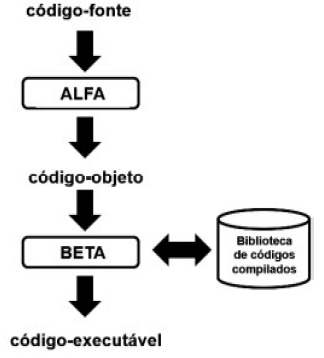
Os processos ALFA e BETA são denominados, respectivamente:
Provas
Questão presente nas seguintes provas

What has come to be termed the New Literacy Studies (NLS) (Gee, 1991; Street, 1996) represents a new tradition in considering the nature of literacy, focusing not so much on acquisition of skills, as in dominant approaches, but rather on what it means to think of literacy as a social practice (Street, 1985). This entails the recognition of multiple literacies, varying according to time and space, but also contested in relations of power.
[
]
To address these issues ethnographically, literacy researchers have constructed a conceptual apparatus that both coins some new terms and gives new meanings to some old ones. My own work, for instance, begins with the notion of multiple literacies, which makes a distinction between autonomous and ideological models of literacy (Street, 1985) [
]. The standard view in many fields, from schooling to development programs, works from the assumption that literacy in itselfautonomouslywill have effects on other social and cognitive practices. Introducing literacy to poor, illiterate people, villages, urban youth etc. will have the effect of enhancing their cognitive skills, improving their economic prospects, making them better citizens, regardless of the social and economic conditions that accounted for their illiteracy in the first place. I refer to this as an autonomous model of literacy. The model, I suggest, disguises the cultural and ideological assumptions that underpin it so that it can then be presented as though they are neutral and universal and that literacy as such will have these benign effects.
Research in NLS challenges this view and suggests that in practice literacy varies from one context to another and from one culture to another and so, therefore, do the effects of the different literacies in different conditions. The autonomous approach is simply imposing western conceptions of literacy on to other cultures or within a country those of one class or cultural group onto others.
The alternative, ideological model of literacy, offers a more culturally sensitive view of literacy practices as they vary from one context to another. This model starts from different premises than the autonomous model- it posits instead that literacy is a social practice, not simply a
technical and neutral skill; that it is always embedded in socially constructed epistemological principles. It is about knowledge: the ways in which people address reading and writing are themselves rooted in conceptions of knowledge, identity, and being. It is also always embedded in social practices, such as those of a particular job market or a particular educational context and the effects of learning that particular literacy will be dependent on those particu- lar contexts. Literacy, in this sense, is always contested, both its meanings and its practices, hence particular versions of it are always ideological, they are always rooted in a particular world-view and in a desire for that view of literacy to dominate and to marginalize others (Gee, 1991; Besnier & Street, 1994). The argument about social literacies (Street, 1995) suggests that engaging with literacy is always a social act even from the outset. The ways in which teachers or facilitators and their students interact is already a social practice that affects the nature of the literacy being learned and the ideas about literacy held by the participants, especially the new learners and their position in relations of power. It is not valid to suggest that literacy can be given neutrally and then its social effects only experienced afterwards.
STREET, B. Whats new in New Literacy Studies: Critical Approaches to Literacy in theory and practice.
Current Issues in Comparative Education, Teachers College, Columbia University, Vol. 5(2), pp. 77-91.
De acordo com o Texto, NÃO pode ser considerado um argumento contrário ao modelo autônomo de letramento:
Provas
Questão presente nas seguintes provas
1620173
Ano: 2018
Disciplina: Direito Educacional e Tecnológico
Banca: SELECON
Orgão: SECITEC-MT
Disciplina: Direito Educacional e Tecnológico
Banca: SELECON
Orgão: SECITEC-MT
Provas:
De acordo com o Inciso IX do artigo 6º da Lei nº 11.892/08, os Institutos Federais têm por finalidades e características promover a produção, o desenvolvimento e a transferência de tecnologias sociais, notadamente aquelas voltadas à:
Provas
Questão presente nas seguintes provas
Se uma sub-rede de computadores está configurada por meio do IP 172.16.37.96 como identificador da rede e máscara 255.255.255.224, pode-se concluir que sua configuração de acordo com a notação CIDR é:
Provas
Questão presente nas seguintes provas
38. Admita que o gráfico do segmento de reta a seguir representa o consumo de 60L de combustível de um determinado automóvel em 4,5 horas.
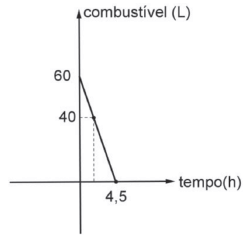
Com base nesse gráfico, o tempo, em horas, necessário para que o volume de combustível no tanque seja igual a 40 litros é igual a:
Provas
Questão presente nas seguintes provas
Segundo os conceitos de Taxonomia, Sistemática, Classificação e Nomenclatura Zoológica, todos os espécimes de uma série-tipo, além do exemplar designado como espécime-tipo de um táxon nominal na ocasião da publicação original, são chamados de:
Provas
Questão presente nas seguintes provas
Segundo as Diretrizes Curriculares Nacionais Gerais da Educação Básica (DCN), os estudiosos do tema currículo têm insistido em criticar aqueles currículos em que:
Provas
Questão presente nas seguintes provas
Com relação ao Modelo de Referência OSI/ISO, uma das principais funções da camada de TRANSPORTE é:
Provas
Questão presente nas seguintes provas
No que diz respeito à navegação na internet por meio dos aplicativos Internet Explorer, Google Chrome e Firefox Mozilla, a execução do atalho de teclado Ctrl + P tem por objetivo:
Provas
Questão presente nas seguintes provas
O texto a seguir foi digitado no Word do pacote MSOffice BR, no qual se pode observar que a letra A aparece em destaque, resultado do uso de um recurso do editor de textos.
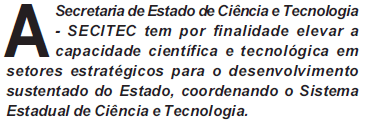
O recurso utilizado é conhecido por:
Provas
Questão presente nas seguintes provas
Cadernos
Caderno Container