Foram encontradas 50 questões.
The Hidden Costs Of Flying
A push for transparent ticket prices.
How much does a plane ticket really costs? (A)Just a decade ago, when most airfares included a checked bag and the ability to reserve a seat or book a ticket by phone (B), the answer was pretty straightforward: the price you saw was the price you paid, minus taxes. Today, most airlines, except for a few full-service Asian carriers and a holdout or two in the United States, charge economy-class passengers extra for almost everything (C)- a process known as ―unbundling.‖ Want to check your luggage? That’ll be $25 for the first bag.(D) Sit next to a window?: $29. Book by phone? An extra $25, please. Maverick Irish carrier Ryanair even charges customers $86 a pop to print boarding passes at the airport. (E
Now U.S. regulators are considering a crackdown on what critics charge are deceptive pricing practices that have unjustly enriched airlines by concealing the true cost of flying. A recent report by IdeaWorks, an aviation consultancy, found that the airline industry is making a fortune on fees, netting $22.6 billion worldwide in 2011, a 66 percent jump from two years before.
A new rule, enacted at the beginning of 2012, already requires domestic airlines to quote fares that include all mandatory taxes and fees. And last week, an advisory committee to the federal Transportation Department considered recommending that the government go a step further by requiring airlines to disclose all of their fees before a ticket purchase. ―Passengers deserve to know how much a ticket actually costs,‖ says Charles Leocha, president of the Consumer Travel Alliance, which represents passengers on the committee.
The committee’s recommendations are nonbinding, and they may have some trouble getting a nod from the next secretary of Transportation if President Obama loses the upcoming election to his Republican opponent. They also face a tedious rule-making process and a likely court challenge by airlines. But consumer groups appear to have some momentum. Airlines balked when they were required to add taxes and mandatory fees to their fares, charging the government with ―hiding‖ taxes and with it, the true cost of air travel. Two carriers sued the government in an effort to overturn the rule. But last month, a Court of Appeals sided with the government. If the move toward price transparency catches on, it could have a ripple effect worldwide, creating a global standard for disclosure and answering the question of how much an airline ticket costs once and for all.
http://www.thedailybeast.com/newsweek/2012/08/12/
Qual das palavras abaixo é sinônimo do adjetivo mandatory no terceiro parágrafo?
Provas
Questão presente nas seguintes provas

Na linha abaixo do famoso discurso de Martin Luther King, a sequência correta de artigos que o completam é:
"I have dream, that my four little children will one day live in nation where they will not be judged by color of their skin but by content of their character.
Provas
Questão presente nas seguintes provas
A questão refere-se ao texto seguinte.
How would, I say, mine eyes be blessed made
By looking on thee in the living day,
When in dead night thy fair imperfect shade
Through heavy sleep on sightless eyes doth stay!
All days are nights to see till I see thee,
And nights bright days when dreams do show thee me.
Shakespeare – Sonnet 43
No soneto acima, a palavra thee é a forma arcaica do
Provas
Questão presente nas seguintes provas
The Hidden Costs Of Flying
A push for transparent ticket prices.
How much does a plane ticket really costs? (A)Just a decade ago, when most airfares included a checked bag and the ability to reserve a seat or book a ticket by phone (B), the answer was pretty straightforward: the price you saw was the price you paid, minus taxes. Today, most airlines, except for a few full-service Asian carriers and a holdout or two in the United States, charge economy-class passengers extra for almost everything (C)- a process known as ―unbundling.‖ Want to check your luggage? That’ll be $25 for the first bag.(D) Sit next to a window?: $29. Book by phone? An extra $25, please. Maverick Irish carrier Ryanair even charges customers $86 a pop to print boarding passes at the airport. (E)
Now U.S. regulators are considering a crackdown on what critics charge are deceptive pricing practices that have unjustly enriched airlines by concealing the true cost of flying. A recent report by IdeaWorks, an aviation consultancy, found that the airline industry is making a fortune on fees, netting $22.6 billion worldwide in 2011, a 66 percent jump from two years before.
A new rule, enacted at the beginning of 2012, already requires domestic airlines to quote fares that include all mandatory taxes and fees. And last week, an advisory committee to the federal Transportation Department considered recommending that the government go a step further by requiring airlines to disclose all of their fees before a ticket purchase. ―Passengers deserve to know how much a ticket actually costs,‖ says Charles Leocha, president of the Consumer Travel Alliance, which represents passengers on the committee.
The committee’s recommendations are nonbinding, and they may have some trouble getting a nod from the next secretary of Transportation if President Obama loses the upcoming election to his Republican opponent. They also face a tedious rule-making process and a likely court challenge by airlines. But consumer groups appear to have some momentum. Airlines balked when they were required to add taxes and mandatory fees to their fares, charging the government with ―hiding‖ taxes and with it, the true cost of air travel. Two carriers sued the government in an effort to overturn the rule. But last month, a Court of Appeals sided with the government. If the move toward price transparency catches on, it could have a ripple effect worldwide, creating a global standard for disclosure and answering the question of how much an airline ticket costs once and for all.
http://www.thedailybeast.com/newsweek/2012/08/12/
No primeiro parágrafo do texto, qual frase sublinhada possui um erro gramatical?
Provas
Questão presente nas seguintes provas
Como as malas se perdem nos aeroportos?
Pelas estatísticas, não parece um grande problema: 99% da bagagem aérea do mundo chega ao destino. Acontece que 1% restante representa uma pilha anual de 8 milhões de volumes que somem por causa de procedimentos- padrão ou por erros de percurso.
A maioria dos sumiços é uma questão de etiqueta – o adesivo identificador colado na hora do check-in é a única informação sobre o destino na mala. Se a etiqueta estiver errada ou se cair durante o embarque e o desembarque, a mala vai para um lado e o dono para outro. Mas às vezes o dono da bagagem também tem culpa: se a mala é despachada tarde demais pode ficar pelo caminho por restrições de peso. Imagine que existem vários guichês recebendo malas acima do peso permitido. Conforme o check-in avança, os quilos a mais vão se acumulando e só mais tarde descobre-se que algumas bagagens não podem entrar porque o limite de carga do avião foi ultrapassado.
As malas desgarradas são normalmente reunidas em grandes depósitos bancados por muitas empresas. Por causa da quantidade de volumes, pode demorar semanas até que a mala volte de um desses lugares para seu dono. Como cada devolução de mala perdida custa em média US$ 100 para as companhias – US$ 8 bilhões por ano –, elas estudam medidas para diminuir as perdas, como banco de dados global e trocar as etiquetas por chips com radiofrequência.
Superinteressante, São Paulo, n. 267, p. 52, jul. 2009. (Fragmento).
Segundo o texto, o volume de bagagens perdidas ainda não é alarmante; entretanto, um dos motivos do desvio de grande número de malas se dá pelo fato de
Provas
Questão presente nas seguintes provas
Let It Be - The Beatles (Paul McCartney)
When I find myself in times of trouble,
Mother Mary comes to me Speaking words of wisdom, let it be And in my hour of
She is standing right in front of me
Speaking words of wisdom, let it be
Let it be, let it be, let it be, let it be
Whisper words of wisdom, let it be
And when the broken hearted people
Living in the world agree
There will be an answer, let it be
For though they may be parted
There is still a chance that they will see
There will be an answer, let it be
Let it be, let it be, let it be, let it be
There will be an answer, let it be
Podemos dizer a respeito da palavra hearted:
Provas
Questão presente nas seguintes provas
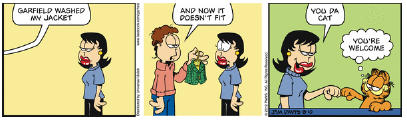
Garfield by Jim Davis
http://www.garfield.com/comics/todayscomic.html
http://www.garfield.com/comics/todayscomic.html
Na tirinha acima, a namorada do Jon felicita Garfield porque
Provas
Questão presente nas seguintes provas
The Hidden Costs Of Flying
A push for transparent ticket prices.
How much does a plane ticket really costs? (A) Just a decade ago, when most airfares included a checked bag and the ability to reserve a seat or book a ticket by phone (B), the answer was pretty straightforward: the price you saw was the price you paid, minus taxes. Today, most airlines, except for a few full-service Asian carriers and a holdout or two in the United States, charge economy-class passengers extra for almost everything (C)- a process known as ―unbundling.‖ Want to check your luggage? That’ll be $25 for the first bag.(D) Sit next to a window?: $29. Book by phone? An extra $25, please. Maverick Irish carrier Ryanair even charges customers $86 a pop to print boarding passes at the airport. (E
Now U.S. regulators are considering a crackdown on what critics charge are deceptive pricing practices that have unjustly enriched airlines by concealing the true cost of flying. A recent report by IdeaWorks, an aviation consultancy, found that the airline industry is making a fortune on fees, netting $22.6 billion worldwide in 2011, a 66 percent jump from two years before.
A new rule, enacted at the beginning of 2012, already requires domestic airlines to quote fares that include all mandatory taxes and fees. And last week, an advisory committee to the federal Transportation Department considered recommending that the government go a step further by requiring airlines to disclose all of their fees before a ticket purchase. ―Passengers deserve to know how much a ticket actually costs,‖ says Charles Leocha, president of the Consumer Travel Alliance, which represents passengers on the committee.
The committee’s recommendations are nonbinding, and they may have some trouble getting a nod from the next secretary of Transportation if President Obama loses the upcoming election to his Republican opponent. They also face a tedious rule-making process and a likely court challenge by airlines. But consumer groups appear to have some momentum. Airlines balked when they were required to add taxes and mandatory fees to their fares, charging the government with ―hiding‖ taxes and with it, the true cost of air travel. Two carriers sued the government in an effort to overturn the rule. But last month, a Court of Appeals sided with the government. If the move toward price transparency catches on, it could have a ripple effect worldwide, creating a global standard for disclosure and answering the question of how much an airline ticket costs once and for all.
http://www.thedailybeast.com/newsweek/2012/08/12/
Qual das ideias abaixo não está contida no texto?
Provas
Questão presente nas seguintes provas
Assinale a opção em que o fragmento do texto “Por que a luz é tão cara”, de Graziele Oliveira (Revista Época. ECONOMIA – 14/08/2012), apresenta erros gramaticais.
Provas
Questão presente nas seguintes provas
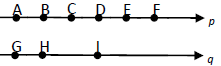
Quantos triângulos podem ser determinados pelos pontos das retas abaixo?
Provas
Questão presente nas seguintes provas
Cadernos
Caderno Container