Foram encontradas 60 questões.
Um produto teve seu preço original aumentado em 10% e passou a custar P reais.
Se, em vez de ser aumentado em 10%, o preço original do produto sofresse um desconto de 20%, o produto passaria a custar, em reais,
Provas

- GeometriaGeometria PlanaCircunferências e CírculosÁrea do círculo, do setor circular e do segmento circular
A figura abaixo destaca a região R do plano cartesiano, que é limitada pela parte positiva do eixo das abscissas, pelo gráfico da função \( f(x) = \sqrt 3 . x \), e pelas circunferências de raios 1 e 3, que possuem centros sobre a origem do sistema cartesiano.
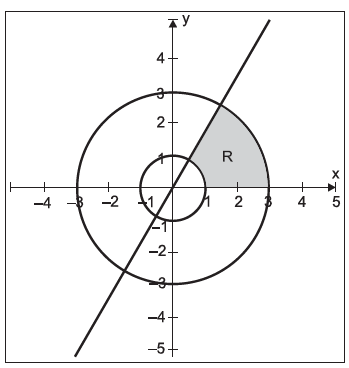
Qual é a área da região R?
Provas
Se, para \( n ∈ \mathbb N \) , an representa o termo geral de uma progressão aritmética de razão igual a \( -{ \large 1 \over 2} \) , e \( f: \mathbb R \rightarrow \mathbb R \) é a função definida por f(x) = 9x, então a sequência cujo termo geral bn, \( n ∈ \mathbb N \) , é definido por bn = f(an) é uma progressão
Provas
A figura abaixo representa uma peça industrial com a forma de um octaedro regular, cujas arestas medem 2 metros.
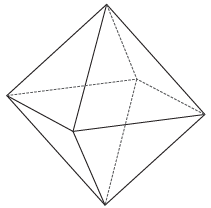
Quando representado em m3, o volume dessa peça é
Provas
Stanford physicists make new form of matter
The laser-cooled quantum gas opens exciting new
realms of unconventional superconductivity.
By Max McClure
Stanford University News
Within the exotic world of macroscopic quantum
effects, where fluids flow uphill, wires conduct without
electrical resistance and magnets levitate, there is an
even stranger family of “unconventional” phenomena:
strongly interacting fermions, a class of particles that
are often very difficult to understand on the quantum
level. These materials often defy explanation by
current theoretical physics, but hold enormous
promise for the development of futuristic technologies
as room-temperature superconductors, ultrasensitive
microscopes and quantum computation.
Last week the scientific world was appalled when
a Stanford team made the announcement in Physical
Review Letters that they had created the world’s first
dipolar quantum fermionic gas– “an entirely new
form of quantum matter,” as Stanford applied physics
Professor and lead author Benjamin Lev puts it. Lev
affirmed that this development represents a major
step toward understanding the behavior of these
systems of particles. Until now, research efforts had
focused on cooling bosons – fundamentally different
from fermions, and much easier to work with. But
now the Stanford team extended these techniques to
gases made of the most magnetic atom: a fermionic
isotope of dysprosium with magnetic energies 4
times larger than previously cooled gases.
He explained that when the thermal energy of
some substances drops below a certain critical point,
it used to be impossible to consider its component
particles separately since the material becomes
strongly correlated and its quantum effects become
difficult to understand and study. Nevertheless,
making the material out of a gas of atoms allows it
to become visible. These quantum gases, the coldest
objects known to man, are where researchers can
observe zero-viscosity fluids – superfluids – that are
mathematical cousins of superconductors.
Thus far, the result of the Lev lab’s high-tech efforts
is a tiny ball of ultracold quantum dipolar fluid. But the
researchers have reason to believe that the humble
substance will exhibit the seemingly contradictory
characteristics of both crystals and superfluids. This
combination could lead to quantum liquid crystals.
Or it could yield a supersolid – a hypothetical state
of matter that would, in theory at least, be a solid with
superfluid characteristics.
The researchers have already begun developing a
microscope to make use of the dipolar quantum fluid’s
unique characteristics. It is the “cryogenic atom chip
microscope”, a magnetic probe that should measure
magnetic fields with unprecedented sensitivity and
resolution. “This kind of probe may even allow for a
more stable form of quantum computation that uses
exotic quantum matter to process information, known
as a topologically protected quantum computer”,
said Lev. “So this new approach is really incredibly
exciting.”
Available at: http://news.stanford.edu/news/2012/june/lev-new--matter-060512.html. Retrieved on: 5 June 2012. Adapted.
According to the text, the cryogenic atom chip microscope
Provas
Stanford physicists make new form of matter
The laser-cooled quantum gas opens exciting new
realms of unconventional superconductivity.
By Max McClure
Stanford University News
Within the exotic world of macroscopic quantum
effects, where fluids flow uphill, wires conduct without
electrical resistance and magnets levitate, there is an
even stranger family of “unconventional” phenomena:
strongly interacting fermions, a class of particles that
are often very difficult to understand on the quantum
level. These materials often defy explanation by
current theoretical physics, but hold enormous
promise for the development of futuristic technologies
as room-temperature superconductors, ultrasensitive
microscopes and quantum computation.
Last week the scientific world was appalled when
a Stanford team made the announcement in Physical
Review Letters that they had created the world’s first
dipolar quantum fermionic gas– “an entirely new
form of quantum matter,” as Stanford applied physics
Professor and lead author Benjamin Lev puts it. Lev
affirmed that this development represents a major
step toward understanding the behavior of these
systems of particles. Until now, research efforts had
focused on cooling bosons – fundamentally different
from fermions, and much easier to work with. But
now the Stanford team extended these techniques to
gases made of the most magnetic atom: a fermionic
isotope of dysprosium with magnetic energies 4
times larger than previously cooled gases.
He explained that when the thermal energy of
some substances drops below a certain critical point,
it used to be impossible to consider its component
particles separately since the material becomes
strongly correlated and its quantum effects become
difficult to understand and study. Nevertheless,
making the material out of a gas of atoms allows it
to become visible. These quantum gases, the coldest
objects known to man, are where researchers can
observe zero-viscosity fluids – superfluids – that are
mathematical cousins of superconductors.
Thus far, the result of the Lev lab’s high-tech efforts
is a tiny ball of ultracold quantum dipolar fluid. But the
researchers have reason to believe that the humble
substance will exhibit the seemingly contradictory
characteristics of both crystals and superfluids. This
combination could lead to quantum liquid crystals.
Or it could yield a supersolid – a hypothetical state
of matter that would, in theory at least, be a solid with
superfluid characteristics.
The researchers have already begun developing a
microscope to make use of the dipolar quantum fluid’s
unique characteristics. It is the “cryogenic atom chip
microscope”, a magnetic probe that should measure
magnetic fields with unprecedented sensitivity and
resolution. “This kind of probe may even allow for a
more stable form of quantum computation that uses
exotic quantum matter to process information, known
as a topologically protected quantum computer”,
said Lev. “So this new approach is really incredibly
exciting.”
Available at: http://news.stanford.edu/news/2012/june/lev-new--matter-060512.html. Retrieved on: 5 June 2012. Adapted.
According to the text, this new material has the opposing qualities of being
Provas
Stanford physicists make new form of matter
The laser-cooled quantum gas opens exciting new
realms of unconventional superconductivity.
By Max McClure
Stanford University News
Within the exotic world of macroscopic quantum
effects, where fluids flow uphill, wires conduct without
electrical resistance and magnets levitate, there is an
even stranger family of “unconventional” phenomena:
strongly interacting fermions, a class of particles that
are often very difficult to understand on the quantum
level. These materials often defy explanation by
current theoretical physics, but hold enormous
promise for the development of futuristic technologies
as room-temperature superconductors, ultrasensitive
microscopes and quantum computation.
Last week the scientific world was appalled when
a Stanford team made the announcement in Physical
Review Letters that they had created the world’s first
dipolar quantum fermionic gas– “an entirely new
form of quantum matter,” as Stanford applied physics
Professor and lead author Benjamin Lev puts it. Lev
affirmed that this development represents a major
step toward understanding the behavior of these
systems of particles. Until now, research efforts had
focused on cooling bosons – fundamentally different
from fermions, and much easier to work with. But
now the Stanford team extended these techniques to
gases made of the most magnetic atom: a fermionic
isotope of dysprosium with magnetic energies 4
times larger than previously cooled gases.
He explained that when the thermal energy of
some substances drops below a certain critical point,
it used to be impossible to consider its component
particles separately since the material becomes
strongly correlated and its quantum effects become
difficult to understand and study. Nevertheless,
making the material out of a gas of atoms allows it
to become visible. These quantum gases, the coldest
objects known to man, are where researchers can
observe zero-viscosity fluids – superfluids – that are
mathematical cousins of superconductors.
Thus far, the result of the Lev lab’s high-tech efforts
is a tiny ball of ultracold quantum dipolar fluid. But the
researchers have reason to believe that the humble
substance will exhibit the seemingly contradictory
characteristics of both crystals and superfluids. This
combination could lead to quantum liquid crystals.
Or it could yield a supersolid – a hypothetical state
of matter that would, in theory at least, be a solid with
superfluid characteristics.
The researchers have already begun developing a
microscope to make use of the dipolar quantum fluid’s
unique characteristics. It is the “cryogenic atom chip
microscope”, a magnetic probe that should measure
magnetic fields with unprecedented sensitivity and
resolution. “This kind of probe may even allow for a
more stable form of quantum computation that uses
exotic quantum matter to process information, known
as a topologically protected quantum computer”,
said Lev. “So this new approach is really incredibly
exciting.”
Available at: http://news.stanford.edu/news/2012/june/lev-new--matter-060512.html. Retrieved on: 5 June 2012. Adapted.
In the text, the word in bold-face type is similar to the one in italics in
Provas
Stanford physicists make new form of matter
The laser-cooled quantum gas opens exciting new
realms of unconventional superconductivity.
By Max McClure
Stanford University News
Within the exotic world of macroscopic quantum
effects, where fluids flow uphill, wires conduct without
electrical resistance and magnets levitate, there is an
even stranger family of “unconventional” phenomena:
strongly interacting fermions, a class of particles that
are often very difficult to understand on the quantum
level. These materials often defy explanation by
current theoretical physics, but hold enormous
promise for the development of futuristic technologies
as room-temperature superconductors, ultrasensitive
microscopes and quantum computation.
Last week the scientific world was appalled when
a Stanford team made the announcement in Physical
Review Letters that they had created the world’s first
dipolar quantum fermionic gas– “an entirely new
form of quantum matter,” as Stanford applied physics
Professor and lead author Benjamin Lev puts it. Lev
affirmed that this development represents a major
step toward understanding the behavior of these
systems of particles. Until now, research efforts had
focused on cooling bosons – fundamentally different
from fermions, and much easier to work with. But
now the Stanford team extended these techniques to
gases made of the most magnetic atom: a fermionic
isotope of dysprosium with magnetic energies 4
times larger than previously cooled gases.
He explained that when the thermal energy of
some substances drops below a certain critical point,
it used to be impossible to consider its component
particles separately since the material becomes
strongly correlated and its quantum effects become
difficult to understand and study. Nevertheless,
making the material out of a gas of atoms allows it
to become visible. These quantum gases, the coldest
objects known to man, are where researchers can
observe zero-viscosity fluids – superfluids – that are
mathematical cousins of superconductors.
Thus far, the result of the Lev lab’s high-tech efforts
is a tiny ball of ultracold quantum dipolar fluid. But the
researchers have reason to believe that the humble
substance will exhibit the seemingly contradictory
characteristics of both crystals and superfluids. This
combination could lead to quantum liquid crystals.
Or it could yield a supersolid – a hypothetical state
of matter that would, in theory at least, be a solid with
superfluid characteristics.
The researchers have already begun developing a
microscope to make use of the dipolar quantum fluid’s
unique characteristics. It is the “cryogenic atom chip
microscope”, a magnetic probe that should measure
magnetic fields with unprecedented sensitivity and
resolution. “This kind of probe may even allow for a
more stable form of quantum computation that uses
exotic quantum matter to process information, known
as a topologically protected quantum computer”,
said Lev. “So this new approach is really incredibly
exciting.”
Available at: http://news.stanford.edu/news/2012/june/lev-new--matter-060512.html. Retrieved on: 5 June 2012. Adapted.
In the second paragraph of the text, it is clear that
Provas
Stanford physicists make new form of matter
The laser-cooled quantum gas opens exciting new
realms of unconventional superconductivity.
By Max McClure
Stanford University News
Within the exotic world of macroscopic quantum
effects, where fluids flow uphill, wires conduct without
electrical resistance and magnets levitate, there is an
even stranger family of “unconventional” phenomena:
strongly interacting fermions, a class of particles that
are often very difficult to understand on the quantum
level. These materials often defy explanation by
current theoretical physics, but hold enormous
promise for the development of futuristic technologies
as room-temperature superconductors, ultrasensitive
microscopes and quantum computation.
Last week the scientific world was appalled when
a Stanford team made the announcement in Physical
Review Letters that they had created the world’s first
dipolar quantum fermionic gas– “an entirely new
form of quantum matter,” as Stanford applied physics
Professor and lead author Benjamin Lev puts it. Lev
affirmed that this development represents a major
step toward understanding the behavior of these
systems of particles. Until now, research efforts had
focused on cooling bosons – fundamentally different
from fermions, and much easier to work with. But
now the Stanford team extended these techniques to
gases made of the most magnetic atom: a fermionic
isotope of dysprosium with magnetic energies 4
times larger than previously cooled gases.
He explained that when the thermal energy of
some substances drops below a certain critical point,
it used to be impossible to consider its component
particles separately since the material becomes
strongly correlated and its quantum effects become
difficult to understand and study. Nevertheless,
making the material out of a gas of atoms allows it
to become visible. These quantum gases, the coldest
objects known to man, are where researchers can
observe zero-viscosity fluids – superfluids – that are
mathematical cousins of superconductors.
Thus far, the result of the Lev lab’s high-tech efforts
is a tiny ball of ultracold quantum dipolar fluid. But the
researchers have reason to believe that the humble
substance will exhibit the seemingly contradictory
characteristics of both crystals and superfluids. This
combination could lead to quantum liquid crystals.
Or it could yield a supersolid – a hypothetical state
of matter that would, in theory at least, be a solid with
superfluid characteristics.
The researchers have already begun developing a
microscope to make use of the dipolar quantum fluid’s
unique characteristics. It is the “cryogenic atom chip
microscope”, a magnetic probe that should measure
magnetic fields with unprecedented sensitivity and
resolution. “This kind of probe may even allow for a
more stable form of quantum computation that uses
exotic quantum matter to process information, known
as a topologically protected quantum computer”,
said Lev. “So this new approach is really incredibly
exciting.”
Available at: http://news.stanford.edu/news/2012/june/lev-new--matter-060512.html. Retrieved on: 5 June 2012. Adapted.
According to the text, fermions
Provas
Em um grande campo, há nove torres e cada uma delas deve ser conectada às demais por meio de cabos.
Se a conexão entre duas torres quaisquer sempre fizer uso de exatamente 20 cabos, quantos cabos serão necessários para ligar todas as nove torres entre si?Provas
Caderno Container