Magna Concursos

Foram encontradas 60 questões.

1319007 Ano: 2014
Disciplina: Inglês (Língua Inglesa)
Banca: UFRJ
Orgão: UFRJ
Read text and answer question
September 3, 1939
House of Commons
These short remarks were delivered by Winston Churchill at the outbreak of World War II [...]
In this solemn hour it is a consolation to recall and to dwell upon our repeated efforts for peace. All have been ill-starred, but all have been faithful and sincere. This is of the highest moral value – and not only moral value, but practical value – at the present time, because the wholehearted concurrence of scores of millions of men and women, whose cooperation is indispensable and whose comradeship and brotherhood are indispensable, is the only foundation upon which the trial and tribulation of modern war can be endured and surmounted. This moral conviction alone affords that ever-fresh resilience which renews the strength and energy of people in long, doubtful and dark days. Outside, the storms of war may blow and the lands may be lashed with the fury of its gales, but in our own hearts this Sunday morning there is peace. Our hands may be active, but our consciences are at rest.
We must not underrate the gravity of the task which lies before us or the temerity of the ordeal, to which we shall not be found unequal. We must expect many disappointments, and many unpleasant surprises, but we may be sure that the task which we have freely accepted is one not beyond the compass and the strength of the British Empire and the French Republic. The Prime Minister said it was a sad day, and that is indeed true, but at the present time there is another note which may be present, and that is a feeling of thankfulness that, if these great trials were to come upon our Island, there is a generation of Britons here now ready to prove itself not unworthy of the days of yore and not unworthy of those great men, the fathers of our land, who laid the foundations of our laws and shaped the greatness of our country. This is not a question of fighting for Danzig or fighting for Poland. We are fighting to save the whole world from the pestilence of Nazi tyranny and in defense of all that is most sacred to man.
This is no war of domination or imperial aggrandizement or material gain; no war to shut any country out of its sunlight and means of progress. It is a war, viewed in its inherent quality, to establish, on impregnable rocks, the rights of the individual, and it is a war to establish and revive the stature of man. Perhaps it might seem a paradox that a war undertaken in the name of liberty and right should require, as a necessary part of its processes, the surrender for the time being of so many of the dearly valued liberties and rights. In these last few days the House of Commons has been voting dozens of Bills which hand over to the executive our most dearly valued traditional liberties. We are sure that these liberties will be in hands which will not abuse them, which will use them for no class or party interests, which will cherish and guard them, and we look forward to the day, surely and confidently we look forward to the day, when our liberties and rights will be restored to us, and when we shall be able to share them with the peoples to whom such blessings are unknown.
(Excerpt. CHURCHILL, Winston. “War Speech”. September 3, 1939. Available at <http://www. winstonchurchill.org/learn/speeches/speeches-ofwinston-churchill/127-war-speech>).
Solemn hour is the way Churchill refers to
 

Provas

Questão presente nas seguintes provas
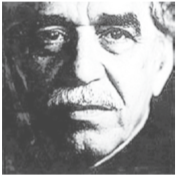
Em 17 de abril deste ano, Gabriel García Márquez, escritor colombiano, de Aracataca, agraciado com o Prêmio Nobel, deixou a vida, na Cidade do México, para ser eternizado na literatura e na cultura universais. O texto adiante são as linhas finais de seu celebrado romance O Amor nos Tempos do Cólera. Depois de lê-lo, com atenção, responda à questão proposta.
Enunciado 1318440-1
Fonte: books.blogs.starnewsonline.com
“(...) O comandante olhou Fermina Daza e viu em suas pestanas (1) os primeiros lampejos de um orvalho de inverno. Depois olhou Florentino Ariza, seu domínio invencível, seu amor impávido, e se assustou com a suspeita tardia de que é a vida, mais que a morte, a que não tem limites.
– E até quando acredita o senhor que podemos continuar neste ir e vir do caralho? – perguntou.
Florentino Ariza tinha a resposta preparada havia cinquenta e três anos, sete meses e onze dias com as respectivas noites.
– Toda a vida – disse.”
A expressão (1), destacada no trecho, mostra uma bela “figura de linguagem” utilizada por García Márquez. Assinale, dentre as alternativas adiante, aquela que a nomeia corretamente.
 

Provas

Questão presente nas seguintes provas
1308261 Ano: 2014
Disciplina: Inglês (Língua Inglesa)
Banca: UFRJ
Orgão: UFRJ
Read text and answer question
Among the many pronouncements that have shaped our understanding of literary translation, perhaps none is more often echoed than John Dryden’s preface to his version of the Aeneid. “I have endeavoured to make Virgil speak such English,” asserted Dryden, “as he would himself have spoken, if he had been born in England, and in this present Age.” No doubt Dryden’s achievement is to have made many of his contemporaries believe that he had impersonated the Latin poet. But this is merely a poetic sleight of hand. Dryden’s Virgil abandons the unrhymed verse of the Latin poem for English couplets while cribbing lines from a previous translator, the poet Sir John Denham. A skeptic might well wonder why Virgil should come back as Dryden instead of an epic poet who lived in the same period and wrote his epic without rhyme: John Milton. Should we not expect an English Virgil to be more attracted to the grand style of Paradise Lost? […]
The most questionable effect of Dryden’s assertion, to my mind, is that it winds up collapsing the translator’s labor into the foreign author’s, giving us no way to understand (let alone judge) how the translator has performed the crucial role of cultural go-between. To read a translation as a translation, as a work in its own right, we need a more practical sense of what a translator does. I would describe it as an attempt to compensate for an irreparable loss by controlling an exorbitant gain.
The foreign language is the first thing to go, the very sound and order of the words, and along with them all the resonance and allusiveness that they carry for the native reader. Simultaneously, merely by choosing words from another language, the translator adds an entirely new set of resonances and allusions designed to imitate the foreign text while making it comprehensible to a culturally different reader. These additional meanings may occasionally result from an actual insertion for clarity. But they in fact inhere in every choice that the translator makes, even when the translation sticks closely to the foreign words and conforms to current dictionary definitions. The translator must somehow control the unavoidable release of meanings that work only in the translating language. Apart from threatening to derail the project of imitation, these meanings always risk transforming what is foreign into something too familiar or simply irrelevant. The loss in translation remains invisible to any reader who doesn’t undertake a careful comparison to the foreign text—i.e., most of us. The gain is everywhere apparent, although only if the reader looks.
(Excerpt. VENUTI, Lawrence. How to Read a Translation. Available at <http://www.wordswithoutborders.org/article. php?lab=HowTo>).
In “the very sound and order of the words” , the underlined word can be replaced by:
 

Provas

Questão presente nas seguintes provas
Leia o texto a seguir e responda a questão:
Enunciado 1297639-1
Acervo: Superintendência de Comunicação Social (SGCOMS) da UFRJ
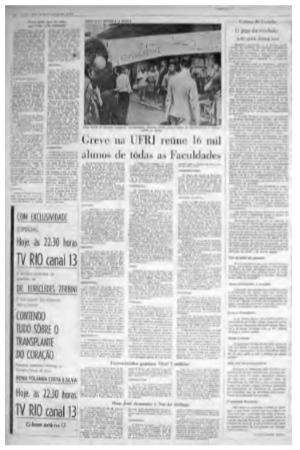
Greve na UFRJ reúne 16 mil alunos de todas as Faculdades Reuniões
“As Faculdades da Praia Vermelha realizaram ontem (1) a tarde assembléias para discutir (2) a política educacional do Governo, sob (3) a vigilância de um choque da PM e de diversos agentes do DOPS, sem se registrarem incidentes.(...) Os presidentes das extintas UNE e UME, Vladimir Palmeira e Luís Travassos, percorreram ontem durante o dia diversas faculdades e realizaram assembléias para permitir maior participação dos estudantes na greve. (...)”.
“O Secretário de Segurança, General França de Oliveira, afirmou ontem que não permitirá (4) a concentração programada pelos universitários para o dia 11, no pátio do MEC, ‘porque é ilegal, e os que insistirem em realizá-la serão presos e processados dentro da Lei de Segurança Nacional’. Segundo o General França de Oliveira, ‘(5) a concentração está sendo organizada por estudantes comunistas, da linha chinesa, e, portanto, é subversiva’ ”.
Jornal do Brasil, 06 de junho de 1968.
O texto dado é uma transcrição adaptada da matéria publicada na edição do Jornal do Brasil de 06 de junho de 1968, conforme o fac-símile reproduzido. Dentre as alternativas adiante, assinale aquela que apresenta a sequência correta quanto ao emprego do sinal indicativo da crase.
 

Provas

Questão presente nas seguintes provas
721136 Ano: 2014
Disciplina: Inglês (Língua Inglesa)
Banca: UFRJ
Orgão: UFRJ
Read text and answer question
I Stopping by Woods on a Snowy Evening
by Robert Frost
Whose woods these are I think I know.
His house is in the village though;
He will not see me stopping here
To watch his woods fill up with snow.
My little horse must think it queer
To stop without a farmhouse near
Between the woods and frozen lake
The darkest evening of the year.
He gives his harness bells a shake
To ask if there is some mistake.
The only other sound’s the sweep
Of easy wind and downy flake.
The woods are lovely, dark and deep,
But I have promises to keep,
And miles to go before I sleep,
And miles to go before I sleep.
It is plausible to affirm that the poem is:
 

Provas

Questão presente nas seguintes provas
718984 Ano: 2014
Disciplina: Inglês (Língua Inglesa)
Banca: UFRJ
Orgão: UFRJ
Read text and answer question
Effective May 1, 2002, Canadian university libraries have agreed to extend in-person borrowing privileges to students, faculty and staff from across the country. All that is required for borrowing is a valid university identification card or a valid participating regional consortia card. Reciprocal borrowing privileges are determined by each lending (host) library and usually provide shorter loan periods than those available at the individual’s home library. Some library materials such as periodicals, videos, and books on course reserve may not be available for loan. Graduate students, faculty and staff are entitled to borrowing privileges at participating libraries. Undergraduate students are entitled to borrowing privileges at most participating libraries.
(Excerpt. Edited. “Canadian University Reciprocal Borrowing Agreement”. Available at <http://www.curba.ca/>).
Loan means:
 

Provas

Questão presente nas seguintes provas
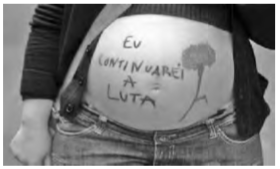
2014, como se pode ver, está sendo um ano pleno de acontecimentos e significados que não apenas nos remetem ao passado histórico como também, por isso mesmo, nos inquietam quanto ao presente e nos inspiram para melhorar o tempo futuro. Um desses eventos foi a celebração, em 25 de abril, dos 40 anos da Revolução dos Cravos, que pôs fim a décadas de ditadura e obscurantismo e restabeleceu as condições para uma vida democrática em Portugal.
Enunciado 713528-1
Fonte: contramachismo.wordpress.com
O texto abaixo é a letra da primeira versão da música Tanto Mar, que Chico Buarque compôs, em 1974, para homenagear o povo português por sua conquista. Censurada pela ditadura brasileira, esta versão foi editada apenas em Portugal, em 1975. Leia-a, com atenção, e responda à questão.
“TANTO MAR
Sei que estás em festa, pá / Fico contente / E enquanto estou ausente / (1) Guarda um cravo para mim Eu queria estar na festa, pá / Com a tua gente / E (2) colher pessoalmente / Uma flor do teu jardim Sei que há léguas a nos separar / Tanto mar, tanto mar / Sei também quanto é / preciso, pá / Navegar, navegar Lá faz primavera, pá / Cá estou doente / (3) Manda urgentemente / Algum cheirinho de alecrim”
Quanto à regência, os verbos numerados e sublinhados no texto são, respectivamente:
 

Provas

Questão presente nas seguintes provas

O texto adiante relaciona trechos de matéria publicada em 14 de abril de 2014 no Portal Brasil, página eletrônica de comunicação do governo federal, e apresenta diversos defeitos e incorreções. Leia-o, atentamente, e responda à questão proposta.

“Nove a cada dez jovens acreditam que é possível mudar o mundo”

“Segundo o Censo 2010, último censo do Instituto Brasileiro de Geografia e Estatística (IBGE), os jovens ocupam, hoje, um quarto da população do País. (...) Um levantamento feito entre abril e maio de 2013, pela Secretaria Nacional da Juventude (SNJ) da Secretaria Geral da Presidência da República, para analisar o perfil dos jovens brasileiros, detalha um pouco mais essa porcentagem. (...).

Entre os assuntos que os jovens consideram mais importantes para serem discutidos pela sociedade estão a desigualdade social e pobreza, para 40%, e drogas e violência, para 38% dos jovens que participaram da pesquisa da Secretaria Nacional da Juventude. Em seguida vêm política (33%), cidadania e direitos humanos (32%), educação e futuro profissional (25%), racismo (25%) e meio-ambiente e desenvolvimento sustentável (24%). E por fim, o que os jovens avaliam como mais positivo no Brasil é, em primeiro lugar, a possibilidade de estudar (63%) e em segundo lugar, a liberdade de expressão. Apenas 4% dos jovens declaram que não há nada de positivo no País.

Podendo aí se subentender uma característica de sonhador e batalhador do jovem brasileiro, (1) o estudo da SNJ mostra também que é muito clara para eles a percepção sobre a capacidade da juventude de mudar o mundo. Cerca de nove em cada dez dos entrevistados responderam que os jovens podem mudar o mundo, sendo que para 7, eles podem mudá-lo e muito.”

Fonte: Portal Brasil, com informações do Instituto Brasileiro de Geografia e Estatística, da Secretaria Nacional da Juventude e do Ministério do Trabalho e Emprego

Sobre o trecho (1), sublinhado no último parágrafo do texto, marque, dentre as alternativas adiante, aquela que apresenta a redação mais adequada no que se refere aos princípios, mecanismos e estruturas da coesão e coerência textuais.


Provas

Questão presente nas seguintes provas

O texto a seguir é fragmento do estudo “Os olhos do regime militar brasileiro nos campi. As assessorias de segurança e informações das universidades”, do pesquisador Rodrigo Patto Sá Motta. Leia-o, atentamente, e responda à questão proposta 28.

“Devido à prática de disseminação de documentos entre as agências da comunidade de informações, os Arquivos das AESI1 da UFMG2 e UnB3 contêm também documentos produzidos por outras AESIs universitárias, bem como volume considerável de material proveniente da Divisão de Segurança e Informações do Ministério da Educação e Cultura (DSI/MEC), órgão supervisor de todas as AESI universitárias e, por sua vez, subordinado ao Serviço Nacional de Informações. (...) O desaparecimento da documentação produzida por essas Assessorias – na verdade, em muitos casos houve destruição proposital – está longe de ser acontecimento fortuito. (...)”

1 Assessoria Especial de Segurança e Informação.

2 Universidade Federal de Minas Gerais.

3 Universidade de Brasília.

Nos termos da Lei Federal n° 8.112, de 1990, “retirar, sem prévia anuência da autoridade competente, qualquer documento ou objeto da repartição”:


Provas

Questão presente nas seguintes provas

Os versos adiante são da belíssima obra Pedro Pedreiro, do autor e compositor Chico Buarque de Holanda, aqui citada apenas para nos ajudar a pensar sobre a universal e sensível questão da remuneração do trabalho. Depois de sua leitura, responda à questão:

“Pedro pedreiro penseiro esperando o trem

Manhã parece, carece de esperar também

Para o bem de quem tem bem de quem não tem vintém

Pedro pedreiro fica assim pensando

Assim pensando o tempo passa e a gente vai ficando prá trás

Esperando, esperando, esperando

Esperando o sol, esperando o trem

Esperando aumento desde o ano passado para o mês que vem. (...)”

Sobre vencimento, remuneração, vantagens, seus valores, conforme estabelecido na Lei Federal n° 8.112, de 1990, é correto afirmar que:


Provas

Questão presente nas seguintes provas