Magna Concursos

Foram encontradas 60 questões.

529298 Ano: 2014
Disciplina: Inglês (Língua Inglesa)
Banca: UFRJ
Orgão: UFRJ
Read text and answer question
Effective May 1, 2002, Canadian university libraries have agreed to extend in-person borrowing privileges to students, faculty and staff from across the country. All that is required for borrowing is a valid university identification card or a valid participating regional consortia card. Reciprocal borrowing privileges are determined by each lending (host) library and usually provide shorter loan periods than those available at the individual’s home library. Some library materials such as periodicals, videos, and books on course reserve may not be available for loan. Graduate students, faculty and staff are entitled to borrowing privileges at participating libraries. Undergraduate students are entitled to borrowing privileges at most participating libraries.
(Excerpt. Edited. “Canadian University Reciprocal Borrowing Agreement”. Available at <http://www.curba.ca/>).
Entitle in the sentence “Graduate students, faculty and staff are entitled to borrowing privileges [...]” means:
 

Provas

Questão presente nas seguintes provas
529271 Ano: 2014
Disciplina: Inglês (Língua Inglesa)
Banca: UFRJ
Orgão: UFRJ
Read text and answer question
Among the many pronouncements that have shaped our understanding of literary translation, perhaps none is more often echoed than John Dryden’s preface to his version of the Aeneid. “I have endeavoured to make Virgil speak such English,” asserted Dryden, “as he would himself have spoken, if he had been born in England, and in this present Age.” No doubt Dryden’s achievement is to have made many of his contemporaries believe that he had impersonated the Latin poet. But this is merely a poetic sleight of hand. Dryden’s Virgil abandons the unrhymed verse of the Latin poem for English couplets while cribbing lines from a previous translator, the poet Sir John Denham. A skeptic might well wonder why Virgil should come back as Dryden instead of an epic poet who lived in the same period and wrote his epic without rhyme: John Milton. Should we not expect an English Virgil to be more attracted to the grand style of Paradise Lost? […]
The most questionable effect of Dryden’s assertion, to my mind, is that it winds up collapsing the translator’s labor into the foreign author’s, giving us no way to understand (let alone judge) how the translator has performed the crucial role of cultural go-between. To read a translation as a translation, as a work in its own right, we need a more practical sense of what a translator does. I would describe it as an attempt to compensate for an irreparable loss by controlling an exorbitant gain.
The foreign language is the first thing to go, the very sound and order of the words, and along with them all the resonance and allusiveness that they carry for the native reader. Simultaneously, merely by choosing words from another language, the translator adds an entirely new set of resonances and allusions designed to imitate the foreign text while making it comprehensible to a culturally different reader. These additional meanings may occasionally result from an actual insertion for clarity. But they in fact inhere in every choice that the translator makes, even when the translation sticks closely to the foreign words and conforms to current dictionary definitions. The translator must somehow control the unavoidable release of meanings that work only in the translating language. Apart from threatening to derail the project of imitation, these meanings always risk transforming what is foreign into something too familiar or simply irrelevant. The loss in translation remains invisible to any reader who doesn’t undertake a careful comparison to the foreign text—i.e., most of us. The gain is everywhere apparent, although only if the reader looks.
(Excerpt. VENUTI, Lawrence. How to Read a Translation. Available at <http://www.wordswithoutborders.org/article. php?lab=HowTo>).
Paradise Lost 19) designates:
 

Provas

Questão presente nas seguintes provas
528130 Ano: 2014
Disciplina: Inglês (Língua Inglesa)
Banca: UFRJ
Orgão: UFRJ
Read text and answer question
I Stopping by Woods on a Snowy Evening
by Robert Frost
Whose woods these are I think I know.
His house is in the village though;
He will not see me stopping here
To watch his woods fill up with snow.
My little horse must think it queer
To stop without a farmhouse near
Between the woods and frozen lake
The darkest evening of the year.
He gives his harness bells a shake
To ask if there is some mistake.
The only other sound’s the sweep
Of easy wind and downy flake.
The woods are lovely, dark and deep,
But I have promises to keep,
And miles to go before I sleep,
And miles to go before I sleep.
The meaning of stop in the title of the poem may be
 

Provas

Questão presente nas seguintes provas

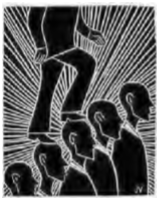
Uma das expressões da desatualização da Lei Federal n° 8.112, de 1990, já com 24 anos, é a omissão de dispositivos claros a respeito de manifestações de assédio moral, absurdamente cada vez mais comuns, sobretudo no nível das relações hierárquicas. Além do dispositivo que proíbe o servidor de promover manifestação de apreço ou desapreço no recinto da repartição, no Regime Disciplinar dos Servidores Públicos Civis da União, das Autarquias e das Fundações Públicas Federais (Título IV da referida Lei) há deveres que, respeitados pela autoridade, resguardam o servidor de variadas modalidades de assédio moral. Assinale, adiante, a alternativa em que esses deveres são citados:

Enunciado 519995-1

Fonte: cultura.culturamix.com


Provas

Questão presente nas seguintes provas
Em 27 de março último, o Conselho Universitário da UFRJ aprovou a criação do Ano da Memória e Verdade da universidade. Especialmente entre 1º de abril de 2014 e 1º de abril de 2015, diversas iniciativas coordenadas pela Comissão da Memória e Verdade da instituição discutirão os anos de ditadura militar marcados por graves violações de direitos na sociedade, nas instituições universitárias, em geral, e na UFRJ, em especial. O texto adiante é o da Nota Pública da COMISSÃO NACIONAL DA VERDADE publicada em 30 de março de 2014. Leia-o, atentamente, e responda à questão proposta a seguir.
50 anos do golpe de Estado de 1964
Há cinquenta anos um golpe de estado militar destituiu o governo constitucional do presidente João Goulart. Instaurou por longo tempo no país um regime autoritário que desrespeitava os direitos humanos; no qual os direitos sociais de muitos eram ignorados; em que os opositores e dissidentes foram rotineiramente perseguidos com a perda dos direitos políticos, a detenção arbitrária, a prisão e o exílio; onde a tortura, os assassinatos, os desaparecimentos forçados e a eliminação física foram sistematicamente utilizados contra aqueles que se insurgiam. Neste cinquentenário, a Comissão Nacional da Verdade quer homenagear essas vítimas e reafirmar sua determinação em ajudar a construir um Brasil cada vez mais democrático e mais justo.
A Comissão Nacional da Verdade nasceu com o objetivo de examinar e esclarecer as graves violações de direitos humanos praticadas no período. (1) Baseia-se na convicção de que a verdade histórica tem como objetivo não somente a afirmação da justiça, mas também preparar a reconciliação nacional, como vem assentado no seu mandato legal. Esteia-se na certeza de que o esclarecimento circunstanciado dos casos de tortura, morte, desaparecimento forçado, ocultação de cadáver e sua autoria, a identificação de locais, instituições e circunstâncias relacionados à prática de violações graves de direitos humanos, constituem dever elementar da solidariedade social e imperativo da decência, reclamados pela dignidade de nosso país. (2) Não deveria haver brasileiro algum ou instituição nacional alguma que deles se furtassem sob qualquer pretexto.
No ano passado comemoramos os vinte cinco anos da promulgação da Constituição Brasileira de 1988. Oitenta e dois milhões de brasileiros nasceram sob o regime democrático. Mais de oitenta por cento da população brasileira nasceu depois do golpe militar. O Brasil que se confronta com o trágico legado de 64, passados cinquenta anos, é literalmente outro. O país se renovou, progrediu e busca redefinir o seu lugar no concerto das nações democráticas. Não há por que hesitar em incorporar a esta marcha para adiante a revisão de seu passado e a reparação das injustiças cometidas. (3) Pensamos ser este o desejo da maioria. É certamente o sentido do trabalho da Comissão Nacional da Verdade.
O trecho (2) Não deveria haver brasileiro algum ou instituição nacional alguma que deles se furtassem sob qualquer pretexto, destacado na Nota Pública, revela que a Comissão Nacional da Verdade:
 

Provas

Questão presente nas seguintes provas
484468 Ano: 2014
Disciplina: Inglês (Língua Inglesa)
Banca: UFRJ
Orgão: UFRJ
Read text and answer question
Effective May 1, 2002, Canadian university libraries have agreed to extend in-person borrowing privileges to students, faculty and staff from across the country. All that is required for borrowing is a valid university identification card or a valid participating regional consortia card. Reciprocal borrowing privileges are determined by each lending (host) library and usually provide shorter loan periods than those available at the individual’s home library. Some library materials such as periodicals, videos, and books on course reserve may not be available for loan. Graduate students, faculty and staff are entitled to borrowing privileges at participating libraries. Undergraduate students are entitled to borrowing privileges at most participating libraries.
(Excerpt. Edited. “Canadian University Reciprocal Borrowing Agreement”. Available at <http://www.curba.ca/>).
Graduate students, undergraduate students , faculty and staff correspond, in Portuguese, respectively, to:
 

Provas

Questão presente nas seguintes provas
474130 Ano: 2014
Disciplina: Inglês (Língua Inglesa)
Banca: UFRJ
Orgão: UFRJ
Read text and answer question
September 3, 1939
House of Commons
These short remarks were delivered by Winston Churchill at the outbreak of World War II [...]
In this solemn hour it is a consolation to recall and to dwell upon our repeated efforts for peace. All have been ill-starred, but all have been faithful and sincere. This is of the highest moral value – and not only moral value, but practical value – at the present time, because the wholehearted concurrence of scores of millions of men and women, whose cooperation is indispensable and whose comradeship and brotherhood are indispensable, is the only foundation upon which the trial and tribulation of modern war can be endured and surmounted. This moral conviction alone affords that ever-fresh resilience which renews the strength and energy of people in long, doubtful and dark days. Outside, the storms of war may blow and the lands may be lashed with the fury of its gales, but in our own hearts this Sunday morning there is peace. Our hands may be active, but our consciences are at rest.
We must not underrate the gravity of the task which lies before us or the temerity of the ordeal, to which we shall not be found unequal. We must expect many disappointments, and many unpleasant surprises, but we may be sure that the task which we have freely accepted is one not beyond the compass and the strength of the British Empire and the French Republic. The Prime Minister said it was a sad day, and that is indeed true, but at the present time there is another note which may be present, and that is a feeling of thankfulness that, if these great trials were to come upon our Island, there is a generation of Britons here now ready to prove itself not unworthy of the days of yore and not unworthy of those great men, the fathers of our land, who laid the foundations of our laws and shaped the greatness of our country. This is not a question of fighting for Danzig or fighting for Poland. We are fighting to save the whole world from the pestilence of Nazi tyranny and in defense of all that is most sacred to man.
This is no war of domination or imperial aggrandizement or material gain; no war to shut any country out of its sunlight and means of progress. It is a war, viewed in its inherent quality, to establish, on impregnable rocks, the rights of the individual, and it is a war to establish and revive the stature of man. Perhaps it might seem a paradox that a war undertaken in the name of liberty and right should require, as a necessary part of its processes, the surrender for the time being of so many of the dearly valued liberties and rights. In these last few days the House of Commons has been voting dozens of Bills which hand over to the executive our most dearly valued traditional liberties. We are sure that these liberties will be in hands which will not abuse them, which will use them for no class or party interests, which will cherish and guard them, and we look forward to the day, surely and confidently we look forward to the day, when our liberties and rights will be restored to us, and when we shall be able to share them with the peoples to whom such blessings are unknown.
(Excerpt. CHURCHILL, Winston. “War Speech”. September 3, 1939. Available at <http://www. winstonchurchill.org/learn/speeches/speeches-ofwinston-churchill/127-war-speech>).
Choose the sequence that best translates the words concurrence, endured, underrate, unequal and unworthy, all considered in their base form.
 

Provas

Questão presente nas seguintes provas
2290994 Ano: 2014
Disciplina: Inglês (Língua Inglesa)
Banca: UFRJ
Orgão: UFRJ
Read text and answer question
September 3, 1939
House of Commons
These short remarks were delivered by Winston Churchill at the outbreak of World War II [...]
In this solemn hour it is a consolation to recall and to dwell upon our repeated efforts for peace. All have been ill-starred, but all have been faithful and sincere. This is of the highest moral value – and not only moral value, but practical value – at the present time, because the wholehearted concurrence of scores of millions of men and women, whose cooperation is indispensable and whose comradeship and brotherhood are indispensable, is the only foundation upon which the trial and tribulation of modern war can be endured and surmounted. This moral conviction alone affords that ever-fresh resilience which renews the strength and energy of people in long, doubtful and dark days. Outside, the storms of war may blow and the lands may be lashed with the fury of its gales, but in our own hearts this Sunday morning there is peace. Our hands may be active, but our consciences are at rest.
We must not underrate the gravity of the task which lies before us or the temerity of the ordeal, to which we shall not be found unequal. We must expect many disappointments, and many unpleasant surprises, but we may be sure that the task which we have freely accepted is one not beyond the compass and the strength of the British Empire and the French Republic. The Prime Minister said it was a sad day, and that is indeed true, but at the present time there is another note which may be present, and that is a feeling of thankfulness that, if these great trials were to come upon our Island, there is a generation of Britons here now ready to prove itself not unworthy of the days of yore and not unworthy of those great men, the fathers of our land, who laid the foundations of our laws and shaped the greatness of our country. This is not a question of fighting for Danzig or fighting for Poland. We are fighting to save the whole world from the pestilence of Nazi tyranny and in defense of all that is most sacred to man.
This is no war of domination or imperial aggrandizement or material gain; no war to shut any country out of its sunlight and means of progress. It is a war, viewed in its inherent quality, to establish, on impregnable rocks, the rights of the individual, and it is a war to establish and revive the stature of man. Perhaps it might seem a paradox that a war undertaken in the name of liberty and right should require, as a necessary part of its processes, the surrender for the time being of so many of the dearly valued liberties and rights. In these last few days the House of Commons has been voting dozens of Bills which hand over to the executive our most dearly valued traditional liberties. We are sure that these liberties will be in hands which will not abuse them, which will use them for no class or party interests, which will cherish and guard them, and we look forward to the day, surely and confidently we look forward to the day, when our liberties and rights will be restored to us, and when we shall be able to share them with the peoples to whom such blessings are unknown.
(Excerpt. CHURCHILL, Winston. “War Speech”. September 3, 1939. Available at ).
Respectively the meanings of the sufixes -ship, -hood and -able in comradeship, brotherhood and indispensable are:

Questão Anulada

Provas

Questão presente nas seguintes provas
Leia o texto a seguir e responda a questão:
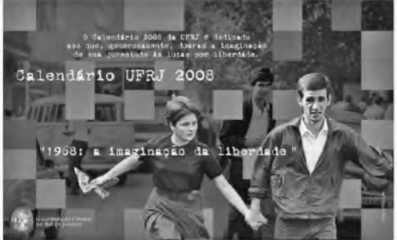
(1) Neste ano de (2) MEMÓRIA e VERDADE na UFRJ, vale lembrar o calendário de 2008 da universidade com o qual a instituição (3) rememorou, passados 40 anos, os (4) marcantes acontecimentos de 1968 – na comunidade acadêmica, no país e no mundo – e fez o seu tributo “aos que, (5) generosamente, doaram a imaginação de sua juventude às lutas por liberdade.”
Enunciado 1490177-1
Quanto à sua classe gramatical, as palavras numeradas e sublinhadas no texto são, respectivamente:
Questão Anulada

Provas

Questão presente nas seguintes provas
Concebido para valorizar a função pública e atrair competências para a administração, o instituto da pensão vem sofrendo o questionamento crescente de setores da sociedade. Tudo agravado, registre-se, pelas efetivas deficiências de parte dos serviços prestados pelo Estado, mas também pela desacreditação deliberada e sistemática do público e da política.
Enunciado 1490268-1
Assinale, adiante, a afirmação INCORRETA quanto ao estabelecido no Título VI da Lei Federal n° 8.112, de 1990, sobre a pensão.
Questão Anulada e Desatualizada

Provas

Questão presente nas seguintes provas