Magna Concursos

Foram encontradas 60 questões.

O texto adiante é integrado de partes do artigo de Maurício Dias, publicado em 26 de abril de 2014, no Portal da revista Carta Capital.

“A difamação da política afeta o eleitor

As pesquisas mostram que, fosse hoje o pleito, 62% dos eleitores não votariam em ninguém

(...) não há até agora e, talvez nem haja até o dia da eleição, novidade maior do que o refluxo de eleitores apontado nas pesquisas eleitorais recentes. A soma dos porcentuais de votos brancos e nulos, de rejeição e daqueles que não quiseram ou não souberam responder, está próxima dos 40%. É um porcentual inédito e expressa, aproximadamente, quase 50 milhões de um total de 140 milhões de eleitores brasileiros.

Há dados conjunturais diversos dando vida a esse problema. Alguns são antigos e outros, mais modernos, como é o caso da demonização dos políticos.

(...) O ataque aos políticos, resumidamente, tem sido sempre, até agora, uma tentativa de desestabilizar a base governista. É preciso dizer com franqueza, porém, que os políticos contribuem para tanto.

(...) O descrédito facilitou a ingerência de uma questão chamada judicialização da política, que, por sinal, perturba o processo democrático ao longo do mundo.(...)”

Dos dispositivos da Lei Federal n° 8.112, de 1990, relacionados nas alternativas adiante, assinale aquele que, ao contrário do quadro apresentado no texto, indica uma valorização da participação política.


Provas

Questão presente nas seguintes provas

O texto que segue apresenta trechos selecionados do artigo publicado pelo professor da UFRJ, e diretor do Instituto Alberto Luiz Coimbra de Pós-Graduação e Pesquisa de Engenharia - (COPPE) da Universidade, Luiz Pinguelli Rosa.

“Um almoço para Einstein
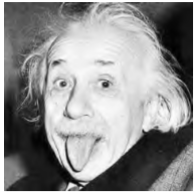
Enunciado 582474-1

Fonte: www.rottentomatoes.com

(...) Infelizmente, para a mentalidade conservadora e juridicista que entrava o serviço público, tudo o que moderniza a gestão do Estado é inimigo, até mesmo as fundações de apoio, criadas por lei com esse propósito. Por sua vez, tudo o que segue o caminho mais complicado e demorado é amigo: (...) São muitas as proibições que estimulam o imobilismo e a indolência, pois qualquer iniciativa acadêmica pode violar algo. (...) O deputado Chico Alencar contou 3,7 milhões de leis “no país da cultura bacharelesca”. Uma denúncia anônima mentirosa - disparada como um míssil por um inimigo pessoal - pode levar um colega sério a ser alvo de perseguição kafkiana. (...) Em 1925, Einstein esteve na UFRJ: na Escola Politécnica e no Museu Nacional, fundados por Dom João VI. (...)Oferecer um almoço na visita de Einstein à universidade hoje poderia ser considerado um ato ilícito,(...)”.

Até que se promova a já necessária atualização do Regime Jurídico dos Servidores Públicos Civis da União, das Autarquias e das Fundações Públicas Federais, deve ser permanente o esforço para fazer valer o DNA democrático da lei que o instituiu, herdado da Constituição Federal, promulgada em 1988.

Assinale, adiante, a alternativa em que figura dispositivo da Lei Federal n° 8.112/1990 que assegura ao servidor público garantia contra eventuais arbitrariedades de agentes do Estado.


Provas

Questão presente nas seguintes provas
Leia, atentamente, o comentário e os textos a seguir e responda à questão adiante.
Enquanto nos TEXTOS I e III, em função de sua natureza poética, os termos Banana e bananeira, respectivamente, são repetidos, enfatizados; no TEXTO II, por sua característica de prosa, são utilizados vários recursos de coesão para evitar repetições e, assim, fazê-lo progredir, favorecendo o movimento e a compreensão do fluxo das informações escritas.
TEXTO I
Yes, nós temos bananas
Bananas pra dar e vender
Banana menina
Tem vitamina
Banana engorda e faz crescer
Versos de Yes, nós temos banana, marchinha de João de Barro e Alberto Ribeiro, gravada originalmente em 1937 por Almirante.
TEXTO II
1 O pesquisador Athayde Motta, que se dedica há quase vinte anos ao estudo de questões
2 raciais no Brasil, vê problemas na campanha que inundou as redes sociais do país.
3 Ele considera positivo o fato de jogadores de futebol responderem publicamente aos racistas
4 que os atacam em campo. Mas acha que o reforço da associação da figura da pessoa negra
5 com o animal macaco é ruim na luta pela igualdade racial.
6 “O perigo é você, querendo fazer o oposto, reforçar o estereótipo de que negros e macacos
7 são, de alguma maneira, similares”, afirma o pesquisador. “Essa associação não é a melhor.
8 O excesso de humor pode afetar o resultado da campanha, esvaziar a discussão.”; conclui
9 o estudioso.
Adaptado do texto Campanha Somos todos macacos pode reforçar racismo.
TEXTO III
bananeira, não sei
bananeira, sei lá
a bananeira, sei não
a maneira de ver
bananeira, não sei
bananeira, sei lá
a bananeira, sei não
isso é lá com você
será
no fundo do quintal
quintal do seu olhar
olhar do coração
Letra da música Bananeira, de Gilberto Gil e João Donato.
No que se refere ao texto II , é correto afirmar que a expressão O pesquisador Athayde Motta (linha 1) é retomada/substituída, entre outros, pelos seguintes recursos de coesão:
 

Provas

Questão presente nas seguintes provas
572827 Ano: 2014
Disciplina: Inglês (Língua Inglesa)
Banca: UFRJ
Orgão: UFRJ
Read text and answer question
Among the many pronouncements that have shaped our understanding of literary translation, perhaps none is more often echoed than John Dryden’s preface to his version of the Aeneid. “I have endeavoured to make Virgil speak such English,” asserted Dryden, “as he would himself have spoken, if he had been born in England, and in this present Age.” No doubt Dryden’s achievement is to have made many of his contemporaries believe that he had impersonated the Latin poet. But this is merely a poetic sleight of hand. Dryden’s Virgil abandons the unrhymed verse of the Latin poem for English couplets while cribbing lines from a previous translator, the poet Sir John Denham. A skeptic might well wonder why Virgil should come back as Dryden instead of an epic poet who lived in the same period and wrote his epic without rhyme: John Milton. Should we not expect an English Virgil to be more attracted to the grand style of Paradise Lost? […]
The most questionable effect of Dryden’s assertion, to my mind, is that it winds up collapsing the translator’s labor into the foreign author’s, giving us no way to understand (let alone judge) how the translator has performed the crucial role of cultural go-between. To read a translation as a translation, as a work in its own right, we need a more practical sense of what a translator does. I would describe it as an attempt to compensate for an irreparable loss by controlling an exorbitant gain.
The foreign language is the first thing to go, the very sound and order of the words, and along with them all the resonance and allusiveness that they carry for the native reader. Simultaneously, merely by choosing words from another language, the translator adds an entirely new set of resonances and allusions designed to imitate the foreign text while making it comprehensible to a culturally different reader. These additional meanings may occasionally result from an actual insertion for clarity. But they in fact inhere in every choice that the translator makes, even when the translation sticks closely to the foreign words and conforms to current dictionary definitions. The translator must somehow control the unavoidable release of meanings that work only in the translating language. Apart from threatening to derail the project of imitation, these meanings always risk transforming what is foreign into something too familiar or simply irrelevant. The loss in translation remains invisible to any reader who doesn’t undertake a careful comparison to the foreign text—i.e., most of us. The gain is everywhere apparent, although only if the reader looks.
(Excerpt. VENUTI, Lawrence. How to Read a Translation. Available at <http://www.wordswithoutborders.org/article. php?lab=HowTo>).
Translating language can be replaced by:
 

Provas

Questão presente nas seguintes provas
567379 Ano: 2014
Disciplina: Inglês (Língua Inglesa)
Banca: UFRJ
Orgão: UFRJ
Read text and answer question
I Stopping by Woods on a Snowy Evening
by Robert Frost
Whose woods these are I think I know.
His house is in the village though;
He will not see me stopping here
To watch his woods fill up with snow.
My little horse must think it queer
To stop without a farmhouse near
Between the woods and frozen lake
The darkest evening of the year.
He gives his harness bells a shake
To ask if there is some mistake.
The only other sound’s the sweep
Of easy wind and downy flake.
The woods are lovely, dark and deep,
But I have promises to keep,
And miles to go before I sleep,
And miles to go before I sleep.
One of the major difficulties in translating poetry lies in the difference between the length of some words in the original language and their equivalents in the language of the translation. So it is very important that the translator know how to count syllables. Bearing that in mind, choose the sequence containing only words that can be classified as disyllables.
 

Provas

Questão presente nas seguintes provas
552537 Ano: 2014
Disciplina: Inglês (Língua Inglesa)
Banca: UFRJ
Orgão: UFRJ
Read text and answer question
Among the many pronouncements that have shaped our understanding of literary translation, perhaps none is more often echoed than John Dryden’s preface to his version of the Aeneid. “I have endeavoured to make Virgil speak such English,” asserted Dryden, “as he would himself have spoken, if he had been born in England, and in this present Age.” No doubt Dryden’s achievement is to have made many of his contemporaries believe that he had impersonated the Latin poet. But this is merely a poetic sleight of hand. Dryden’s Virgil abandons the unrhymed verse of the Latin poem for English couplets while cribbing lines from a previous translator, the poet Sir John Denham. A skeptic might well wonder why Virgil should come back as Dryden instead of an epic poet who lived in the same period and wrote his epic without rhyme: John Milton. Should we not expect an English Virgil to be more attracted to the grand style of Paradise Lost? […]
The most questionable effect of Dryden’s assertion, to my mind, is that it winds up collapsing the translator’s labor into the foreign author’s, giving us no way to understand (let alone judge) how the translator has performed the crucial role of cultural go-between. To read a translation as a translation, as a work in its own right, we need a more practical sense of what a translator does. I would describe it as an attempt to compensate for an irreparable loss by controlling an exorbitant gain.
The foreign language is the first thing to go, the very sound and order of the words, and along with them all the resonance and allusiveness that they carry for the native reader. Simultaneously, merely by choosing words from another language, the translator adds an entirely new set of resonances and allusions designed to imitate the foreign text while making it comprehensible to a culturally different reader. These additional meanings may occasionally result from an actual insertion for clarity. But they in fact inhere in every choice that the translator makes, even when the translation sticks closely to the foreign words and conforms to current dictionary definitions. The translator must somehow control the unavoidable release of meanings that work only in the translating language. Apart from threatening to derail the project of imitation, these meanings always risk transforming what is foreign into something too familiar or simply irrelevant. The loss in translation remains invisible to any reader who doesn’t undertake a careful comparison to the foreign text—i.e., most of us. The gain is everywhere apparent, although only if the reader looks.
(Excerpt. VENUTI, Lawrence. How to Read a Translation. Available at <http://www.wordswithoutborders.org/article. php?lab=HowTo>).
Choose the best translation for “Apart from threatening to derail the project of imitation, these meanings always risk transforming what is foreign into something too familiar or simply irrelevant.” .
 

Provas

Questão presente nas seguintes provas
545570 Ano: 2014
Disciplina: Inglês (Língua Inglesa)
Banca: UFRJ
Orgão: UFRJ
Read text and answer question
September 3, 1939
House of Commons
These short remarks were delivered by Winston Churchill at the outbreak of World War II [...]
In this solemn hour it is a consolation to recall and to dwell upon our repeated efforts for peace. All have been ill-starred, but all have been faithful and sincere. This is of the highest moral value – and not only moral value, but practical value – at the present time, because the wholehearted concurrence of scores of millions of men and women, whose cooperation is indispensable and whose comradeship and brotherhood are indispensable, is the only foundation upon which the trial and tribulation of modern war can be endured and surmounted. This moral conviction alone affords that ever-fresh resilience which renews the strength and energy of people in long, doubtful and dark days. Outside, the storms of war may blow and the lands may be lashed with the fury of its gales, but in our own hearts this Sunday morning there is peace. Our hands may be active, but our consciences are at rest.
We must not underrate the gravity of the task which lies before us or the temerity of the ordeal, to which we shall not be found unequal. We must expect many disappointments, and many unpleasant surprises, but we may be sure that the task which we have freely accepted is one not beyond the compass and the strength of the British Empire and the French Republic. The Prime Minister said it was a sad day, and that is indeed true, but at the present time there is another note which may be present, and that is a feeling of thankfulness that, if these great trials were to come upon our Island, there is a generation of Britons here now ready to prove itself not unworthy of the days of yore and not unworthy of those great men, the fathers of our land, who laid the foundations of our laws and shaped the greatness of our country. This is not a question of fighting for Danzig or fighting for Poland. We are fighting to save the whole world from the pestilence of Nazi tyranny and in defense of all that is most sacred to man.
This is no war of domination or imperial aggrandizement or material gain; no war to shut any country out of its sunlight and means of progress. It is a war, viewed in its inherent quality, to establish, on impregnable rocks, the rights of the individual, and it is a war to establish and revive the stature of man. Perhaps it might seem a paradox that a war undertaken in the name of liberty and right should require, as a necessary part of its processes, the surrender for the time being of so many of the dearly valued liberties and rights. In these last few days the House of Commons has been voting dozens of Bills which hand over to the executive our most dearly valued traditional liberties. We are sure that these liberties will be in hands which will not abuse them, which will use them for no class or party interests, which will cherish and guard them, and we look forward to the day, surely and confidently we look forward to the day, when our liberties and rights will be restored to us, and when we shall be able to share them with the peoples to whom such blessings are unknown.
(Excerpt. CHURCHILL, Winston. “War Speech”. September 3, 1939. Available at <http://www. winstonchurchill.org/learn/speeches/speeches-ofwinston-churchill/127-war-speech>).
In his speech (first paragraph), Churchill highlights that:
 

Provas

Questão presente nas seguintes provas
Leia, atentamente, o comentário e os textos a seguir e responda à questão adiante.
Enquanto nos TEXTOS I e III, em função de sua natureza poética, os termos Banana e bananeira, respectivamente, são repetidos, enfatizados; no TEXTO II, por sua característica de prosa, são utilizados vários recursos de coesão para evitar repetições e, assim, fazê-lo progredir, favorecendo o movimento e a compreensão do fluxo das informações escritas.
TEXTO I
Yes, nós temos bananas
Bananas pra dar e vender
Banana menina
Tem vitamina
Banana engorda e faz crescer
Versos de Yes, nós temos banana, marchinha de João de Barro e Alberto Ribeiro, gravada originalmente em 1937 por Almirante.
TEXTO II
1 O pesquisador Athayde Motta, que se dedica há quase vinte anos ao estudo de questões
2 raciais no Brasil, vê problemas na campanha que inundou as redes sociais do país.
3 Ele considera positivo o fato de jogadores de futebol responderem publicamente aos racistas
4 que os atacam em campo. Mas acha que o reforço da associação da figura da pessoa negra
5 com o animal macaco é ruim na luta pela igualdade racial.
6 “O perigo é você, querendo fazer o oposto, reforçar o estereótipo de que negros e macacos
7 são, de alguma maneira, similares”, afirma o pesquisador. “Essa associação não é a melhor.
8 O excesso de humor pode afetar o resultado da campanha, esvaziar a discussão.”; conclui
9 o estudioso.
Adaptado do texto Campanha Somos todos macacos pode reforçar racismo.
TEXTO III
bananeira, não sei
bananeira, sei lá
a bananeira, sei não
a maneira de ver
bananeira, não sei
bananeira, sei lá
a bananeira, sei não
isso é lá com você
será
no fundo do quintal
quintal do seu olhar
olhar do coração
Letra da música Bananeira, de Gilberto Gil e João Donato.
Quanto às repetições dos textos I e III, comentadas, é correto afirmar que correspondem à Figura de Linguagem denominada:
 

Provas

Questão presente nas seguintes provas
543458 Ano: 2014
Disciplina: Inglês (Língua Inglesa)
Banca: UFRJ
Orgão: UFRJ
Read text and answer question
I Stopping by Woods on a Snowy Evening
by Robert Frost
Whose woods these are I think I know.
His house is in the village though;
He will not see me stopping here
To watch his woods fill up with snow.
My little horse must think it queer
To stop without a farmhouse near
Between the woods and frozen lake
The darkest evening of the year.
He gives his harness bells a shake
To ask if there is some mistake.
The only other sound’s the sweep
Of easy wind and downy flake.
The woods are lovely, dark and deep,
But I have promises to keep,
And miles to go before I sleep,
And miles to go before I sleep.
If in the 10th stanza expresses
 

Provas

Questão presente nas seguintes provas
543451 Ano: 2014
Disciplina: Inglês (Língua Inglesa)
Banca: UFRJ
Orgão: UFRJ
Read text and answer question
Among the many pronouncements that have shaped our understanding of literary translation, perhaps none is more often echoed than John Dryden’s preface to his version of the Aeneid. “I have endeavoured to make Virgil speak such English,” asserted Dryden, “as he would himself have spoken, if he had been born in England, and in this present Age.” No doubt Dryden’s achievement is to have made many of his contemporaries believe that he had impersonated the Latin poet. But this is merely a poetic sleight of hand. Dryden’s Virgil abandons the unrhymed verse of the Latin poem for English couplets while cribbing lines from a previous translator, the poet Sir John Denham. A skeptic might well wonder why Virgil should come back as Dryden instead of an epic poet who lived in the same period and wrote his epic without rhyme: John Milton. Should we not expect an English Virgil to be more attracted to the grand style of Paradise Lost? […]
The most questionable effect of Dryden’s assertion, to my mind, is that it winds up collapsing the translator’s labor into the foreign author’s, giving us no way to understand (let alone judge) how the translator has performed the crucial role of cultural go-between. To read a translation as a translation, as a work in its own right, we need a more practical sense of what a translator does. I would describe it as an attempt to compensate for an irreparable loss by controlling an exorbitant gain.
The foreign language is the first thing to go, the very sound and order of the words, and along with them all the resonance and allusiveness that they carry for the native reader. Simultaneously, merely by choosing words from another language, the translator adds an entirely new set of resonances and allusions designed to imitate the foreign text while making it comprehensible to a culturally different reader. These additional meanings may occasionally result from an actual insertion for clarity. But they in fact inhere in every choice that the translator makes, even when the translation sticks closely to the foreign words and conforms to current dictionary definitions. The translator must somehow control the unavoidable release of meanings that work only in the translating language. Apart from threatening to derail the project of imitation, these meanings always risk transforming what is foreign into something too familiar or simply irrelevant. The loss in translation remains invisible to any reader who doesn’t undertake a careful comparison to the foreign text—i.e., most of us. The gain is everywhere apparent, although only if the reader looks.
(Excerpt. VENUTI, Lawrence. How to Read a Translation. Available at <http://www.wordswithoutborders.org/article. php?lab=HowTo>).
Based on the first paragraph, it is reasonable to affirm that Dryden’s poetic achievement in translating the Latin poet is evaluated by Venuti as a:
 

Provas

Questão presente nas seguintes provas