Foram encontradas 385 questões.
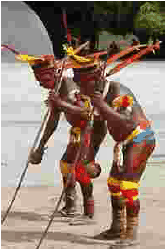
There are approximately 200 Indian societies living in Brazil; 200 cultures with distinct languages, religions and social organizations. This represents one of the greatest cultural treasures in the world. This treasure, however, is under constant threat mainly due to conflicts over land and the advance of non-indians on Indian territories.
The material culture of the Indian people expresses to the other sectors of society their vision of the universe and, almost always, carries out a utilitarian function in the daily routine of the tribal community. But this vision has been influenced by a variety of pressures to which the Brazilian indians are submitted, for their land is coveted by the local non-indians due to its rich flora, fauna and under soil.
The influence of the non-indians of the region on the Indian people can be perceived in their artifacts. During the last few years, agents from FUNAI have verified a lower quality in the artifacts they produce. This process coincides with the advance of non-indians on their territory, which has provoked environmental changes and deprived the indians of the raw materials necessary for the production of their art. Besides this, the low investment in the areas of education, health and productive activities, has caused the indigenous societies to be susceptible to regional influences and dependent on benefits from the State.
Internet: <www.brazilsf.org> (with adaptations).
According to the text above, it can be said that
the material culture of the Indians almost always serves two purposes.
Provas

There are approximately 200 Indian societies living in Brazil; 200 cultures with distinct languages, religions and social organizations. This represents one of the greatest cultural treasures in the world. This treasure, however, is under constant threat mainly due to conflicts over land and the advance of non-indians on Indian territories.
The material culture of the Indian people expresses to the other sectors of society their vision of the universe and, almost always, carries out a utilitarian function in the daily routine of the tribal community. But this vision has been influenced by a variety of pressures to which the Brazilian indians are submitted, for their land is coveted by the local non-indians due to its rich flora, fauna and under soil.
The influence of the non-indians of the region on the Indian people can be perceived in their artifacts. During the last few years, agents from FUNAI have verified a lower quality in the artifacts they produce. This process coincides with the advance of non-indians on their territory, which has provoked environmental changes and deprived the indians of the raw materials necessary for the production of their art. Besides this, the low investment in the areas of education, health and productive activities, has caused the indigenous societies to be susceptible to regional influences and dependent on benefits from the State.
Internet: <www.brazilsf.org> (with adaptations).
According to the text above, it can be said that
Indian societies in Brazil are very homogeneous.
Provas
The great commerce of every civilized society is that carried on between the inhabitants of the town and those of the country. It consists in the exchange of rude for manufactured produce, either immediately, or by the intervention of money, or of some sort of paper which represents money. The country supplies the town with the means of subsistence and the materials of manufacture. The town repays this supply by sending back a part of the manufactured produce to the inhabitants of the country. The town in which there neither is nor can be any reproduction of substances may very properly be said to gain its whole wealth and subsistence from the country. We must not, however, upon this account, imagine that the gain of the town is the loss of the country. The gains of both are mutual and reciprocal, and the division of labor is in this, as in all other cases, advantageous to all the different persons employed in the various occupations into which it is subdivided. The inhabitants of the country purchase of the town a greater quantity of manufactured goods, with the produce of a much smaller quantity of their own labor, than they must have employed had they attempted to prepare them themselves.
Internet: <socserv.mcmaster.ca> (with adaptations).
In the text,
the phrase “had they attempted” can be correctly replaced by if they had attempted.
Provas
The great commerce of every civilized society is that carried on between the inhabitants of the town and those of the country. It consists in the exchange of rude for manufactured produce, either immediately, or by the intervention of money, or of some sort of paper which represents money. The country supplies the town with the means of subsistence and the materials of manufacture. The town repays this supply by sending back a part of the manufactured produce to the inhabitants of the country. The town in which there neither is nor can be any reproduction of substances may very properly be said to gain its whole wealth and subsistence from the country. We must not, however, upon this account, imagine that the gain of the town is the loss of the country. The gains of both are mutual and reciprocal, and the division of labor is in this, as in all other cases, advantageous to all the different persons employed in the various occupations into which it is subdivided. The inhabitants of the country purchase of the town a greater quantity of manufactured goods, with the produce of a much smaller quantity of their own labor, than they must have employed had they attempted to prepare them themselves.
Internet: <socserv.mcmaster.ca> (with adaptations).
In the text,
“its” can be correctly replaced by it is.
Provas
The great commerce of every civilized society is that carried on between the inhabitants of the town and those of the country. It consists in the exchange of rude for manufactured produce, either immediately, or by the intervention of money, or of some sort of paper which represents money. The country supplies the town with the means of subsistence and the materials of manufacture. The town repays this supply by sending back a part of the manufactured produce to the inhabitants of the country. The town in which there neither is nor can be any reproduction of substances may very properly be said to gain its whole wealth and subsistence from the country. We must not, however, upon this account, imagine that the gain of the town is the loss of the country. The gains of both are mutual and reciprocal, and the division of labor is in this, as in all other cases, advantageous to all the different persons employed in the various occupations into which it is subdivided. The inhabitants of the country purchase of the town a greater quantity of manufactured goods, with the produce of a much smaller quantity of their own labor, than they must have employed had they attempted to prepare them themselves.
Internet: <socserv.mcmaster.ca> (with adaptations).
Based on the text, judge the item below.
The gain of the town is at the expense of the country people.
Provas
The great commerce of every civilized society is that carried on between the inhabitants of the town and those of the country. It consists in the exchange of rude for manufactured produce, either immediately, or by the intervention of money, or of some sort of paper which represents money. The country supplies the town with the means of subsistence and the materials of manufacture. The town repays this supply by sending back a part of the manufactured produce to the inhabitants of the country. The town in which there neither is nor can be any reproduction of substances may very properly be said to gain its whole wealth and subsistence from the country. We must not, however, upon this account, imagine that the gain of the town is the loss of the country. The gains of both are mutual and reciprocal, and the division of labor is in this, as in all other cases, advantageous to all the different persons employed in the various occupations into which it is subdivided. The inhabitants of the country purchase of the town a greater quantity of manufactured goods, with the produce of a much smaller quantity of their own labor, than they must have employed had they attempted to prepare them themselves.
Internet: <socserv.mcmaster.ca> (with adaptations).
Based on the text, judge the item below.
Trading cotton for textiles illustrates the ideas in the text.
Provas
The great commerce of every civilized society is that carried on between the inhabitants of the town and those of the country. It consists in the exchange of rude for manufactured produce, either immediately, or by the intervention of money, or of some sort of paper which represents money. The country supplies the town with the means of subsistence and the materials of manufacture. The town repays this supply by sending back a part of the manufactured produce to the inhabitants of the country. The town in which there neither is nor can be any reproduction of substances may very properly be said to gain its whole wealth and subsistence from the country. We must not, however, upon this account, imagine that the gain of the town is the loss of the country. The gains of both are mutual and reciprocal, and the division of labor is in this, as in all other cases, advantageous to all the different persons employed in the various occupations into which it is subdivided. The inhabitants of the country purchase of the town a greater quantity of manufactured goods, with the produce of a much smaller quantity of their own labor, than they must have employed had they attempted to prepare them themselves.
Internet: <socserv.mcmaster.ca> (with adaptations).
Based on the text, judge the item below.
The rural population can benefit from industrialized commodities with less work than if they had to produce them themselves.
Provas
The great commerce of every civilized society is that carried on between the inhabitants of the town and those of the country. It consists in the exchange of rude for manufactured produce, either immediately, or by the intervention of money, or of some sort of paper which represents money. The country supplies the town with the means of subsistence and the materials of manufacture. The town repays this supply by sending back a part of the manufactured produce to the inhabitants of the country. The town in which there neither is nor can be any reproduction of substances may very properly be said to gain its whole wealth and subsistence from the country. We must not, however, upon this account, imagine that the gain of the town is the loss of the country. The gains of both are mutual and reciprocal, and the division of labor is in this, as in all other cases, advantageous to all the different persons employed in the various occupations into which it is subdivided. The inhabitants of the country purchase of the town a greater quantity of manufactured goods, with the produce of a much smaller quantity of their own labor, than they must have employed had they attempted to prepare them themselves.
Internet: <socserv.mcmaster.ca> (with adaptations).
Based on the text, judge the item below.
The more the town earns, the more the country loses.
Provas
The great commerce of every civilized society is that carried on between the inhabitants of the town and those of the country. It consists in the exchange of rude for manufactured produce, either immediately, or by the intervention of money, or of some sort of paper which represents money. The country supplies the town with the means of subsistence and the materials of manufacture. The town repays this supply by sending back a part of the manufactured produce to the inhabitants of the country. The town in which there neither is nor can be any reproduction of substances may very properly be said to gain its whole wealth and subsistence from the country. We must not, however, upon this account, imagine that the gain of the town is the loss of the country. The gains of both are mutual and reciprocal, and the division of labor is in this, as in all other cases, advantageous to all the different persons employed in the various occupations into which it is subdivided. The inhabitants of the country purchase of the town a greater quantity of manufactured goods, with the produce of a much smaller quantity of their own labor, than they must have employed had they attempted to prepare them themselves.
Internet: <socserv.mcmaster.ca> (with adaptations).
Based on the text, judge the item below.
Money is indispensable as a means of payment between the city and the country.
Provas
The great commerce of every civilized society is that carried on between the inhabitants of the town and those of the country. It consists in the exchange of rude for manufactured produce, either immediately, or by the intervention of money, or of some sort of paper which represents money. The country supplies the town with the means of subsistence and the materials of manufacture. The town repays this supply by sending back a part of the manufactured produce to the inhabitants of the country. The town in which there neither is nor can be any reproduction of substances may very properly be said to gain its whole wealth and subsistence from the country. We must not, however, upon this account, imagine that the gain of the town is the loss of the country. The gains of both are mutual and reciprocal, and the division of labor is in this, as in all other cases, advantageous to all the different persons employed in the various occupations into which it is subdivided. The inhabitants of the country purchase of the town a greater quantity of manufactured goods, with the produce of a much smaller quantity of their own labor, than they must have employed had they attempted to prepare them themselves.
Internet: <socserv.mcmaster.ca> (with adaptations).
Based on the text, judge the item below.
The country is responsible for the raw material whereas the cities remain in charge of producing industrialized objects.
Provas
Caderno Container