Foram encontradas 60 questões.
Na hipótese de criação de uma nova Unidade da USP, ao
elaborar o Regimento Interno, são propostas 3 comissões.
Assinale a alternativa que apresenta as comissões possíveis
nos termos do Estatuto da USP.
Provas
Questão presente nas seguintes provas

Segundo as normas da USP, os docentes que assumem
funções de Direção e que, por isso, ficam desobrigados de
suas atividades docentes, são, além do Reitor,
Provas
Questão presente nas seguintes provas
“É claro que durante esses anos nós deixamos de ser colônia
para constituir o Estado brasileiro e entramos no século XXI,
quando a maior parte das previsões apostava que as
populações indígenas não sobreviveriam à ocupação do
território, pelo menos não mantendo formas próprias de
organização, capazes de gerir suas vidas. Isso porque a
máquina estatal atua para desfazer as formas de organização
das nossas sociedades, buscando uma integração entre
essas populações e o conjunto da sociedade brasileira”.
Ailton Krenak. Ideias para adiar o fim do mundo.
O trecho apresentado está inserido num contexto em que o autor critica a
Ailton Krenak. Ideias para adiar o fim do mundo.
O trecho apresentado está inserido num contexto em que o autor critica a
Provas
Questão presente nas seguintes provas
“Pouco tempo depois de publicar meu primeiro romance, fui a
uma emissora de TV em Lagos [na Nigéria] para uma
entrevista. Uma mulher que trabalhava lá me abordou e disse:
‘Gostei muito do seu romance, mas não gostei do fim. Você
precisa escrever uma continuação, e é isso que vai
acontecer...’ – então começou a me dizer o que escrever”.
Chimamanda Ngozi Adichie. O perigo de uma história única.
O trecho apresentado está inserido num contexto em que a autora
Chimamanda Ngozi Adichie. O perigo de uma história única.
O trecho apresentado está inserido num contexto em que a autora
Provas
Questão presente nas seguintes provas
Observe a charge a seguir:
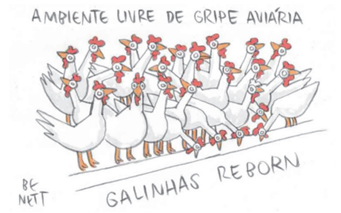
Folha de São Paulo, 20.05.2025.
Assinale a alternativa que melhor descreve o sentido da charge em face de recentes circunstâncias vivenciadas na sociedade brasileira.
Folha de São Paulo, 20.05.2025.
Assinale a alternativa que melhor descreve o sentido da charge em face de recentes circunstâncias vivenciadas na sociedade brasileira.
Provas
Questão presente nas seguintes provas
Thirty-six is the new 60
A recent Finnish study, published in the Annals of
Medicine, has drawn attention to the detrimental effects of
unhealthy habits, revealing that heavy drinking, smoking, and
lack of exercise are associated with declines in health in
individuals as young as 36. This research tracked the health of
children born in Jyväskylä, Finland, from 1959 onwards,
indicating that these habits can cause cumulative damage to
physical and mental health. While acknowledging the study's
limitations, including its focus on a specific demographic and
the exclusion of dietary factors, the core message emphasizes
the importance of early intervention to address risky health
behaviors. This prompts a broader reflection on personal
health practices and the seeming paradox of facing agerelated health concerns at an age that once felt youthful.
This reflection is juxtaposed with the observation of a
rising health consciousness among younger generations,
particularly Gen Z, who are demonstrating a decline in
traditional vices like smoking and embracing unique wellness
trends often popularized through social media. It's considered
whether this increased focus on hygiene and health is partly a
consequence of pandemic culture, and questions arise about
the implications for older individuals who may not have
adopted these evolving health priorities. The conflicting
messages surrounding healthy living contribute to uncertainty
about the most effective path forward.
The conflicting information is particularly evident in
discussions around alcohol consumption. While NHS guidance
offers clear benefits for quitting smoking, such as reduced
risks of heart attack and lung cancer, advice on alcohol is less
definitive. A study in the Canadian Journal of Cardiology even
suggests potential cardioprotective effects from white wine,
champagne, and fruit, especially for individuals who are
wealthy, well-educated, and active. This paradox adds to the
uncertainty of navigating health recommendations and lifestyle
choices.
Ultimately, many find themselves at a crossroads,
weighing the potential risks and benefits of various lifestyle
decisions and grappling with the complexities of conflicting
health information. Nuanced perspectives on habits like
alcohol consumption, which challenge traditional assumptions,
further complicate the decision-making process. The ongoing
debate underscores the broader challenge of making informed
health decisions in an environment of evolving scientific
understanding and contradictory advice.
Financial Times, May 3rd, 2025 (adaptado)
Provas
Questão presente nas seguintes provas
Thirty-six is the new 60
A recent Finnish study, published in the Annals of
Medicine, has drawn attention to the detrimental effects of
unhealthy habits, revealing that heavy drinking, smoking, and
lack of exercise are associated with declines in health in
individuals as young as 36. This research tracked the health of
children born in Jyväskylä, Finland, from 1959 onwards,
indicating that these habits can cause cumulative damage to
physical and mental health. While acknowledging the study's
limitations, including its focus on a specific demographic and
the exclusion of dietary factors, the core message emphasizes
the importance of early intervention to address risky health
behaviors. This prompts a broader reflection on personal
health practices and the seeming paradox of facing agerelated health concerns at an age that once felt youthful.
This reflection is juxtaposed with the observation of a
rising health consciousness among younger generations,
particularly Gen Z, who are demonstrating a decline in
traditional vices like smoking and embracing unique wellness
trends often popularized through social media. It's considered
whether this increased focus on hygiene and health is partly a
consequence of pandemic culture, and questions arise about
the implications for older individuals who may not have
adopted these evolving health priorities. The conflicting
messages surrounding healthy living contribute to uncertainty
about the most effective path forward.
The conflicting information is particularly evident in
discussions around alcohol consumption. While NHS guidance
offers clear benefits for quitting smoking, such as reduced
risks of heart attack and lung cancer, advice on alcohol is less
definitive. A study in the Canadian Journal of Cardiology even
suggests potential cardioprotective effects from white wine,
champagne, and fruit, especially for individuals who are
wealthy, well-educated, and active. This paradox adds to the
uncertainty of navigating health recommendations and lifestyle
choices.
Ultimately, many find themselves at a crossroads,
weighing the potential risks and benefits of various lifestyle
decisions and grappling with the complexities of conflicting
health information. Nuanced perspectives on habits like
alcohol consumption, which challenge traditional assumptions,
further complicate the decision-making process. The ongoing
debate underscores the broader challenge of making informed
health decisions in an environment of evolving scientific
understanding and contradictory advice.
Financial Times, May 3rd, 2025 (adaptado)
Em relação ao texto e com base no trecho apresentado, qual é a principal preocupação destacada pelo estudo finlandês?
Provas
Questão presente nas seguintes provas
Extraterrestrial tongues
The challenge of imagining alien communication is
highlighted in the film Arrival (2016), where linguists confront a
language strikingly different from any on Earth. While fictional
alien languages like Klingon (Star Trek) often resemble human
languages with variations in sound or syntax, the possibilities
for extraterrestrial tongues are far more diverse. To truly grasp
the potential for alien linguistic systems, we must consider the
fundamental components of language itself: signs, structure,
semantics, and pragmatics.
The first level, signs, encompasses the means of
expression, which could extend beyond spoken words and
written symbols to include gestures, smells (as in animal
communication), or even electrical impulses. Structure, the
second level, involves the organization of language, including
grammar and syntax. While we might initially assume alien
languages would share structural similarities with our own, they
could radically differ, potentially lacking familiar elements like
nouns or verbs, or employing entirely novel grammatical
categories, perhaps akin to the way maps convey information.
Semantics, the third level, deals with meaning. Here, the
problem of untranslatability arises. While some differences in
meaning between human languages exist (e.g., the German
word "Fernweh"), alien languages might present more
fundamental challenges. If aliens perceive and categorize the
world in fundamentally different ways, their language might
express concepts we struggle to even grasp.
Despite these obstacles, communication may still be
possible. Shared needs, such as describing the world or giving
commands, could provide a basis for finding points of
connection between alien and human languages. Pragmatics,
the fourth level, concerns how language is used in context,
including metaphors and social conventions. Differences at
this level, particularly when combined with semantic
differences, as illustrated by the Tamarian language in Star
Trek: The Next Generation, can further complicate
understanding.
Ultimately, contemplating the possibilities of alien
communication pushes us to expand our understanding of
language itself. It encourages us to move beyond our
"anthropocentric bubble" and consider that alien languages
might possess levels or structures we haven't yet imagined,
potentially transforming our perspectives on consciousness,
intelligence, and what it means to communicate.
Aeon, April 9th, 2025,(Adaptado)
Em relação ao texto apresentado, qual das seguintes reestruturações desse trecho mantém o sentido original, manifesta ênfase semelhante e é gramaticalmente correta?
Provas
Questão presente nas seguintes provas
Extraterrestrial tongues
The challenge of imagining alien communication is
highlighted in the film Arrival (2016), where linguists confront a
language strikingly different from any on Earth. While fictional
alien languages like Klingon (Star Trek) often resemble human
languages with variations in sound or syntax, the possibilities
for extraterrestrial tongues are far more diverse. To truly grasp
the potential for alien linguistic systems, we must consider the
fundamental components of language itself: signs, structure,
semantics, and pragmatics.
The first level, signs, encompasses the means of
expression, which could extend beyond spoken words and
written symbols to include gestures, smells (as in animal
communication), or even electrical impulses. Structure, the
second level, involves the organization of language, including
grammar and syntax. While we might initially assume alien
languages would share structural similarities with our own, they
could radically differ, potentially lacking familiar elements like
nouns or verbs, or employing entirely novel grammatical
categories, perhaps akin to the way maps convey information.
Semantics, the third level, deals with meaning. Here, the
problem of untranslatability arises. While some differences in
meaning between human languages exist (e.g., the German
word "Fernweh"), alien languages might present more
fundamental challenges. If aliens perceive and categorize the
world in fundamentally different ways, their language might
express concepts we struggle to even grasp.
Despite these obstacles, communication may still be
possible. Shared needs, such as describing the world or giving
commands, could provide a basis for finding points of
connection between alien and human languages. Pragmatics,
the fourth level, concerns how language is used in context,
including metaphors and social conventions. Differences at
this level, particularly when combined with semantic
differences, as illustrated by the Tamarian language in Star
Trek: The Next Generation, can further complicate
understanding.
Ultimately, contemplating the possibilities of alien
communication pushes us to expand our understanding of
language itself. It encourages us to move beyond our
"anthropocentric bubble" and consider that alien languages
might possess levels or structures we haven't yet imagined,
potentially transforming our perspectives on consciousness,
intelligence, and what it means to communicate.
Aeon, April 9th, 2025,(Adaptado)
Provas
Questão presente nas seguintes provas
Extraterrestrial tongues
The challenge of imagining alien communication is
highlighted in the film Arrival (2016), where linguists confront a
language strikingly different from any on Earth. While fictional
alien languages like Klingon (Star Trek) often resemble human
languages with variations in sound or syntax, the possibilities
for extraterrestrial tongues are far more diverse. To truly grasp
the potential for alien linguistic systems, we must consider the
fundamental components of language itself: signs, structure,
semantics, and pragmatics.
The first level, signs, encompasses the means of
expression, which could extend beyond spoken words and
written symbols to include gestures, smells (as in animal
communication), or even electrical impulses. Structure, the
second level, involves the organization of language, including
grammar and syntax. While we might initially assume alien
languages would share structural similarities with our own, they
could radically differ, potentially lacking familiar elements like
nouns or verbs, or employing entirely novel grammatical
categories, perhaps akin to the way maps convey information.
Semantics, the third level, deals with meaning. Here, the
problem of untranslatability arises. While some differences in
meaning between human languages exist (e.g., the German
word "Fernweh"), alien languages might present more
fundamental challenges. If aliens perceive and categorize the
world in fundamentally different ways, their language might
express concepts we struggle to even grasp.
Despite these obstacles, communication may still be
possible. Shared needs, such as describing the world or giving
commands, could provide a basis for finding points of
connection between alien and human languages. Pragmatics,
the fourth level, concerns how language is used in context,
including metaphors and social conventions. Differences at
this level, particularly when combined with semantic
differences, as illustrated by the Tamarian language in Star
Trek: The Next Generation, can further complicate
understanding.
Ultimately, contemplating the possibilities of alien
communication pushes us to expand our understanding of
language itself. It encourages us to move beyond our
"anthropocentric bubble" and consider that alien languages
might possess levels or structures we haven't yet imagined,
potentially transforming our perspectives on consciousness,
intelligence, and what it means to communicate.
Aeon, April 9th, 2025,(Adaptado)
Provas
Questão presente nas seguintes provas
Cadernos
Caderno Container