Foram encontradas 225 questões.
Para garantir a qualidade no atendimento pessoal, é importante o(a)
Provas
Questão presente nas seguintes provas

Movimentação de Cargas no Porto Organizado de Santana
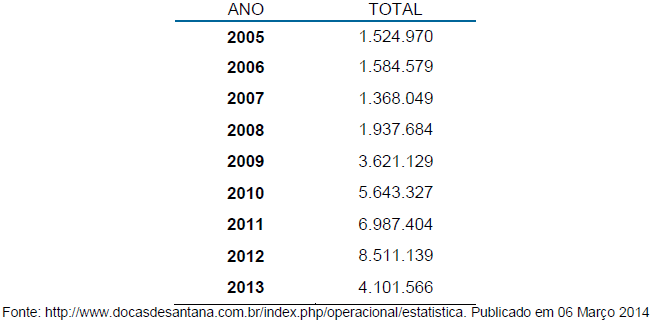
Comparando o gráfico abaixo com os dados da tabela apresentada,
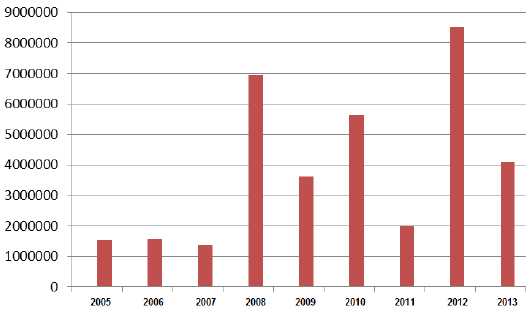
pode-se afirmar que são
Provas
Questão presente nas seguintes provas
Is Breakfast Overrated?
By Gretchen Reynolds
August 21, 2014
For years, we’ve heard that breakfast is the most important meal of the day. But scientific support for that idea has been surprisingly meager, and a spate of new research at several different universities — published in multiple articles in the August issue of The American Journal of Clinical Nutrition — could change the way we think about early-hours eating.
The largest and most provocative of the studies focused on whether breakfast plays a role in weight loss. Researchers at the University of Alabama at Birmingham and other institutions recruited nearly 300 volunteers who were trying to lose weight. They randomly assigned subjects to either skip breakfast, always eat the meal or continue with their current dietary habits. (Each group contained people who habitually ate or skipped breakfast at the start, so some changed habits, and others did not.)
Sixteen weeks later, the volunteers returned to the lab to be weighed. No one had lost much, only a pound or so per person, with weight in all groups unaffected by whether someone ate breakfast or skipped it.
In another new study — this one of lean volunteers — researchers at the University of Bath determined the resting metabolic rates, cholesterol levels and blood-sugar profiles of 33 participants and randomly assigned them to eat or skip breakfast. Volunteers were then provided with activity monitors.
After six weeks, their body weights, resting metabolic rates, cholesterol and most measures of blood sugar were about the same as they had been at the start, whether people ate breakfast or not. The one difference was that the breakfast eaters seemed to move around more during the morning; their activity monitors showed that volunteers in this group burned almost 500 calories more in light-intensity movement. But by eating breakfast, they also consumed an additional 500 calories each day. Contrary to popular belief, skipping breakfast had not driven volunteers to wolf down enormous lunches and dinners — but it had made them somewhat more sluggish first thing in the morning.
Together, the new research suggests that in terms of weight loss, “breakfast may be just another meal,” said Emily Dhurandhar, the assistant professor at the University of Alabama at Birmingham who led the study there. Skipping breakfast in these studies, she said, did not fatten people.
Each study was fairly short-term, however, and involved a limited range of volunteers. More randomized experiments are needed before we can fully understand the impact of breakfast, said James Betts, the professor who led the study of lean people. It’s not yet clear, for instance, whether heavy people’s bodies respond differently to morning meals than lean people’s, or if the timing and makeup of breakfast matters.
For now, the slightly unsatisfying takeaway from the new science would seem to be that if you like breakfast, fine; but if not, don’t sweat it. “I almost never have breakfast,” Dr. Betts said. “That was part of my motivation for conducting this research, as everybody was always telling me off and saying I should know better.” Based on the results of these studies, he said his habits won’t change.
Neither will those of Dr. Dhurandhar, who enjoys a morning meal. But, she said, “I guess I won’t nag my husband to eat breakfast anymore.”
(http://well.blogs.nytimes.com/2014/08/21/is-breakfast-overrated/??src=dayp&action=click&pgtype=Homepage&module=ccolumn- above-moth-fixed-region®ion=c-column-above-moth-fixed-region&WT.nav=c-column-above-moth-fixed-region)
The popular belief referred to in the !$ 5^{th} !$ paragraph is that skipping breakfast makes people
Provas
Questão presente nas seguintes provas
- PODC: Processo OrganizacionalProcesso Administrativo: OrganizaçãoRelações entre Indivíduo e Organização
Nas relações pessoais travadas no ambiente de trabalho, é importante que o servidor
Provas
Questão presente nas seguintes provas
Is Breakfast Overrated?
By Gretchen Reynolds
August 21, 2014
For years, we’ve heard that breakfast is the most important meal of the day. But scientific support for that idea has been surprisingly meager, and a spate of new research at several different universities — published in multiple articles in the August issue of The American Journal of Clinical Nutrition — could change the way we think about early-hours eating.
The largest and most provocative of the studies focused on whether breakfast plays a role in weight loss. Researchers at the University of Alabama at Birmingham and other institutions recruited nearly 300 volunteers who were trying to lose weight. They randomly assigned subjects to either skip breakfast, always eat the meal or continue with their current dietary habits. (Each group contained people who habitually ate or skipped breakfast at the start, so some changed habits, and others did not.)
Sixteen weeks later, the volunteers returned to the lab to be weighed. No one had lost much, only a pound or so per person, with weight in all groups unaffected by whether someone ate breakfast or skipped it.
In another new study — this one of lean volunteers — researchers at the University of Bath determined the resting metabolic rates, cholesterol levels and blood-sugar profiles of 33 participants and randomly assigned them to eat or skip breakfast. Volunteers were then provided with activity monitors.
After six weeks, their body weights, resting metabolic rates, cholesterol and most measures of blood sugar were about the same as they had been at the start, whether people ate breakfast or not. The one difference was that the breakfast eaters seemed to move around more during the morning; their activity monitors showed that volunteers in this group burned almost 500 calories more in light-intensity movement. But by eating breakfast, they also consumed an additional 500 calories each day. Contrary to popular belief, skipping breakfast had not driven volunteers to wolf down enormous lunches and dinners — but it had made them somewhat more sluggish first thing in the morning.
Together, the new research suggests that in terms of weight loss, “breakfast may be just another meal,” said Emily Dhurandhar, the assistant professor at the University of Alabama at Birmingham who led the study there. Skipping breakfast in these studies, she said, did not fatten people.
Each study was fairly short-term, however, and involved a limited range of volunteers. More randomized experiments are needed before we can fully understand the impact of breakfast, said James Betts, the professor who led the study of lean people. It’s not yet clear, for instance, whether heavy people’s bodies respond differently to morning meals than lean people’s, or if the timing and makeup of breakfast matters.
For now, the slightly unsatisfying takeaway from the new science would seem to be that if you like breakfast, fine; but if not, don’t sweat it. “I almost never have breakfast,” Dr. Betts said. “That was part of my motivation for conducting this research, as everybody was always telling me off and saying I should know better.” Based on the results of these studies, he said his habits won’t change.
Neither will those of Dr. Dhurandhar, who enjoys a morning meal. But, she said, “I guess I won’t nag my husband to eat breakfast anymore.”
(http://well.blogs.nytimes.com/2014/08/21/is-breakfast-overrated/??src=dayp&action=click&pgtype=Homepage&module=ccolumn- above-moth-fixed-region®ion=c-column-above-moth-fixed-region&WT.nav=c-column-above-moth-fixed-region)
In the second study mentioned in the text, the volunteers who skipped breakfast
Provas
Questão presente nas seguintes provas
543432
Ano: 2014
Disciplina: TI - Organização e Arquitetura dos Computadores
Banca: FADESP
Orgão: CDSA
Disciplina: TI - Organização e Arquitetura dos Computadores
Banca: FADESP
Orgão: CDSA
Provas:
Os padrões de codificação de caracteres consistem em tabelas com grupos de bits que representam determinados caracteres. A codificação que utiliza seis bits para representar os caracteres, permitindo codificar 64 símbolos (letras maiúsculas e outros símbolos) é o
Provas
Questão presente nas seguintes provas
Um dos elementos informativos mais comumente tomados como referência para a ordenação de documentos é o
Provas
Questão presente nas seguintes provas
O serviço da Internet que consiste no índice afixado à internet de um dispositivo móvel, como, por exemplo, um telefone celular é o
Provas
Questão presente nas seguintes provas
536029
Ano: 2014
Disciplina: TI - Organização e Arquitetura dos Computadores
Banca: FADESP
Orgão: CDSA
Disciplina: TI - Organização e Arquitetura dos Computadores
Banca: FADESP
Orgão: CDSA
Provas:
Numa instalação de placa de rede, os recursos escolhidos automaticamente pelo sistema operacional, necessários ao funcionamento da Placa de rede são, exceto:
Provas
Questão presente nas seguintes provas
Um vírus de computador é um fragmento de programa que é unido a um programa legítimo com a intenção de infectar outros programas. A anatomia do vírus é constituída por duas partes, sendo uma delas, aquela denominada __________, responsável pela procura de novos arquivos que possam ser infectados.
- A palavra que preenche corretamente a lacuna acima é
Provas
Questão presente nas seguintes provas
Cadernos
Caderno Container