Foram encontradas 50 questões.
Um tubo de Pitot foi instalado na parte dianteira de um carro de F1 durante os testes do início da temporada para que fosse determinada a velocidade máxima de deslocamento do veículo.
O princípio de funcionamento do tubo de Pitot está mostrado na figura a seguir:
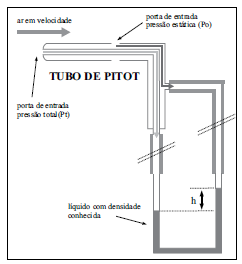
A pressão estática no local dos testes era 760 mm de Hg e a densidade do ar no dia dos testes era de 1,0 kg/m3, o desnível máximo registrado na coluna do manômetro diferencial utilizando um fluído manométrico com densidade de 8 000 kg/m3 foi de 25 mm.
Nessas condições, a velocidade máxima atingida pelo veículo foi
Dado: g = 10 m/s2
Provas

Um veículo possui 1 000 kg de massa, motor dianteiro e distribuição de massa de 55% no eixo dianteiro e 45% no eixo traseiro.
Se o entre-eixos deste veículo é de 2 750 mm em relação ao eixo dianteiro, qual a posição do seu centro de gravidade?
Provas
Os novos motores Diesel que atendem ao PROCONVE Fase 7 estão utilizando um tipo de diesel com baixo teor de enxofre, o S50, que apresenta a concentração máxima de enxofre de 50 ppm e o Arla32.
O Arla 32 é um componente que é adicionado aos gases de escape e tem a finalidade de
Provas
Em motores de combustão interna, a taxa de compressão é definida como sendo
Provas
De acordo com a norma-padrão da língua portuguesa, assinale a alternativa em que a concordância verbal e/ou nominal está corretamente empregada.
Provas
Provas
Provas
Leia o texto para responder a questão.
DIET DRINKS "LINK TO DEPRESSION" QUESTIONED
Experts are questioning whether diet drinks could raise depression risk, after a large study has found a link.
The US research in more than 250,000 people found depression was more common among frequent consumers of artificially sweetened beverages. The work, which will be presented at the American Academy of Neurology’s annual meeting, did not look at the cause for this link.
Drinking coffee was linked with a lower risk of depression.
People who drank four cups a day were 10% less likely to be diagnosed with depression during the 10-year study period than those who drank no coffee. But those who drank four cans or glasses of diet fizzy drinks or artificially sweetened juice a day increased their risk of depression by about a third. Lead researcher Dr Honglei Chen, of the National Institutes of Health in North Carolina, said: “Our research suggests that cutting out or down on sweetened diet drinks or replacing them with unsweetened coffee may naturally help lower your depression risk.”
But he said more studies were needed to explore this. There are many other factors that may be involved. And the findings – in people in their 50s, 60s, 70s and 80s and living in the US – might not apply to other populations. The safety of sweeteners, like aspartame, has been extensively tested by scientists and is assured by regulators.
Gaynor Bussell, of the British Dietetic Association, said: “Sweeteners used to be called ‘artificial’ sweeteners and unfortunately the term ‘artificial’ has evoked suspicion. As a result, sweeteners have been very widely tested and reviewed for safety and the ones on the market have an excellent safety track record. However, the studies on them continue and this one has thrown up a possibly link – not a cause and effect – with depression.”
(http://www.bbc.co.uk/news/health-20943509.09.01.2013. Adaptado)
Provas
Leia o texto para responder a questão.
DIET DRINKS "LINK TO DEPRESSION" QUESTIONED
Experts are questioning whether diet drinks could raise depression risk, after a large study has found a link.
The US research in more than 250,000 people found depression was more common among frequent consumers of artificially sweetened beverages. The work, which will be presented at the American Academy of Neurology’s annual meeting, did not look at the cause for this link.
Drinking coffee was linked with a lower risk of depression.
People who drank four cups a day were 10% less likely to be diagnosed with depression during the 10-year study period than those who drank no coffee. But those who drank four cans or glasses of diet fizzy drinks or artificially sweetened juice a day increased their risk of depression by about a third. Lead researcher Dr Honglei Chen, of the National Institutes of Health in North Carolina, said: “Our research suggests that cutting out or down on sweetened diet drinks or replacing them with unsweetened coffee may naturally help lower your depression risk.”
But he said more studies were needed to explore this. There are many other factors that may be involved. And the findings – in people in their 50s, 60s, 70s and 80s and living in the US – might not apply to other populations. The safety of sweeteners, like aspartame, has been extensively tested by scientists and is assured by regulators.
Gaynor Bussell, of the British Dietetic Association, said: “Sweeteners used to be called ‘artificial’ sweeteners and unfortunately the term ‘artificial’ has evoked suspicion. As a result, sweeteners have been very widely tested and reviewed for safety and the ones on the market have an excellent safety track record. However, the studies on them continue and this one has thrown up a possibly link – not a cause and effect – with depression.”
(http://www.bbc.co.uk/news/health-20943509.09.01.2013. Adaptado)
Provas
Para responder à questão, leia o texto.
US TO BUILD $120M RARE EARTH RESEARCH INSTITUTE
Provas
Caderno Container