Foram encontradas 100 questões.
Considere a equação !$ A(t)X=B(t),\,t∈\mathbb{R} !$, em que !$ A(t)= \begin{bmatrix} 2e^{-2t} & -e^{2t} & -1 \\ -1 & 1 & 1 \\ -3 &1 & 2 \end{bmatrix} !$, !$ X=\begin{bmatrix} & x &\\ & y \\ & z \end{bmatrix} !$ e !$ B(t)=\begin{bmatrix} & e^t &\\ & -\sqrt2 \\ & 0 \end{bmatrix} !$Sabendo que !$ det \,A(t)=1 !$ e !$ t ≠ 0 !$, os valores de !$ x,y !$ e !$ z !$ são, respectivaemente,
Provas
Questão presente nas seguintes provas

São feitas as seguintes afirmações sobre o que Joule demonstrou em seus experimentos do século XIX:
I. A relação entre calor e trabalho é fixa.
II. Existe um equivalente mecânico do calor.
III. O calor pode ser medido.
Das afirmações acima, está(ão) CORRETA(S) apenas
Provas
Questão presente nas seguintes provas
Um circuito elétrico com dois pares de terminais é conhecido como quadripolo. Para um quadripolo passivo, as tensões medidas em cada par de terminais podem ser expressas em função das correntes mediante uma matriz de impedância !$ \begin{bmatrix} z_{11} & z_{12} \\ z_{21} & z_{22} \end{bmatrix} !$, de tal forma que: !$ \begin{bmatrix} v_1 \\ v_2 \end{bmatrix} = Z \begin{bmatrix} i_1 \\ i_2 \end{bmatrix} !$ Dos quadripolos propostos nas alternativas seguintes, assinale aquele cuja matriz de impedância seja !$ \begin{bmatrix} 4Ω & 2Ω \\ 2Ω & 3 Ω \end{bmatrix} !$.
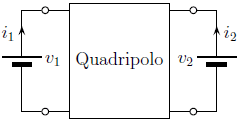
Provas
Questão presente nas seguintes provas
Assinale a opção que contém o número de oxidação do crômio no composto !$ [Cr(NH_3)_4Cℓ_2]^+ !$.
Provas
Questão presente nas seguintes provas
DISTANT PEAK CAR
Carmakers worry that one day demand for cars will stop rising. But that is a long way off.
IN 1924 FORD ran an advertisement headlined “His First Car”, urging fathers to buy their teenage sons their first set of wheels. The idea caught on. For boys, especially, learning to drive became an essential part of growing up. By the late 1970s 86% of American 18-year-olds—of both sexes—had a driving licence. But then the trend went into reverse: researchers at the University of Michigan found that in 2010 only 61% of 18-year-old Americans had licences. Other rich countries are going the same way. Teenagers are showing less interest in cars as they turn their attention to smartphones and social networking.
This is a worry for carmakers, who are wondering where their future customers are going to come from. In the two decades to 2008 the number of miles driven by Americans in their 20s fell by 8%. In Britain a study for the RAC Foundation, a transport-research body, found a 30% drop among men in the same age group between 1996 and 2006.
One reason for concern is that half the world’s population now lives in towns and cities, which have only so much space for cars. Even in rapidly growing car markets such as China, city governments in the more prosperous parts of the country are beginning to restrict new car registrations and invest heavily in public transport.
Young urban residents may also be meeting up less often in person, thanks to social-networking sites that let them keep in touch digitally. So they have less need for a car, and when they do need one they turn to car clubs, which offer rental by the hour in their neighbourhood, and to car-sharing schemes. In particular, the generation who came of age after 2000, the so-called “millennials”, express a preference for having access to rather than owning cars. But some of that may be just talk. In a survey by McKinsey, American millennials said they expected to use car clubs in the future, but when asked if owning a car would remain an important status symbol, they were much more likely to answer “yes” than older consumers.
Economic factors, too, work against car ownership. Sheryl Connelly, Ford’s “global trends and futuring” manager, notes that a few decades ago teenagers in America often got free driving lessons at school, but now they may have to pay up to $800 for them before they can sit their test. The cost of adding a young driver to the family’s car-insurance policy too has risen sharply, she says. In Britain the RAC Foundation study found that fewer young men are driving because their employers have cut back on providing company cars.
However, studies also show a marked rise in the proportion of elderly people with driving licences. Babyboomers pretty much all learned to drive, and now that they are beginning to retire they expect to continue motoring. The development of assisted driving, followed one day by fully automated cars, will allow them to stay mobile for much longer.
What may be happening in rich countries is a one-off shift in the timing of people’s driving careers, so that they start later but then continue well into old age. This may be no bad thing for carmakers. It has long been an open secret in the business that cars are advertised as being for the young but are bought mainly by the middle-aged with the necessary disposable income. In America the average Mercedes buyer is in his late 50s, and even the supposedly youth-oriented MINI Cooper is typically bought by people in their early 40s. The world’s biggest car markets—China, North America and Europe—are all greying.
So it is not clear that declining car ownership among young urbanites will have more than a marginal effect on overall car sales. Besides, argues Renault-Nissan’s Mr Ghosn, for most people “their car is more than an object.” For some it is an extension of their home, he says, and most people would rather not share their home. For others it is their pet, and who wants to share their pet?
All in all, “peak car”—the point at which worldwide demand for cars will stop rising—still seems quite a long way off. In the rich world some of the economic factors that have deterred young people from taking up driving will fade away: as cars become increasingly self-piloting and accident rates fall, insurance costs should decrease, and in time there will be little or no need to take expensive lessons.
The Economist, April 20th, 2013.
A expressão “this is a worry for carmakers” resgata o(a)
Provas
Questão presente nas seguintes provas
O poema abaixo é de Cecília Meireles:
Epigrama 8
Encostei-me em ti, sabendo bem que eras somente onda.
Sabendo bem que eras nuvem, depus minha vida em ti.
Como sabia bem tudo isso, e dei-me ao teu destino frágil,
fiquei sem poder chorar, quando caí.
É CORRETO afirmar que o texto
Provas
Questão presente nas seguintes provas
Considere dois satélites artificiais !$ S !$ e !$ T !$ em torno da Terra. !$ S !$ descreve uma órbita elíptica com semieixo maior !$ a !$, e !$ T !$, uma órbita circular de raio !$ a !$, com os respectivos vetores posição !$ \vec{r}_S !$ e !$ \vec{r}_T !$ com origem no centro da Terra. É correto afirmar que
Provas
Questão presente nas seguintes provas
Uma amostra !$ I !$ de átomos de !$ ^{57}Fe !$, cujos núcleos excitados emitem fótons devido a uma transição nuclear, está situada a uma altura !$ d !$ verticalmente acima de uma amostra !$ II !$ de !$ ^{57}Fe !$ que recebe a radiação emitida pela amostra !$ I !$. Ao chegar a !$ II !$, os fótons da amostra !$ I !$ sofrem um aumento de frequência devido à redução de sua energia potencial gravitacional, sendo, portanto, incapazes de excitar os núcleos de !$ ^{57}Fe !$ dessa amostra. No entanto, essa incapacidade pode ser anulada se a amostra !$ I !$ se afastar verticalmente da amostra !$ II !$ com uma velocidade !$ v !$ adequada. Considerando !$ v \ll c !$ e que a energia potencial gravitacional do fóton de energia !$ \varepsilon !$ pode ser obtida mediante sua “massa efetiva” !$ \varepsilon/c^2 !$, assinale a opção que explicita !$ v !$. Se necessário, utilize !$ (1 + x)^n \cong 1 + nx !$ para !$ x \ll 1 !$.
Provas
Questão presente nas seguintes provas
Considere um ímã cilíndrico vertical com o polo norte para cima, tendo um anel condutor posicionado acima do mesmo. Um agente externo imprime um movimento ao anel que, partindo do repouso, desce verticalmente em torno do ímã e atinge uma posição simétrica à original, iniciando, logo em seguida, um movimento ascendente e retornando à posição inicial em repouso. Considerando o eixo de simetria do anel sempre coincidente com o do ímã e sendo positiva a corrente no sentido anti-horário (visto por um observador de cima), o gráfico que melhor representa o comportamento da corrente induzida !$ i !$ no anel é
Provas
Questão presente nas seguintes provas
Considere as seguintes afirmações sobre as matrizes quadradas !$ A !$ e !$ B !$ de ordem !$ n !$, com !$ A !$ inversível e !$ B !$ antissimétrica:
I. Se o produto !$ AB !$ for inversível, então !$ n !$ é par;
II. Se o produto !$ AB !$ não for inversível, então !$ n !$ é ímpar;
III. Se !$ B !$ for inversível, então !$ n !$ é par.
Destas afirmações, é (são) verdadeira(s)
Provas
Questão presente nas seguintes provas
Cadernos
Caderno Container