Foram encontradas 505 questões.
Disciplina: Inglês (Língua Inglesa)
Banca: FUNDATEC
Orgão: Pref. Esteio-RS
Instruction: Answer question based on the following text.
Fake news: improved critical literacy skills are key to telling fact from fiction
Fake news is a buzzword of our time, but its impact can be significant. Not only can
it threaten our democracy, our confidence in governance, or our trust in journalism, but it has
also been reported to distort children’s view of the world.
In a digital world, we can no longer take everything we read, hear or see at face value –
no matter how reliable we believe the source. Children are increasingly likely to encounter fake
news; more young people than ever are using digital media as their main source of news, so
they must be equipped with the skills to tell fact from fiction.
While critical literacy skills are part of every stage of the national curriculum in England,
a new report from the National Literacy Trust shows that children are not retaining what they’ve
been taught. Some 20% of children aged between eight and 15 believe everything they read
online is true, and 35% of UK teachers say pupils have cited fake news or false information
found online as fact in their work.
Reading comprehension, a big part of the Key Stage 1 and 2 curriculums, is particularly
important for preparing children to become critically literate. It helps children accurately
understand and interpret information by making connections between what they read and what
they already know, working out what is important, and spotting the difference between fact and
fiction. Other curriculum areas help to build the foundation skills needed to develop strong
critical literacy skills, such as reading a wide range of texts for different purposes, learning
about inference, and identifying how language structures and presentation contribute to
meaning.
In addition to building on the skills learned in primary school, these skills feature even
more prominently in secondary school. At Key Stage 3, it is a requirement to teach pupils to
read critically and at Key Stage 4, pupils are taught to understand and evaluate texts by
seeking evidence to support a point of view, to distinguish between statements that are
supported by evidence and those that are not, and to identify bias and misuse of evidence.
Children need to be able to take what they learn in the classroom and apply it to real-life
situations. With fake news such a big threat to children’s lives, as well as being such a topical
issue, bringing it into the classroom will give teachers the opportunity to further develop their
pupils’ critical literacy skills, and give children an opportunity to discuss any news stories that
worry them in a safe environment.
Adapted from https://www.theguardian.com/teacher-network/2017/oct/17/fake-news-improved-criticalliteracy-skills-teaching-young-people
Provas

Disciplina: Inglês (Língua Inglesa)
Banca: FUNDATEC
Orgão: Pref. Esteio-RS
Instruction: Answer question based on the following text.
Fake news: improved critical literacy skills are key to telling fact from fiction
Fake news is a buzzword of our time, but its impact can be significant. Not only can
it threaten our democracy, our confidence in governance, or our trust in journalism, but it has
also been reported to distort children’s view of the world.
In a digital world, we can no longer take everything we read, hear or see at face value –
no matter how reliable we believe the source. Children are increasingly likely to encounter fake
news; more young people than ever are using digital media as their main source of news, so
they must be equipped with the skills to tell fact from fiction.
While critical literacy skills are part of every stage of the national curriculum in England,
a new report from the National Literacy Trust shows that children are not retaining what they’ve
been taught. Some 20% of children aged between eight and 15 believe everything they read
online is true, and 35% of UK teachers say pupils have cited fake news or false information
found online as fact in their work.
Reading comprehension, a big part of the Key Stage 1 and 2 curriculums, is particularly
important for preparing children to become critically literate. It helps children accurately
understand and interpret information by making connections between what they read and what
they already know, working out what is important, and spotting the difference between fact and
fiction. Other curriculum areas help to build the foundation skills needed to develop strong
critical literacy skills, such as reading a wide range of texts for different purposes, learning
about inference, and identifying how language structures and presentation contribute to
meaning.
In addition to building on the skills learned in primary school, these skills feature even
more prominently in secondary school. At Key Stage 3, it is a requirement to teach pupils to
read critically and at Key Stage 4, pupils are taught to understand and evaluate texts by
seeking evidence to support a point of view, to distinguish between statements that are
supported by evidence and those that are not, and to identify bias and misuse of evidence.
Children need to be able to take what they learn in the classroom and apply it to real-life
situations. With fake news such a big threat to children’s lives, as well as being such a topical
issue, bringing it into the classroom will give teachers the opportunity to further develop their
pupils’ critical literacy skills, and give children an opportunity to discuss any news stories that
worry them in a safe environment.
Adapted from https://www.theguardian.com/teacher-network/2017/oct/17/fake-news-improved-criticalliteracy-skills-teaching-young-people
Provas
Disciplina: Inglês (Língua Inglesa)
Banca: FUNDATEC
Orgão: Pref. Esteio-RS
- Interpretação de texto | Reading comprehension
- Gramática - Língua InglesaVerbos | VerbsPresente simples | Simple present
Instruction: Answer question based on the following text.
Fake news: improved critical literacy skills are key to telling fact from fiction
Fake news is a buzzword of our time, but its impact can be significant. Not only can
it threaten our democracy, our confidence in governance, or our trust in journalism, but it has
also been reported to distort children’s view of the world.
In a digital world, we can no longer take everything we read, hear or see at face value –
no matter how reliable we believe the source. Children are increasingly likely to encounter fake
news; more young people than ever are using digital media as their main source of news, so
they must be equipped with the skills to tell fact from fiction.
While critical literacy skills are part of every stage of the national curriculum in England,
a new report from the National Literacy Trust shows that children are not retaining what they’ve
been taught. Some 20% of children aged between eight and 15 believe everything they read
online is true, and 35% of UK teachers say pupils have cited fake news or false information
found online as fact in their work.
Reading comprehension, a big part of the Key Stage 1 and 2 curriculums, is particularly
important for preparing children to become critically literate. It helps children accurately
understand and interpret information by making connections between what they read and what
they already know, working out what is important, and spotting the difference between fact and
fiction. Other curriculum areas help to build the foundation skills needed to develop strong
critical literacy skills, such as reading a wide range of texts for different purposes, learning
about inference, and identifying how language structures and presentation contribute to
meaning.
In addition to building on the skills learned in primary school, these skills feature even
more prominently in secondary school. At Key Stage 3, it is a requirement to teach pupils to
read critically and at Key Stage 4, pupils are taught to understand and evaluate texts by
seeking evidence to support a point of view, to distinguish between statements that are
supported by evidence and those that are not, and to identify bias and misuse of evidence.
Children need to be able to take what they learn in the classroom and apply it to real-life
situations. With fake news such a big threat to children’s lives, as well as being such a topical
issue, bringing it into the classroom will give teachers the opportunity to further develop their
pupils’ critical literacy skills, and give children an opportunity to discuss any news stories that
worry them in a safe environment.
Adapted from https://www.theguardian.com/teacher-network/2017/oct/17/fake-news-improved-criticalliteracy-skills-teaching-young-people
Provas
- Sistemas OperacionaisWindowsFuncionalidades do WindowsGerenciamento de Arquivos e PastasPastas e Diretórios
Para responder às questões 16 a 25, considere o uso do sistema operacional Windows 10, editor de textos Word 2013, editor de planilhas eletrônicas Excel 2013 e navegador Web Google Chrome 62, todos utilizando o idioma português, país Brasil, e o mouse configurado para destro. Quando for utilizada alguma palavra ou expressão entre aspas duplas, significa que apenas o que está entre as aspas deve ser considerado (as aspas servem apenas para enfatizar). As figuras 1, 2 e 3 mostram partes do ambiente Windows, Word 2013 e Excel 2013 e devem servir como base para algumas das questões.
Considere a Figura 1 abaixo para responder às questões 16 a 18.
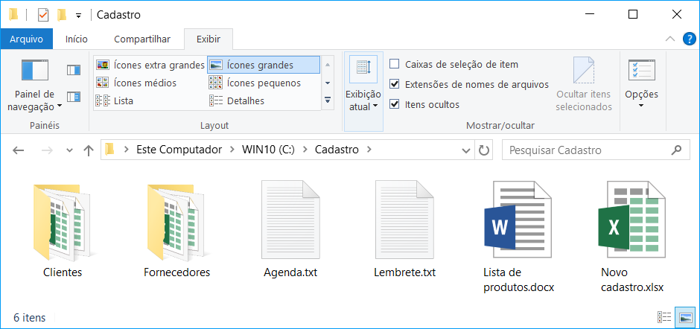
Figura 1
De acordo com a Figura 1, é correto afirmar que:
Provas
- Sistemas OperacionaisWindowsFuncionalidades do WindowsGerenciamento de Arquivos e PastasArquivos
- Sistemas OperacionaisWindowsFuncionalidades do WindowsGerenciamento de Arquivos e PastasPastas e Diretórios
- Sistemas OperacionaisWindowsFuncionalidades do WindowsGerenciamento de Arquivos e PastasWindows Explorer
Para responder às questões 16 a 25, considere o uso do sistema operacional Windows 10, editor de textos Word 2013, editor de planilhas eletrônicas Excel 2013 e navegador Web Google Chrome 62, todos utilizando o idioma português, país Brasil, e o mouse configurado para destro. Quando for utilizada alguma palavra ou expressão entre aspas duplas, significa que apenas o que está entre as aspas deve ser considerado (as aspas servem apenas para enfatizar). As figuras 1, 2 e 3 mostram partes do ambiente Windows, Word 2013 e Excel 2013 e devem servir como base para algumas das questões.
Considere a Figura 1 abaixo para responder às questões 16 a 18.
Figura 1
Suponha que um usuário tenha realizado a seguinte sequência: (1) clicado com o botão esquerdo sobre o arquivo “Agenda.txt”, sem soltá-lo; (2) posicionado o cursor do mouse sobre a pasta “Clientes”; (3) soltado o botão esquerdo do mouse. Sabendo que não houve qualquer tipo de erro, é possível afirmar que o arquivo “Agenda.txt” foi:
Provas
- Sistemas OperacionaisWindowsFuncionalidades do WindowsGerenciamento de Arquivos e PastasArquivos
- Sistemas OperacionaisWindowsFuncionalidades do WindowsGerenciamento de Arquivos e PastasPastas e Diretórios
Para responder às questões 16 a 25, considere o uso do sistema operacional Windows 10, editor de textos Word 2013, editor de planilhas eletrônicas Excel 2013 e navegador Web Google Chrome 62, todos utilizando o idioma português, país Brasil, e o mouse configurado para destro. Quando for utilizada alguma palavra ou expressão entre aspas duplas, significa que apenas o que está entre as aspas deve ser considerado (as aspas servem apenas para enfatizar). As figuras 1, 2 e 3 mostram partes do ambiente Windows, Word 2013 e Excel 2013 e devem servir como base para algumas das questões.
Considere a Figura 1 abaixo para responder às questões 16 a 18.
Figura 1
O chefe de Maria solicitou que o nome do arquivo “Agenda.txt” fosse alterado para algum nome relacionado à agenda do mês de janeiro de 2018. Maria pensou em cinco nomes diferentes, mas apenas um foi aceito pelo sistema operacional Windows. O nome de arquivo aceito foi:
Provas
- EscritórioMicrosoft OfficeExcelConceitos Avançados do Excel
- EscritórioMicrosoft OfficeWordVersões do WordWord 2013
- EscritórioMicrosoft OfficeWordPrincipais Recursos do Word
- EscritórioMicrosoft OfficeWordConceitos Avançados do Word
Para responder às questões 16 a 25, considere o uso do sistema operacional Windows 10, editor de textos Word 2013, editor de planilhas eletrônicas Excel 2013 e navegador Web Google Chrome 62, todos utilizando o idioma português, país Brasil, e o mouse configurado para destro. Quando for utilizada alguma palavra ou expressão entre aspas duplas, significa que apenas o que está entre as aspas deve ser considerado (as aspas servem apenas para enfatizar). As figuras 1, 2 e 3 mostram partes do ambiente Windows, Word 2013 e Excel 2013 e devem servir como base para algumas das questões.
No Word 2013, existe o conceito de guias principais. A guia “Inserir” possui, entre outras, as seguintes funcionalidades:
Provas
- EscritórioMicrosoft OfficeWordVersões do WordWord 2013
- EscritórioMicrosoft OfficeWordPrincipais Recursos do WordFormatação de Fonte 1
Para responder às questões 16 a 25, considere o uso do sistema operacional Windows 10, editor de textos Word 2013, editor de planilhas eletrônicas Excel 2013 e navegador Web Google Chrome 62, todos utilizando o idioma português, país Brasil, e o mouse configurado para destro. Quando for utilizada alguma palavra ou expressão entre aspas duplas, significa que apenas o que está entre as aspas deve ser considerado (as aspas servem apenas para enfatizar). As figuras 1, 2 e 3 mostram partes do ambiente Windows, Word 2013 e Excel 2013 e devem servir como base para algumas das questões.
A Figura 2 mostra o grupo “Fonte” no Word 2013. Levando em consideração a configuração mostrada, o texto a ser digitado deve possuir, entre outras, as seguintes características:
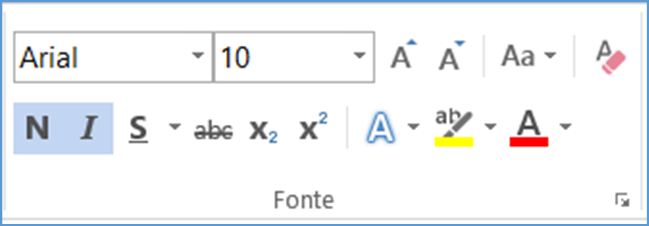
Figura 2
Provas
- EscritórioMicrosoft OfficeWordInterface Gráfica do WordGuias do Word
- EscritórioMicrosoft OfficeWordPrincipais Recursos do Word
Para responder às questões 16 a 25, considere o uso do sistema operacional Windows 10, editor de textos Word 2013, editor de planilhas eletrônicas Excel 2013 e navegador Web Google Chrome 62, todos utilizando o idioma português, país Brasil, e o mouse configurado para destro. Quando for utilizada alguma palavra ou expressão entre aspas duplas, significa que apenas o que está entre as aspas deve ser considerado (as aspas servem apenas para enfatizar). As figuras 1, 2 e 3 mostram partes do ambiente Windows, Word 2013 e Excel 2013 e devem servir como base para algumas das questões.
No Word 2013, através da guia “Exibição”, pode-se visualizar o grupo “Mostrar”. Nele há três itens que podem, individualmente, estar marcados (para visualizar) ou desmarcados (para não serem mostrados), quais sejam:
Provas
Para responder às questões 16 a 25, considere o uso do sistema operacional Windows 10, editor de textos Word 2013, editor de planilhas eletrônicas Excel 2013 e navegador Web Google Chrome 62, todos utilizando o idioma português, país Brasil, e o mouse configurado para destro. Quando for utilizada alguma palavra ou expressão entre aspas duplas, significa que apenas o que está entre as aspas deve ser considerado (as aspas servem apenas para enfatizar). As figuras 1, 2 e 3 mostram partes do ambiente Windows, Word 2013 e Excel 2013 e devem servir como base para algumas das questões.
Considere a Figura 3 abaixo para responder às questões 22 a 24.
|
D4_______ |
×__✓__ ƒx |
|||
|
A |
B |
C |
D |
|
|
1 |
30 |
20 |
10 |
|
|
2 |
25 |
15 |
5 |
|
|
3 |
33 |
23 |
3 |
|
|
4 |
||||
Figura 3
Qual o resultado para a fórmula =MÉDIA(B2:C3)?
Provas
Caderno Container