Foram encontradas 348 questões.
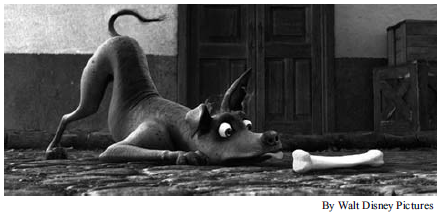
Don’t let that scare you away. There is a murder and a fatal church-bell-related accident, but the afterlife in Coco is a warm and hectic place, more comical than creepy. The story happens during the Day of the Dead, when the border controls between life and death relax and the departed are allowed temporary passage to the land of the living. A boy named Miguel makes the trip in reverse, which is not to say that he dies, but rather that his living self, through one of several metaphysical loopholes that the movie explains, is transported into a fantastical world of specters and skeletons, who hold fabulous parties and raucous outdoor concerts.
Nearly as enchanting as that magical realm is the Mexican village of Santa Cecilia, Miguel’s hometown, where he is part of a prosperous clan of shoemakers. The cultural vibe of Coco is inclusive rather than exoticizing, pre-empting inevitable concerns about authenticity and appropriation with the mixture of charm and sensitivity that has become something of a 21st-century Disney hallmark. Here, the importance of family — the multigenerational household that sustains and constrains the hero — is both specific and universal. It’s what
explains the particular beats of Miguel’s story and what connects him to viewers regardless of background.
He shows a certain kinship with other well-known recent cartoon characters. A gifted musician in a family that forbids music, he is a bit like Remy, the “Ratatouille” rat whose kin were hostile to his artistic ambition, and like Mumble, the misfit penguin in “Happy Feet.” Miguel’s quest — a search for roots, lost ancestors and information that might explain who he is — resembles Dory’s journey in Finding Dory. The sidekicks who accompany him, animal and (formerly) human, are drawn from a familiar well of archetypes, and the final round of lesson-learning and reconciliation hits notes we have heard many times before.
Internet: <www nytimes com> (adapted)
Based on the text above, judge the items from 21 through 28.
In “the land of the living” (l.6) and in “his living self” (l.8), the word “living” plays the same grammar role.
Provas

Don’t let that scare you away. There is a murder and a fatal church-bell-related accident, but the afterlife in Coco is a warm and hectic place, more comical than creepy. The story happens during the Day of the Dead, when the border controls between life and death relax and the departed are allowed temporary passage to the land of the living. A boy named Miguel makes the trip in reverse, which is not to say that he dies, but rather that his living self, through one of several metaphysical loopholes that the movie explains, is transported into a fantastical world of specters and skeletons, who hold fabulous parties and raucous outdoor concerts.
Nearly as enchanting as that magical realm is the Mexican village of Santa Cecilia, Miguel’s hometown, where he is part of a prosperous clan of shoemakers. The cultural vibe of Coco is inclusive rather than exoticizing, pre-empting inevitable concerns about authenticity and appropriation with the mixture of charm and sensitivity that has become something of a 21st-century Disney hallmark. Here, the importance of family — the multigenerational household that sustains and constrains the hero — is both specific and universal. It’s what
explains the particular beats of Miguel’s story and what connects him to viewers regardless of background.
He shows a certain kinship with other well-known recent cartoon characters. A gifted musician in a family that forbids music, he is a bit like Remy, the “Ratatouille” rat whose kin were hostile to his artistic ambition, and like Mumble, the misfit penguin in “Happy Feet.” Miguel’s quest — a search for roots, lost ancestors and information that might explain who he is — resembles Dory’s journey in Finding Dory. The sidekicks who accompany him, animal and (formerly) human, are drawn from a familiar well of archetypes, and the final round of lesson-learning and reconciliation hits notes we have heard many times before.
Internet: <www nytimes com> (adapted)
Based on the text above, judge the items from 21 through 28.
The author mentions that the story in Coco takes place in at least three distinct spheres.
Provas
Don’t let that scare you away. There is a murder and a fatal church-bell-related accident, but the afterlife in Coco is a warm and hectic place, more comical than creepy. The story happens during the Day of the Dead, when the border controls between life and death relax and the departed are allowed temporary passage to the land of the living. A boy named Miguel makes the trip in reverse, which is not to say that he dies, but rather that his living self, through one of several metaphysical loopholes that the movie explains, is transported into a fantastical world of specters and skeletons, who hold fabulous parties and raucous outdoor concerts.
Nearly as enchanting as that magical realm is the Mexican village of Santa Cecilia, Miguel’s hometown, where he is part of a prosperous clan of shoemakers. The cultural vibe of Coco is inclusive rather than exoticizing, pre-empting inevitable concerns about authenticity and appropriation with the mixture of charm and sensitivity that has become something of a 21st-century Disney hallmark. Here, the importance of family — the multigenerational household that sustains and constrains the hero — is both specific and universal. It’s what
explains the particular beats of Miguel’s story and what connects him to viewers regardless of background.
He shows a certain kinship with other well-known recent cartoon characters. A gifted musician in a family that forbids music, he is a bit like Remy, the “Ratatouille” rat whose kin were hostile to his artistic ambition, and like Mumble, the misfit penguin in “Happy Feet.” Miguel’s quest — a search for roots, lost ancestors and information that might explain who he is — resembles Dory’s journey in Finding Dory. The sidekicks who accompany him, animal and (formerly) human, are drawn from a familiar well of archetypes, and the final round of lesson-learning and reconciliation hits notes we have heard many times before.
Internet: <www nytimes com> (adapted)
Based on the text above, judge the items from 21 through 28.
In the fragment “hold fabulous parties and raucous outdoor concerts” (l. 10 e 11), the verb “to hold” can be correctly replaced with to throw.
Provas
Don’t let that scare you away. There is a murder and a fatal church-bell-related accident, but the afterlife in Coco is a warm and hectic place, more comical than creepy. The story happens during the Day of the Dead, when the border controls between life and death relax and the departed are allowed temporary passage to the land of the living. A boy named Miguel makes the trip in reverse, which is not to say that he dies, but rather that his living self, through one of several metaphysical loopholes that the movie explains, is transported into a fantastical world of specters and skeletons, who hold fabulous parties and raucous outdoor concerts.
Nearly as enchanting as that magical realm is the Mexican village of Santa Cecilia, Miguel’s hometown, where he is part of a prosperous clan of shoemakers. The cultural vibe of Coco is inclusive rather than exoticizing, pre-empting inevitable concerns about authenticity and appropriation with the mixture of charm and sensitivity that has become something of a 21st-century Disney hallmark. Here, the importance of family — the multigenerational household that sustains and constrains the hero — is both specific and universal. It’s what
explains the particular beats of Miguel’s story and what connects him to viewers regardless of background.
He shows a certain kinship with other well-known recent cartoon characters. A gifted musician in a family that forbids music, he is a bit like Remy, the “Ratatouille” rat whose kin were hostile to his artistic ambition, and like Mumble, the misfit penguin in “Happy Feet.” Miguel’s quest — a search for roots, lost ancestors and information that might explain who he is — resembles Dory’s journey in Finding Dory. The sidekicks who accompany him, animal and (formerly) human, are drawn from a familiar well of archetypes, and the final round of lesson-learning and reconciliation hits notes we have heard many times before.
Internet: <www nytimes com> (adapted)
Based on the text above, judge the items from 21 through 28.
In the film, death is not so morbid a subject that it should discourage people from watching it.
Provas
Chaplin was famous in a way that no one had been before; arguably, no one has been as famous since. At the peak of his popularity, his screen persona, the Tramp, was the most recognized image in the world. His name came first in discussions of the new medium as popular entertainment, and in defences of it as a distinct art form — a cultural position occupied afterwards only by the Beatles, whose own era-defining popularity never equalled Chaplin’s. He’s the closest thing the 20th century produced to a universal cultural touchstone.
Film histories will invariably assert that Chaplin’s mass popularity was owed to the way in which the Tramp represented a destitute everyman. His films turned hunger, laziness, and the feeling of being unwanted into comedy. He was an ego artist, a performer with an uncanny relationship to the camera who spent the early part of his career refining his screen persona and the latter part of i deconstructing it.
Many a film critic raises the issue of Chaplin’s actual relationship to the cultural moment of the time — and the fact that his popularity survived several periods of sweeping cultural change. His post-silent films — which include his two most enduringly popular features, Modern Times and The Great Dictator — reflect his own attitudes more than the feelings of American audiences at the time. His mature work is deliberately artificial, set in a world pieced together from chunks of European and American past, present, and, in the case of Modern Times, future.
Ignaty Vishnevetsky A century later, why does Chaplin still matters? Internet: <www film avclub com> (adapted)
According to the text above, judge the following statements.
The passage “enduringly popular features” (l.22) can be correctly paraphrased as films that have continuously been well-liked and admired.
Provas
Chaplin was famous in a way that no one had been before; arguably, no one has been as famous since. At the peak of his popularity, his screen persona, the Tramp, was the most recognized image in the world. His name came first in discussions of the new medium as popular entertainment, and in defences of it as a distinct art form — a cultural position occupied afterwards only by the Beatles, whose own era-defining popularity never equalled Chaplin’s. He’s the closest thing the 20th century produced to a universal cultural touchstone.
Film histories will invariably assert that Chaplin’s mass popularity was owed to the way in which the Tramp represented a destitute everyman. His films turned hunger, laziness, and the feeling of being unwanted into comedy. He was an ego artist, a performer with an uncanny relationship to the camera who spent the early part of his career refining his screen persona and the latter part of i deconstructing it.
Many a film critic raises the issue of Chaplin’s actual relationship to the cultural moment of the time — and the fact that his popularity survived several periods of sweeping cultural change. His post-silent films — which include his two most enduringly popular features, Modern Times and The Great Dictator — reflect his own attitudes more than the feelings of American audiences at the time. His mature work is deliberately artificial, set in a world pieced together from chunks of European and American past, present, and, in the case of Modern Times, future.
Ignaty Vishnevetsky A century later, why does Chaplin still matters? Internet: <www film avclub com> (adapted)
According to the text above, judge the following statements.
Throughout his career, Chaplin stuck to his original acting methods and goals, keeping alive the figure of the Tramp.
Provas
Chaplin was famous in a way that no one had been before; arguably, no one has been as famous since. At the peak of his popularity, his screen persona, the Tramp, was the most recognized image in the world. His name came first in discussions of the new medium as popular entertainment, and in defences of it as a distinct art form — a cultural position occupied afterwards only by the Beatles, whose own era-defining popularity never equalled Chaplin’s. He’s the closest thing the 20th century produced to a universal cultural touchstone.
Film histories will invariably assert that Chaplin’s mass popularity was owed to the way in which the Tramp represented a destitute everyman. His films turned hunger, laziness, and the feeling of being unwanted into comedy. He was an ego artist, a performer with an uncanny relationship to the camera who spent the early part of his career refining his screen persona and the latter part of i deconstructing it.
Many a film critic raises the issue of Chaplin’s actual relationship to the cultural moment of the time — and the fact that his popularity survived several periods of sweeping cultural change. His post-silent films — which include his two most enduringly popular features, Modern Times and The Great Dictator — reflect his own attitudes more than the feelings of American audiences at the time. His mature work is deliberately artificial, set in a world pieced together from chunks of European and American past, present, and, in the case of Modern Times, future.
Ignaty Vishnevetsky A century later, why does Chaplin still matters? Internet: <www film avclub com> (adapted)
According to the text above, judge the following statements.
Due to his inflated ego, Chaplin tried very hard to select the best possible angles for the cameras.
Provas
Chaplin was famous in a way that no one had been before; arguably, no one has been as famous since. At the peak of his popularity, his screen persona, the Tramp, was the most recognized image in the world. His name came first in discussions of the new medium as popular entertainment, and in defences of it as a distinct art form — a cultural position occupied afterwards only by the Beatles, whose own era-defining popularity never equalled Chaplin’s. He’s the closest thing the 20th century produced to a universal cultural touchstone.
Film histories will invariably assert that Chaplin’s mass popularity was owed to the way in which the Tramp represented a destitute everyman. His films turned hunger, laziness, and the feeling of being unwanted into comedy. He was an ego artist, a performer with an uncanny relationship to the camera who spent the early part of his career refining his screen persona and the latter part of i deconstructing it.
Many a film critic raises the issue of Chaplin’s actual relationship to the cultural moment of the time — and the fact that his popularity survived several periods of sweeping cultural change. His post-silent films — which include his two most enduringly popular features, Modern Times and The Great Dictator — reflect his own attitudes more than the feelings of American audiences at the time. His mature work is deliberately artificial, set in a world pieced together from chunks of European and American past, present, and, in the case of Modern Times, future.
Ignaty Vishnevetsky A century later, why does Chaplin still matters? Internet: <www film avclub com> (adapted)
According to the text above, judge the following statements.
Chaplin’s main goal as a film director was to eradicate starvation, laziness and lack of love by means of humour.
Provas
Chaplin was famous in a way that no one had been before; arguably, no one has been as famous since. At the peak of his popularity, his screen persona, the Tramp, was the most recognized image in the world. His name came first in discussions of the new medium as popular entertainment, and in defences of it as a distinct art form — a cultural position occupied afterwards only by the Beatles, whose own era-defining popularity never equalled Chaplin’s. He’s the closest thing the 20th century produced to a universal cultural touchstone.
Film histories will invariably assert that Chaplin’s mass popularity was owed to the way in which the Tramp represented a destitute everyman. His films turned hunger, laziness, and the feeling of being unwanted into comedy. He was an ego artist, a performer with an uncanny relationship to the camera who spent the early part of his career refining his screen persona and the latter part of i deconstructing it.
Many a film critic raises the issue of Chaplin’s actual relationship to the cultural moment of the time — and the fact that his popularity survived several periods of sweeping cultural change. His post-silent films — which include his two most enduringly popular features, Modern Times and The Great Dictator — reflect his own attitudes more than the feelings of American audiences at the time. His mature work is deliberately artificial, set in a world pieced together from chunks of European and American past, present, and, in the case of Modern Times, future.
Ignaty Vishnevetsky A century later, why does Chaplin still matters? Internet: <www film avclub com> (adapted)
According to the text above, judge the following statements.
The word “touchstone” (l.10) means a basis or criterion for comparison.
Provas
Chaplin was famous in a way that no one had been before; arguably, no one has been as famous since. At the peak of his popularity, his screen persona, the Tramp, was the most recognized image in the world. His name came first in discussions of the new medium as popular entertainment, and in defences of it as a distinct art form — a cultural position occupied afterwards only by the Beatles, whose own era-defining popularity never equalled Chaplin’s. He’s the closest thing the 20th century produced to a universal cultural touchstone.
Film histories will invariably assert that Chaplin’s mass popularity was owed to the way in which the Tramp represented a destitute everyman. His films turned hunger, laziness, and the feeling of being unwanted into comedy. He was an ego artist, a performer with an uncanny relationship to the camera who spent the early part of his career refining his screen persona and the latter part of i deconstructing it.
Many a film critic raises the issue of Chaplin’s actual relationship to the cultural moment of the time — and the fact that his popularity survived several periods of sweeping cultural change. His post-silent films — which include his two most enduringly popular features, Modern Times and The Great Dictator — reflect his own attitudes more than the feelings of American audiences at the time. His mature work is deliberately artificial, set in a world pieced together from chunks of European and American past, present, and, in the case of Modern Times, future.
Ignaty Vishnevetsky A century later, why does Chaplin still matters? Internet: <www film avclub com> (adapted)
According to the text above, judge the following statements.
Chaplin’s extraordinary talent helped cinema achieve the status of an individual art form.
Provas
Caderno Container