Foram encontradas 357 questões.
March 22, 2006: Consider a pair of brothers, identical twins. One gets a job as an astronaut and rockets into deep space. The other stays on Earth. When the traveling twin returns home, he discovers he’s younger than his brother.
This is Einstein’s Twins Paradox, and although it sounds strange, it is absolutely true. The theory of relativity tells us that the faster you travel through space, the slower you travel through time. Rocketing to Alpha Centauri — warp 9, please — is a good way to stay young.
Or is it?
Some researchers are beginning to believe that space travel could have the opposite effect. It could make you prematurely old. Albert Einstein’s theory of Special Relativity says that time slows down for fast-moving space travelers, effectively keeping them young. Space radiation acting on telomeres could however, reverse the effect.
“The problem with Einstein’s paradox is that it doesn’t fold in biology — specifically, space radiation and the biology of aging”, says Frank Cucinotta, NASA’s chief scientist for radiation studies at the Johnson Space Center.
While the astronaut twin is hurtling through space, Cucinotta explains, his chromosomes are exposed to penetrating cosmic rays. This can damage his telomeres — little molecular caps on the ends of his DNA. Here on Earth, the loss of telomeres has been linked to aging.
So far, the risk hasn’t been a major concern: the effect on shuttle and space station astronauts, if any, would be very small. These astronauts orbit inside of Earth’s protective magnetic field, which deflects most cosmic rays.
But by 2018, NASA plans to send humans outside of that protective bubble to return to the moon and eventually travel to Mars. Astronauts on those missions could be exposed to cosmic rays for weeks or months at a time. Naturally, NASA is keen to find out whether or not the danger of “radiation aging” really exists, and if so, how to handle it.
Internet: <science.nasa.gov> (adapted).
Acccording to the text,
Einstein’s Twin Paradox was believed to be true.
Provas

March 22, 2006: Consider a pair of brothers, identical twins. One gets a job as an astronaut and rockets into deep space. The other stays on Earth. When the traveling twin returns home, he discovers he’s younger than his brother.
This is Einstein’s Twins Paradox, and although it sounds strange, it is absolutely true. The theory of relativity tells us that the faster you travel through space, the slower you travel through time. Rocketing to Alpha Centauri — warp 9, please — is a good way to stay young.
Or is it?
Some researchers are beginning to believe that space travel could have the opposite effect. It could make you prematurely old. Albert Einstein’s theory of Special Relativity says that time slows down for fast-moving space travelers, effectively keeping them young. Space radiation acting on telomeres could however, reverse the effect.
“The problem with Einstein’s paradox is that it doesn’t fold in biology — specifically, space radiation and the biology of aging”, says Frank Cucinotta, NASA’s chief scientist for radiation studies at the Johnson Space Center.
While the astronaut twin is hurtling through space, Cucinotta explains, his chromosomes are exposed to penetrating cosmic rays. This can damage his telomeres — little molecular caps on the ends of his DNA. Here on Earth, the loss of telomeres has been linked to aging.
So far, the risk hasn’t been a major concern: the effect on shuttle and space station astronauts, if any, would be very small. These astronauts orbit inside of Earth’s protective magnetic field, which deflects most cosmic rays.
But by 2018, NASA plans to send humans outside of that protective bubble to return to the moon and eventually travel to Mars. Astronauts on those missions could be exposed to cosmic rays for weeks or months at a time. Naturally, NASA is keen to find out whether or not the danger of “radiation aging” really exists, and if so, how to handle it.
Internet: <science.nasa.gov> (adapted).
Acccording to the text,
the faster you travel in space the younger you become.
Provas
March 22, 2006: Consider a pair of brothers, identical twins. One gets a job as an astronaut and rockets into deep space. The other stays on Earth. When the traveling twin returns home, he discovers he’s younger than his brother.
This is Einstein’s Twins Paradox, and although it sounds strange, it is absolutely true. The theory of relativity tells us that the faster you travel through space, the slower you travel through time. Rocketing to Alpha Centauri — warp 9, please — is a good way to stay young.
Or is it?
Some researchers are beginning to believe that space travel could have the opposite effect. It could make you prematurely old. Albert Einstein’s theory of Special Relativity says that time slows down for fast-moving space travelers, effectively keeping them young. Space radiation acting on telomeres could however, reverse the effect.
“The problem with Einstein’s paradox is that it doesn’t fold in biology — specifically, space radiation and the biology of aging”, says Frank Cucinotta, NASA’s chief scientist for radiation studies at the Johnson Space Center.
While the astronaut twin is hurtling through space, Cucinotta explains, his chromosomes are exposed to penetrating cosmic rays. This can damage his telomeres — little molecular caps on the ends of his DNA. Here on Earth, the loss of telomeres has been linked to aging.
So far, the risk hasn’t been a major concern: the effect on shuttle and space station astronauts, if any, would be very small. These astronauts orbit inside of Earth’s protective magnetic field, which deflects most cosmic rays.
But by 2018, NASA plans to send humans outside of that protective bubble to return to the moon and eventually travel to Mars. Astronauts on those missions could be exposed to cosmic rays for weeks or months at a time. Naturally, NASA is keen to find out whether or not the danger of “radiation aging” really exists, and if so, how to handle it.
Internet: <science.nasa.gov> (adapted).
Acccording to the text,
the twin who does not travel into deep space gets older than his brother.
Provas
March 22, 2006: Consider a pair of brothers, identical twins. One gets a job as an astronaut and rockets into deep space. The other stays on Earth. When the traveling twin returns home, he discovers he’s younger than his brother.
This is Einstein’s Twins Paradox, and although it sounds strange, it is absolutely true. The theory of relativity tells us that the faster you travel through space, the slower you travel through time. Rocketing to Alpha Centauri — warp 9, please — is a good way to stay young.
Or is it?
Some researchers are beginning to believe that space travel could have the opposite effect. It could make you prematurely old. Albert Einstein’s theory of Special Relativity says that time slows down for fast-moving space travelers, effectively keeping them young. Space radiation acting on telomeres could however, reverse the effect.
“The problem with Einstein’s paradox is that it doesn’t fold in biology — specifically, space radiation and the biology of aging”, says Frank Cucinotta, NASA’s chief scientist for radiation studies at the Johnson Space Center.
While the astronaut twin is hurtling through space, Cucinotta explains, his chromosomes are exposed to penetrating cosmic rays. This can damage his telomeres — little molecular caps on the ends of his DNA. Here on Earth, the loss of telomeres has been linked to aging.
So far, the risk hasn’t been a major concern: the effect on shuttle and space station astronauts, if any, would be very small. These astronauts orbit inside of Earth’s protective magnetic field, which deflects most cosmic rays.
But by 2018, NASA plans to send humans outside of that protective bubble to return to the moon and eventually travel to Mars. Astronauts on those missions could be exposed to cosmic rays for weeks or months at a time. Naturally, NASA is keen to find out whether or not the danger of “radiation aging” really exists, and if so, how to handle it.
Internet: <science.nasa.gov> (adapted).
Acccording to the text,
NASA intends to send humans to the Moon and perhaps to Mars.
Provas
Europeans enjoy unprecedented levels of personal mobility, while goods are shipped rapidly and efficiently from factory to customer, often in different countries. The European Union (UN) has stimulated this freedom of movement by opening national markets and by removing physical and technical obstacles. But today’s transport patterns and growth rates are unsustainable.
Moving people and goods quickly, efficiently and cheaply is a central tenet of the EU’s goal for a dynamic economy and cohesive society. The transport sector generates 10% of EU wealth in terms of gross domestic product (GDP) and provides more than ten million jobs.
The constant growth in mobility puts severe strains on transport systems. The result is congestion, particularly for road and air traffic which reduces economic efficiency, and adds to fuel consumption and to pollution.
Although many aspects of transport policy come under national governments, it makes sense for the European single market to have a single transport infrastructure. This is why the EU has opened national transport markets across the Union to competition, particularly in the road and air sectors and, to a lesser extent, for rail.
As a result, trucks can operate in countries other than their own, and no longer return empty on international journeys. In 2003, a first liberalisation package opened about 70-80% of long-distance rail freight traffic to competition.
Liberalisation alone cannot solve several deep seated problems. These include the dominance of road over other forms of transport, pollution, and the fragmentation of transport systems, including poor links to outlying regions and between national networks.
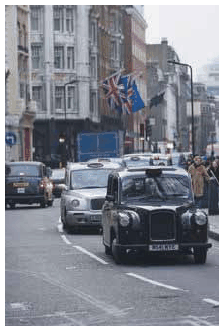
Congestion charging, where users pay for access to scarce infrastructure, is also being introduced. One example is the system, pioneered by London in 2003, which charges motorists for driving into central districts of town and cities. Rail is the first target. A freight train in the EU travels at an average speed of 18 kilometres per hour. Rail must improve speeds and service levels if it is to attract freight traffic from roads.
Internet: <europa.eu> (adapted).
Based on the text, judge the following item.
Rail improvement must be dealt with as a top priority.
Provas
Europeans enjoy unprecedented levels of personal mobility, while goods are shipped rapidly and efficiently from factory to customer, often in different countries. The European Union (UN) has stimulated this freedom of movement by opening national markets and by removing physical and technical obstacles. But today’s transport patterns and growth rates are unsustainable.
Moving people and goods quickly, efficiently and cheaply is a central tenet of the EU’s goal for a dynamic economy and cohesive society. The transport sector generates 10% of EU wealth in terms of gross domestic product (GDP) and provides more than ten million jobs.
The constant growth in mobility puts severe strains on transport systems. The result is congestion, particularly for road and air traffic which reduces economic efficiency, and adds to fuel consumption and to pollution.
Although many aspects of transport policy come under national governments, it makes sense for the European single market to have a single transport infrastructure. This is why the EU has opened national transport markets across the Union to competition, particularly in the road and air sectors and, to a lesser extent, for rail.
As a result, trucks can operate in countries other than their own, and no longer return empty on international journeys. In 2003, a first liberalisation package opened about 70-80% of long-distance rail freight traffic to competition.
Liberalisation alone cannot solve several deep seated problems. These include the dominance of road over other forms of transport, pollution, and the fragmentation of transport systems, including poor links to outlying regions and between national networks.
Congestion charging, where users pay for access to scarce infrastructure, is also being introduced. One example is the system, pioneered by London in 2003, which charges motorists for driving into central districts of town and cities. Rail is the first target. A freight train in the EU travels at an average speed of 18 kilometres per hour. Rail must improve speeds and service levels if it is to attract freight traffic from roads.
Internet: <europa.eu> (adapted).
Based on the text, judge the following item.
In London, motorists are supposed to pay when they use their cars downtown.
Provas
Europeans enjoy unprecedented levels of personal mobility, while goods are shipped rapidly and efficiently from factory to customer, often in different countries. The European Union (UN) has stimulated this freedom of movement by opening national markets and by removing physical and technical obstacles. But today’s transport patterns and growth rates are unsustainable.
Moving people and goods quickly, efficiently and cheaply is a central tenet of the EU’s goal for a dynamic economy and cohesive society. The transport sector generates 10% of EU wealth in terms of gross domestic product (GDP) and provides more than ten million jobs.
The constant growth in mobility puts severe strains on transport systems. The result is congestion, particularly for road and air traffic which reduces economic efficiency, and adds to fuel consumption and to pollution.
Although many aspects of transport policy come under national governments, it makes sense for the European single market to have a single transport infrastructure. This is why the EU has opened national transport markets across the Union to competition, particularly in the road and air sectors and, to a lesser extent, for rail.
As a result, trucks can operate in countries other than their own, and no longer return empty on international journeys. In 2003, a first liberalisation package opened about 70-80% of long-distance rail freight traffic to competition.
Liberalisation alone cannot solve several deep seated problems. These include the dominance of road over other forms of transport, pollution, and the fragmentation of transport systems, including poor links to outlying regions and between national networks.
Congestion charging, where users pay for access to scarce infrastructure, is also being introduced. One example is the system, pioneered by London in 2003, which charges motorists for driving into central districts of town and cities. Rail is the first target. A freight train in the EU travels at an average speed of 18 kilometres per hour. Rail must improve speeds and service levels if it is to attract freight traffic from roads.
Internet: <europa.eu> (adapted).
Based on the text, judge the following item.
Large trucks are not allowed to carry goods from other countries but their own.
Provas
Europeans enjoy unprecedented levels of personal mobility, while goods are shipped rapidly and efficiently from factory to customer, often in different countries. The European Union (UN) has stimulated this freedom of movement by opening national markets and by removing physical and technical obstacles. But today’s transport patterns and growth rates are unsustainable.
Moving people and goods quickly, efficiently and cheaply is a central tenet of the EU’s goal for a dynamic economy and cohesive society. The transport sector generates 10% of EU wealth in terms of gross domestic product (GDP) and provides more than ten million jobs.
The constant growth in mobility puts severe strains on transport systems. The result is congestion, particularly for road and air traffic which reduces economic efficiency, and adds to fuel consumption and to pollution.
Although many aspects of transport policy come under national governments, it makes sense for the European single market to have a single transport infrastructure. This is why the EU has opened national transport markets across the Union to competition, particularly in the road and air sectors and, to a lesser extent, for rail.
As a result, trucks can operate in countries other than their own, and no longer return empty on international journeys. In 2003, a first liberalisation package opened about 70-80% of long-distance rail freight traffic to competition.
Liberalisation alone cannot solve several deep seated problems. These include the dominance of road over other forms of transport, pollution, and the fragmentation of transport systems, including poor links to outlying regions and between national networks.
Congestion charging, where users pay for access to scarce infrastructure, is also being introduced. One example is the system, pioneered by London in 2003, which charges motorists for driving into central districts of town and cities. Rail is the first target. A freight train in the EU travels at an average speed of 18 kilometres per hour. Rail must improve speeds and service levels if it is to attract freight traffic from roads.
Internet: <europa.eu> (adapted).
Based on the text, judge the following item.
The transport network in Europe considers national and international aspects.
Provas
Europeans enjoy unprecedented levels of personal mobility, while goods are shipped rapidly and efficiently from factory to customer, often in different countries. The European Union (UN) has stimulated this freedom of movement by opening national markets and by removing physical and technical obstacles. But today’s transport patterns and growth rates are unsustainable.
Moving people and goods quickly, efficiently and cheaply is a central tenet of the EU’s goal for a dynamic economy and cohesive society. The transport sector generates 10% of EU wealth in terms of gross domestic product (GDP) and provides more than ten million jobs.
The constant growth in mobility puts severe strains on transport systems. The result is congestion, particularly for road and air traffic which reduces economic efficiency, and adds to fuel consumption and to pollution.
Although many aspects of transport policy come under national governments, it makes sense for the European single market to have a single transport infrastructure. This is why the EU has opened national transport markets across the Union to competition, particularly in the road and air sectors and, to a lesser extent, for rail.
As a result, trucks can operate in countries other than their own, and no longer return empty on international journeys. In 2003, a first liberalisation package opened about 70-80% of long-distance rail freight traffic to competition.
Liberalisation alone cannot solve several deep seated problems. These include the dominance of road over other forms of transport, pollution, and the fragmentation of transport systems, including poor links to outlying regions and between national networks.
Congestion charging, where users pay for access to scarce infrastructure, is also being introduced. One example is the system, pioneered by London in 2003, which charges motorists for driving into central districts of town and cities. Rail is the first target. A freight train in the EU travels at an average speed of 18 kilometres per hour. Rail must improve speeds and service levels if it is to attract freight traffic from roads.
Internet: <europa.eu> (adapted).
Based on the text, judge the following item.
At present, European transport systems can be said to have entirely reached the goals set by EU.
Provas
Europeans enjoy unprecedented levels of personal mobility, while goods are shipped rapidly and efficiently from factory to customer, often in different countries. The European Union (UN) has stimulated this freedom of movement by opening national markets and by removing physical and technical obstacles. But today’s transport patterns and growth rates are unsustainable.
Moving people and goods quickly, efficiently and cheaply is a central tenet of the EU’s goal for a dynamic economy and cohesive society. The transport sector generates 10% of EU wealth in terms of gross domestic product (GDP) and provides more than ten million jobs.
The constant growth in mobility puts severe strains on transport systems. The result is congestion, particularly for road and air traffic which reduces economic efficiency, and adds to fuel consumption and to pollution.
Although many aspects of transport policy come under national governments, it makes sense for the European single market to have a single transport infrastructure. This is why the EU has opened national transport markets across the Union to competition, particularly in the road and air sectors and, to a lesser extent, for rail.
As a result, trucks can operate in countries other than their own, and no longer return empty on international journeys. In 2003, a first liberalisation package opened about 70-80% of long-distance rail freight traffic to competition.
Liberalisation alone cannot solve several deep seated problems. These include the dominance of road over other forms of transport, pollution, and the fragmentation of transport systems, including poor links to outlying regions and between national networks.
Congestion charging, where users pay for access to scarce infrastructure, is also being introduced. One example is the system, pioneered by London in 2003, which charges motorists for driving into central districts of town and cities. Rail is the first target. A freight train in the EU travels at an average speed of 18 kilometres per hour. Rail must improve speeds and service levels if it is to attract freight traffic from roads.
Internet: <europa.eu> (adapted).
Based on the text, judge the following item.
The transport sector has no influence on EU’s GDP.
Provas
Caderno Container