Foram encontradas 175 questões.
Sistemas de informação adotam como uma de suas bases a cadeia de valor de Michel Porter. Segundo essa cadeia de valor, há atividades primárias e de apoio, sendo que duas das atividades primárias contidas nessa cadeia de valor são:
Provas

Pre-primary school years is fun – serious fun. Music, storytelling, movement, outdoor play, role play and drama give children basic literacy, numeracy and problem-solving skills. These are the building blocks of a child’s education that put them on the right track for a life of learning. Children who do not have the chance to start their education early are put at a serious disadvantage before they even start school. One recent UNESCO study showed that students who attended some form of organised early childhood education in 13 African countries scored 66 points higher in reading, on average, than those who did not.
The only way we can move forward is to share lessons between countries on what works. We did just this in our latest report, assessing what the policies were that had enabled countries to achieve fast progress. Recommendations emerged from comprehensive analyses of the issue and they all related to the cost barriers to access.
It is important to legislate and offer free and compulsory pre-primary education. But only about half of the countries in the world have done this so far. While one policy change cannot be assessed out of context, there is a clear jump in children’s early education access across countries that put such legislation in place.
While there is no magic wand to overcome all educational challenges, there are clear lessons we can draw from looking at existing policies. Education can and should start early. If they legislate, regulate and finance appropriately, countries can certainly reach their early education goals.
(Manos Antoninis e Silvia Montoya. www.aljazeera.com, 07.02.2023. Adaptado)
Leia o cartoon.
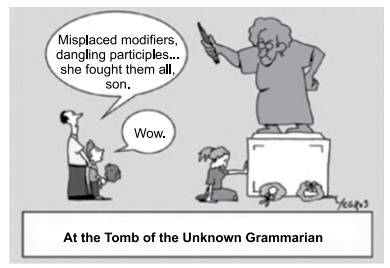
(https://archive.nytimes.com)
“Misplaced” and “unknown” are two words with prefixes which carry a negative connotation. A negative prefix has been correctly used in alternative
Provas
Pre-primary school years is fun – serious fun. Music, storytelling, movement, outdoor play, role play and drama give children basic literacy, numeracy and problem-solving skills. These are the building blocks of a child’s education that put them on the right track for a life of learning. Children who do not have the chance to start their education early are put at a serious disadvantage before they even start school. One recent UNESCO study showed that students who attended some form of organised early childhood education in 13 African countries scored 66 points higher in reading, on average, than those who did not.
The only way we can move forward is to share lessons between countries on what works. We did just this in our latest report, assessing what the policies were that had enabled countries to achieve fast progress. Recommendations emerged from comprehensive analyses of the issue and they all related to the cost barriers to access.
It is important to legislate and offer free and compulsory pre-primary education. But only about half of the countries in the world have done this so far. While one policy change cannot be assessed out of context, there is a clear jump in children’s early education access across countries that put such legislation in place.
While there is no magic wand to overcome all educational challenges, there are clear lessons we can draw from looking at existing policies. Education can and should start early. If they legislate, regulate and finance appropriately, countries can certainly reach their early education goals.
(Manos Antoninis e Silvia Montoya. www.aljazeera.com, 07.02.2023. Adaptado)
In the sentence from the last paragraph “Education can and should start early”, the underlined modal verbs indicate, respectively,
Provas
Pre-primary school years is fun – serious fun. Music, storytelling, movement, outdoor play, role play and drama give children basic literacy, numeracy and problem-solving skills. These are the building blocks of a child’s education that put them on the right track for a life of learning. Children who do not have the chance to start their education early are put at a serious disadvantage before they even start school. One recent UNESCO study showed that students who attended some form of organised early childhood education in 13 African countries scored 66 points higher in reading, on average, than those who did not.
The only way we can move forward is to share lessons between countries on what works. We did just this in our latest report, assessing what the policies were that had enabled countries to achieve fast progress. Recommendations emerged from comprehensive analyses of the issue and they all related to the cost barriers to access.
It is important to legislate and offer free and compulsory pre-primary education. But only about half of the countries in the world have done this so far. While one policy change cannot be assessed out of context, there is a clear jump in children’s early education access across countries that put such legislation in place.
While there is no magic wand to overcome all educational challenges, there are clear lessons we can draw from looking at existing policies. Education can and should start early. If they legislate, regulate and finance appropriately, countries can certainly reach their early education goals.
(Manos Antoninis e Silvia Montoya. www.aljazeera.com, 07.02.2023. Adaptado)
In the fragment from the second paragraph “Recommendations emerged from comprehensive analyses of the issue”, the underlined word is the irregular plural form of the Latin-origin word “analysis”. Mark the alternative containing an English singular word followed by its irregular plural form.
Provas
Preprimary school years is fun – serious fun. Music, storytelling, movement, outdoor play, role play and drama give children basic literacy, numeracy and problem-solving skills. These are the building blocks of a child’s education that put them on the right track for a life of learning. Children who do not have the chance to start their education early are put at a serious disadvantage before they even start school. One recent UNESCO study showed that students who attended some form of organised early childhood education in 13 African countries scored 66 points higher in reading, on average, than those who did not.
The only way we can move forward is to share lessons between countries on what works. We did just this in our latest report, assessing what the policies were that had enabled countries to achieve fast progress. Recommendations emerged from comprehensive analyses of the issue and they all related to the cost barriers to access.
It is important to legislate and offer free and compulsory pre-primary education. But only about half of the countries in the world have done this so far. While one policy change cannot be assessed out of context, there is a clear jump in children’s early education access across countries that put such legislation in place.
While there is no magic wand to overcome all educational challenges, there are clear lessons we can draw from looking at existing policies. Education can and should start early. If they legislate, regulate and finance appropriately, countries can certainly reach their early education goals.
(Manos Antoninis e Silvia Montoya. www.aljazeera.com, 07.02.2023. Adaptado)
Four of the words below are false cognates in the context of the text; a true cognate between English and Portuguese is underlined in alternative:
Provas
Pre-primary school years is fun – serious fun. Music, storytelling, movement, outdoor play, role play and drama give children basic literacy, numeracy and problem-solving skills. These are the building blocks of a child’s education that put them on the right track for a life of learning. Children who do not have the chance to start their education early are put at a serious disadvantage before they even start school. One recent UNESCO study showed that students who attended some form of organised early childhood education in 13 African countries scored 66 points higher in reading, on average, than those who did not.
The only way we can move forward is to share lessons between countries on what works. We did just this in our latest report, assessing what the policies were that had enabled countries to achieve fast progress. Recommendations emerged from comprehensive analyses of the issue and they all related to the cost barriers to access.
It is important to legislate and offer free and compulsory pre-primary education. But only about half of the countries in the world have done this so far. While one policy change cannot be assessed out of context, there is a clear jump in children’s early education access across countries that put such legislation in place.
While there is no magic wand to overcome all educational challenges, there are clear lessons we can draw from looking at existing policies. Education can and should start early. If they legislate, regulate and finance appropriately, countries can certainly reach their early education goals.
(Manos Antoninis e Silvia Montoya. www.aljazeera.com, 07.02.2023. Adaptado)
In texts, pronouns are often used to refer to a specific antecedent or subsequent element that is close by. In the sentence from the first paragraph “These are the building blocks of a child’s education that put them on the right track for a life of learning.”, the underlined demonstrative pronoun refers to
Provas
Interactive Lecture:
Small Changes for Improved Engagement and Learning
Traditionally, undergraduate education has been predominately lecture-based instruction and passive lecturing continues to be the most widely used instructional strategy. However, educational research over the past decades has shown that students retain more course content when active learning techniques are correctly implemented. Furthermore, evidence shows that active learning lessens learning and achievement gaps for historically marginalized students
One method for starting the shift to active learning is the use of interactive lectures, those that incorporate short activities that give students opportunities to engage with the materials just covered in class. The main advantages of interactive lectures for instructors are the ease of implementation and the variety of activities that can be explored and incorporated into a course. Students benefit through increased engagement, learning, and long-term retention of course ideas, topics, and materials (Ernst and Colthorpe 2007, Revell and Wainwright 2009, Miller et al. 2013, Hadie et al. 2018).
So, how do you create an interactive lecture?
The preparation for an interactive lecture begins with revisiting the student learning objectives. Student learning objectives are key to determining which topics are essential to the course and aids in attending to these ideas, materials, and topics for lectures.
Once you are clear on the learning objective(s), review the topic content to determine which aspects of the lecture are key points or required topics and which can be eliminated or covered using methods such as textbook readings, introductory videos, homework assignments etc.
Finally, determine the smallest units of content that can be given and remain coherent. For each small section of information, reframe the content to answer a question. Use awareness-raising questions for structuring lectures; this will allow many strategies to be employed to increase student engagement through analysis and discussion. You could use one same question and have students brainstorm possible answers in pairs or small groups. The method helps students determine their prior knowledge and has them think critically about the topic.
(Michele Larson. https://teaching.unl.edu, 24.05.2022. Adaptado)
It is one of the features of the interactive lecture, as described in the text:
Provas
Interactive Lecture:
Small Changes for Improved Engagement and Learning
Traditionally, undergraduate education has been predominately lecture-based instruction and passive lecturing continues to be the most widely used instructional strategy. However, educational research over the past decades has shown that students retain more course content when active learning techniques are correctly implemented. Furthermore, evidence shows that active learning lessens learning and achievement gaps for historically marginalized students
One method for starting the shift to active learning is the use of interactive lectures, those that incorporate short activities that give students opportunities to engage with the materials just covered in class. The main advantages of interactive lectures for instructors are the ease of implementation and the variety of activities that can be explored and incorporated into a course. Students benefit through increased engagement, learning, and long-term retention of course ideas, topics, and materials (Ernst and Colthorpe 2007, Revell and Wainwright 2009, Miller et al. 2013, Hadie et al. 2018).
So, how do you create an interactive lecture?
The preparation for an interactive lecture begins with revisiting the student learning objectives. Student learning objectives are key to determining which topics are essential to the course and aids in attending to these ideas, materials, and topics for lectures.
Once you are clear on the learning objective(s), review the topic content to determine which aspects of the lecture are key points or required topics and which can be eliminated or covered using methods such as textbook readings, introductory videos, homework assignments etc.
Finally, determine the smallest units of content that can be given and remain coherent. For each small section of information, reframe the content to answer a question. Use awareness-raising questions for structuring lectures; this will allow many strategies to be employed to increase student engagement through analysis and discussion. You could use one same question and have students brainstorm possible answers in pairs or small groups. The method helps students determine their prior knowledge and has them think critically about the topic.
(Michele Larson. https://teaching.unl.edu, 24.05.2022. Adaptado)
In the noun phrase “awareness-raising questions”, in the last paragraph, a compound adjective modifies the noun. A present participle compound adjective is also correctly used in the sentence in alternative
Provas
Interactive Lecture:
Small Changes for Improved Engagement and Learning
Traditionally, undergraduate education has been predominately lecture-based instruction and passive lecturing continues to be the most widely used instructional strategy. However, educational research over the past decades has shown that students retain more course content when active learning techniques are correctly implemented. Furthermore, evidence shows that active learning lessens learning and achievement gaps for historically marginalized students
One method for starting the shift to active learning is the use of interactive lectures, those that incorporate short activities that give students opportunities to engage with the materials just covered in class. The main advantages of interactive lectures for instructors are the ease of implementation and the variety of activities that can be explored and incorporated into a course. Students benefit through increased engagement, learning, and long-term retention of course ideas, topics, and materials (Ernst and Colthorpe 2007, Revell and Wainwright 2009, Miller et al. 2013, Hadie et al. 2018).
So, how do you create an interactive lecture?
The preparation for an interactive lecture begins with revisiting the student learning objectives. Student learning objectives are key to determining which topics are essential to the course and aids in attending to these ideas, materials, and topics for lectures.
Once you are clear on the learning objective(s), review the topic content to determine which aspects of the lecture are key points or required topics and which can be eliminated or covered using methods such as textbook readings, introductory videos, homework assignments etc.
Finally, determine the smallest units of content that can be given and remain coherent. For each small section of information, reframe the content to answer a question. Use awareness-raising questions for structuring lectures; this will allow many strategies to be employed to increase student engagement through analysis and discussion. You could use one same question and have students brainstorm possible answers in pairs or small groups. The method helps students determine their prior knowledge and has them think critically about the topic.
(Michele Larson. https://teaching.unl.edu, 24.05.2022. Adaptado)
The word ending in – ing is correctly used as an adjective in the context of alternative
Provas
Interactive Lecture:
Small Changes for Improved Engagement and Learning
Traditionally, undergraduate education has been predominately lecture-based instruction and passive lecturing continues to be the most widely used instructional strategy. However, educational research over the past decades has shown that students retain more course content when active learning techniques are correctly implemented. Furthermore, evidence shows that active learning lessens learning and achievement gaps for historically marginalized students
One method for starting the shift to active learning is the use of interactive lectures, those that incorporate short activities that give students opportunities to engage with the materials just covered in class. The main advantages of interactive lectures for instructors are the ease of implementation and the variety of activities that can be explored and incorporated into a course. Students benefit through increased engagement, learning, and long-term retention of course ideas, topics, and materials (Ernst and Colthorpe 2007, Revell and Wainwright 2009, Miller et al. 2013, Hadie et al. 2018).
So, how do you create an interactive lecture?
The preparation for an interactive lecture begins with revisiting the student learning objectives. Student learning objectives are key to determining which topics are essential to the course and aids in attending to these ideas, materials, and topics for lectures.
Once you are clear on the learning objective(s), review the topic content to determine which aspects of the lecture are key points or required topics and which can be eliminated or covered using methods such as textbook readings, introductory videos, homework assignments etc.
Finally, determine the smallest units of content that can be given and remain coherent. For each small section of information, reframe the content to answer a question. Use awareness-raising questions for structuring lectures; this will allow many strategies to be employed to increase student engagement through analysis and discussion. You could use one same question and have students brainstorm possible answers in pairs or small groups. The method helps students determine their prior knowledge and has them think critically about the topic.
(Michele Larson. https://teaching.unl.edu, 24.05.2022. Adaptado)
In the sentence “Student learning objectives are key to determining which topics are essential to the course and aids in attending to these ideas, materials, and topics for lectures” (paragraph 4) the preposition “to” follows a noun, an adjective and a verb, respectively, to illustrate the use of the preposition “to” to introduce a complement.
A fully correct sentence with the preposition “to” is found in alternative
Provas
Caderno Container