Foram encontradas 45.123 questões.
Read the Text I and answer the question that follow it.
Text I
Correspondence
Human genome editing: potential seeds of conflict
Recently, The Lancet published an important declaration regarding the necessity of regulating and legislating for human genome editing. We agree with their opinions that the human genome editing technology and resulting research can have both positive and negative effects on human society. The use of genome editing for research and commercial purposes has sparked debates in both biological and political realms. However, most of them have mainly focused on the effects of human genome editing on the patients themselves, and little attention has been paid to their offspring.
Several films, such as Gattaca and Gundam SEED, have addressed the conflicts that arise from human genome editing. Such conflicts not only exist within the generation who have experienced editing but are also transmitted to their offspring. For example, in these films, the offspring of people without genome editing felt a sense of unfairness regarding the inferiority of their physical (or other non-edited domains) status, whereas the offspring of people with genome editing grew up in a biased, discriminated against, and ostracized environment. They could have lived in peace with a strong and well regulated government; however, when the tenuous grip of government weakens, jealousy and resentment can lead to ruins. Although these scenes still exist in films, they might become increasingly plausible in decades to come. Using the concept of preparedness, access, countermeasures, tools, and trust, we should prepare legitimate human genome editing, establish access to deal with imminent or potential discrimination, develop countermeasures and tools for prevention and resolution of conflict, and entrust future generations with the responsibility to use them wisely.
Bing-Yan Zeng, Ping-Tao Tseng, *Chih-Sung Liang
Adapted from: www.thelancet.com, vol. 401, June 24, 2023 at
https://www.thelancet.com/action/showPdf?pii=S0140-6736%2823%2901084-X
Provas

Read the Text I and answer the question that follow it.
Text I
Correspondence
Human genome editing: potential seeds of conflict
Recently, The Lancet published an important declaration regarding the necessity of regulating and legislating for human genome editing. We agree with their opinions that the human genome editing technology and resulting research can have both positive and negative effects on human society. The use of genome editing for research and commercial purposes has sparked debates in both biological and political realms. However, most of them have mainly focused on the effects of human genome editing on the patients themselves, and little attention has been paid to their offspring.
Several films, such as Gattaca and Gundam SEED, have addressed the conflicts that arise from human genome editing. Such conflicts not only exist within the generation who have experienced editing but are also transmitted to their offspring. For example, in these films, the offspring of people without genome editing felt a sense of unfairness regarding the inferiority of their physical (or other non-edited domains) status, whereas the offspring of people with genome editing grew up in a biased, discriminated against, and ostracized environment. They could have lived in peace with a strong and well regulated government; however, when the tenuous grip of government weakens, jealousy and resentment can lead to ruins. Although these scenes still exist in films, they might become increasingly plausible in decades to come. Using the concept of preparedness, access, countermeasures, tools, and trust, we should prepare legitimate human genome editing, establish access to deal with imminent or potential discrimination, develop countermeasures and tools for prevention and resolution of conflict, and entrust future generations with the responsibility to use them wisely.
Bing-Yan Zeng, Ping-Tao Tseng, *Chih-Sung Liang
Adapted from: www.thelancet.com, vol. 401, June 24, 2023 at
https://www.thelancet.com/action/showPdf?pii=S0140-6736%2823%2901084-X
Provas
Read the Text I and answer the question that follow it.
Text I
Correspondence
Human genome editing: potential seeds of conflict
Recently, The Lancet published an important declaration regarding the necessity of regulating and legislating for human genome editing. We agree with their opinions that the human genome editing technology and resulting research can have both positive and negative effects on human society. The use of genome editing for research and commercial purposes has sparked debates in both biological and political realms. However, most of them have mainly focused on the effects of human genome editing on the patients themselves, and little attention has been paid to their offspring.
Several films, such as Gattaca and Gundam SEED, have addressed the conflicts that arise from human genome editing. Such conflicts not only exist within the generation who have experienced editing but are also transmitted to their offspring. For example, in these films, the offspring of people without genome editing felt a sense of unfairness regarding the inferiority of their physical (or other non-edited domains) status, whereas the offspring of people with genome editing grew up in a biased, discriminated against, and ostracized environment. They could have lived in peace with a strong and well regulated government; however, when the tenuous grip of government weakens, jealousy and resentment can lead to ruins. Although these scenes still exist in films, they might become increasingly plausible in decades to come. Using the concept of preparedness, access, countermeasures, tools, and trust, we should prepare legitimate human genome editing, establish access to deal with imminent or potential discrimination, develop countermeasures and tools for prevention and resolution of conflict, and entrust future generations with the responsibility to use them wisely.
Bing-Yan Zeng, Ping-Tao Tseng, *Chih-Sung Liang
Adapted from: www.thelancet.com, vol. 401, June 24, 2023 at
https://www.thelancet.com/action/showPdf?pii=S0140-6736%2823%2901084-X
( ) In principle, the authors back the basic tenets on human genome editing technology held earlier by the same journal.
( ) Human genome editing research has focused mostly on the progeny rather than on the patients.
( ) The settings depicted in the motion pictures mentioned may come about in the real world.
The statements are, respectively,
Provas
Leia o texto para responder às questões de números 28 a 30.
Aponta-se, hoje, para a necessidade de construção de uma escola voltada essencialmente para o desenvolvimento de capacidades e habilidades (Perrenoud, 2001). Dentro desse contexto, o conceito de competência assume central importância, e o mesmo pode ser entendido como a capacidade de saber fazer, ser capaz de agir em determinadas situações, fazendo uso de conhecimentos construídos (Basso, 2001). Dentro desta perspectiva, entendemos que a competência não pode ser relacionada à imitação de modelos ou ao acúmulo de conhecimentos, uma vez que ela envolve a ação de resolver problemas e, portanto, fazer escolhas, apoiando-se em conhecimentos já construídos, ao mesmo tempo em que se buscam e se constroem novos conhecimentos.
(C. H. Rocha. Provisões para ensinar LE no ensino fundamental de 1a a 4a séries: dos parâmetros oficiais e objetivos dos agentes. Dissertação de mestrado. Campinas, UNICAMP, 2002. Adaptado)
Classes aiming at developing reading abilities and competencies in the foreign language should tend to
Provas
Leia o texto para responder às questões de números 28 a 30.
Aponta-se, hoje, para a necessidade de construção de uma escola voltada essencialmente para o desenvolvimento de capacidades e habilidades (Perrenoud, 2001). Dentro desse contexto, o conceito de competência assume central importância, e o mesmo pode ser entendido como a capacidade de saber fazer, ser capaz de agir em determinadas situações, fazendo uso de conhecimentos construídos (Basso, 2001). Dentro desta perspectiva, entendemos que a competência não pode ser relacionada à imitação de modelos ou ao acúmulo de conhecimentos, uma vez que ela envolve a ação de resolver problemas e, portanto, fazer escolhas, apoiando-se em conhecimentos já construídos, ao mesmo tempo em que se buscam e se constroem novos conhecimentos.
(C. H. Rocha. Provisões para ensinar LE no ensino fundamental de 1a a 4a séries: dos parâmetros oficiais e objetivos dos agentes. Dissertação de mestrado. Campinas, UNICAMP, 2002. Adaptado)
Teachers who understand the concept of competence as “a capacidade de saber fazer, ser capaz de agir em determinadas situações, fazendo uso de conhecimentos construídos” will, in their English classes,
Provas
Leia o texto para responder às questões de números 28 a 30.
Aponta-se, hoje, para a necessidade de construção de uma escola voltada essencialmente para o desenvolvimento de capacidades e habilidades (Perrenoud, 2001). Dentro desse contexto, o conceito de competência assume central importância, e o mesmo pode ser entendido como a capacidade de saber fazer, ser capaz de agir em determinadas situações, fazendo uso de conhecimentos construídos (Basso, 2001). Dentro desta perspectiva, entendemos que a competência não pode ser relacionada à imitação de modelos ou ao acúmulo de conhecimentos, uma vez que ela envolve a ação de resolver problemas e, portanto, fazer escolhas, apoiando-se em conhecimentos já construídos, ao mesmo tempo em que se buscam e se constroem novos conhecimentos.
(C. H. Rocha. Provisões para ensinar LE no ensino fundamental de 1a a 4a séries: dos parâmetros oficiais e objetivos dos agentes. Dissertação de mestrado. Campinas, UNICAMP, 2002. Adaptado)
Most particularly, the content in the excerpt points to the importance, in school education, to factors such as
Provas
- Gramática - Língua InglesaSubstantivos e compostos | Nouns and compoundsPlural dos substantivos | Plural of nouns
Leia o cartum.
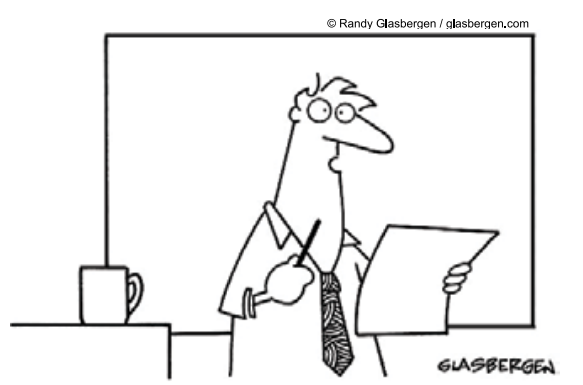
"Today's test is 70% of your final grade which makes
up 35% of your grade for the semester and 20% of
your GPA for 50% of your scholastic career for 15%
of the curriculum. If you can explain this to
the person next you, you pass the test."
(https://br.pinterest.com)
A palavra “curriculum”, de origem latina, tem sua forma plural “curricula”. Assinale a alternativa que apresenta corretamente o par singular-plural.
Provas
Leia o texto para responder às questões de números 39 a 49.
As a scholar of education who studies grading practices, I’ve seen how important grades are to schools, students and their families.
Teachers, too, certainly know how important grades are. In fact, teachers spend over one-third of their professional work time assessing and evaluating student learning. But most university teacher-education programs focus on curriculum and instruction, with less attention attached to assessment. These programs do not talk about how to actually grade student work.
In keeping with a long-held tradition in education, teachers also have, and like, the autonomy to set their own practices. That has resulted in inconsistency, inequity and even unreliability in teachers’ grading practices.
For example, teachers decide if grades will be based on tests, quizzes, homework, participation, behavior, effort, extra credit or other evidence. When surveying over 15,000 teachers, administrators, support educators, parents and students, I found teachers use a rather comprehensive range of evidence in grades. While they primarily use tests, quizzes, projects, and homework to assign grades, teachers at all grade levels also include nonacademic evidence, like behavior and effort, in their grading equations.
Once teachers decide what to include in their grades, they decide how much weight to assign to each grade category. One teacher may weigh homework as 20% of the final course grade, while another teacher in the same grade level may choose a different weight or not grade homework at all.
In my study, I have talked to teachers who curve grades, that is, these teachers adjust grades by adding points to all students’ scores to bring the highest score up to 100%. Other teachers in the same school told me they do not grade on a curve - they add extra credit points to students’ final course grades if they attend a school event, such as a play. Some teachers told me they also add grade points if a student was never tardy to class or never missed an assignment deadline.
The effort to keep up with multiple teachers’ different grading expectations causes students chronic stress and anxiety, especially for those students with poor organizational, time-management and self-regulation skills. This is also the case for students competing for high grade-point averages and class rank. Still, students rarely question teachers’ grading or the grading differences between teachers; rather, they have accepted these differences because “this is how it’s always been”.
(Laura Link theconversation.com, 16.03.2023. Adaptado)
Suppose that, as a reader, you have never seen the word “rather” as used in the text’s final sentence. To get at its meaning you can use the reading ability named
Provas
Leia o texto para responder às questões de números 39 a 49.
As a scholar of education who studies grading practices, I’ve seen how important grades are to schools, students and their families.
Teachers, too, certainly know how important grades are. In fact, teachers spend over one-third of their professional work time assessing and evaluating student learning. But most university teacher-education programs focus on curriculum and instruction, with less attention attached to assessment. These programs do not talk about how to actually grade student work.
In keeping with a long-held tradition in education, teachers also have, and like, the autonomy to set their own practices. That has resulted in inconsistency, inequity and even unreliability in teachers’ grading practices.
For example, teachers decide if grades will be based on tests, quizzes, homework, participation, behavior, effort, extra credit or other evidence. When surveying over 15,000 teachers, administrators, support educators, parents and students, I found teachers use a rather comprehensive range of evidence in grades. While they primarily use tests, quizzes, projects, and homework to assign grades, teachers at all grade levels also include nonacademic evidence, like behavior and effort, in their grading equations.
Once teachers decide what to include in their grades, they decide how much weight to assign to each grade category. One teacher may weigh homework as 20% of the final course grade, while another teacher in the same grade level may choose a different weight or not grade homework at all.
In my study, I have talked to teachers who curve grades, that is, these teachers adjust grades by adding points to all students’ scores to bring the highest score up to 100%. Other teachers in the same school told me they do not grade on a curve - they add extra credit points to students’ final course grades if they attend a school event, such as a play. Some teachers told me they also add grade points if a student was never tardy to class or never missed an assignment deadline.
The effort to keep up with multiple teachers’ different grading expectations causes students chronic stress and anxiety, especially for those students with poor organizational, time-management and self-regulation skills. This is also the case for students competing for high grade-point averages and class rank. Still, students rarely question teachers’ grading or the grading differences between teachers; rather, they have accepted these differences because “this is how it’s always been”.
(Laura Link theconversation.com, 16.03.2023. Adaptado)
The word “rather”, in the last sentence in the text, can be correctly replaced by
Provas
Leia o texto para responder às questões de números 39 a 49.
As a scholar of education who studies grading practices, I’ve seen how important grades are to schools, students and their families.
Teachers, too, certainly know how important grades are. In fact, teachers spend over one-third of their professional work time assessing and evaluating student learning. But most university teacher-education programs focus on curriculum and instruction, with less attention attached to assessment. These programs do not talk about how to actually grade student work.
In keeping with a long-held tradition in education, teachers also have, and like, the autonomy to set their own practices. That has resulted in inconsistency, inequity and even unreliability in teachers’ grading practices.
For example, teachers decide if grades will be based on tests, quizzes, homework, participation, behavior, effort, extra credit or other evidence. When surveying over 15,000 teachers, administrators, support educators, parents and students, I found teachers use a rather comprehensive range of evidence in grades. While they primarily use tests, quizzes, projects, and homework to assign grades, teachers at all grade levels also include nonacademic evidence, like behavior and effort, in their grading equations.
Once teachers decide what to include in their grades, they decide how much weight to assign to each grade category. One teacher may weigh homework as 20% of the final course grade, while another teacher in the same grade level may choose a different weight or not grade homework at all.
In my study, I have talked to teachers who curve grades, that is, these teachers adjust grades by adding points to all students’ scores to bring the highest score up to 100%. Other teachers in the same school told me they do not grade on a curve - they add extra credit points to students’ final course grades if they attend a school event, such as a play. Some teachers told me they also add grade points if a student was never tardy to class or never missed an assignment deadline.
The effort to keep up with multiple teachers’ different grading expectations causes students chronic stress and anxiety, especially for those students with poor organizational, time-management and self-regulation skills. This is also the case for students competing for high grade-point averages and class rank. Still, students rarely question teachers’ grading or the grading differences between teachers; rather, they have accepted these differences because “this is how it’s always been”.
(Laura Link theconversation.com, 16.03.2023. Adaptado)
In the fragment from the third paragraph “I found teachers use a rather comprehensive range of evidence in grades”, the underlined word “rather” means
Provas
Caderno Container