Foram encontradas 1.145 questões.
O consumo de energia elétrica no Brasil nunca foi tão alto. O gráfico abaixo apresenta o pico de consumo, medido sempre na primeira quinta-feira de fevereiro de cada ano, nos últimos três anos.
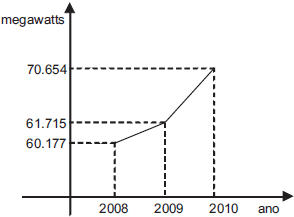
Se o aumento linear observado de 2008 para 2009 se mantivesse de 2009 para 2010, o pico de consumo de energia na primeira quinta-feira de fevereiro seria x megawatts menor do que efetivamente foi. Conclui-se que x é igual a
Provas
Questão presente nas seguintes provas

314281
Ano: 2010
Disciplina: Segurança e Saúde no Trabalho (SST)
Banca: CESGRANRIO
Orgão: BR Distribuidora
Disciplina: Segurança e Saúde no Trabalho (SST)
Banca: CESGRANRIO
Orgão: BR Distribuidora
Provas:
No âmbito da segurança do trabalho, a diferença entre o significado dos termos acidente e incidente é que
Provas
Questão presente nas seguintes provas
314153
Ano: 2010
Disciplina: Segurança e Saúde no Trabalho (SST)
Banca: CESGRANRIO
Orgão: BR Distribuidora
Disciplina: Segurança e Saúde no Trabalho (SST)
Banca: CESGRANRIO
Orgão: BR Distribuidora
Provas:
A NR 15 apresenta, no Anexo no 12, o seguinte modelo de rótulo:

Este rótulo é exigido para identificação adequada de produtos contendo
Provas
Questão presente nas seguintes provas
314124
Ano: 2010
Disciplina: Segurança e Saúde no Trabalho (SST)
Banca: CESGRANRIO
Orgão: BR Distribuidora
Disciplina: Segurança e Saúde no Trabalho (SST)
Banca: CESGRANRIO
Orgão: BR Distribuidora
Provas:
Segundo a NR 17, nas atividades de processamento eletrônico de dados, deve-se, salvo o disposto em convenções e acordos coletivos de trabalho, observar, entre outras, as seguintes determinações:
I – o empregador não deve promover qualquer sistema de avaliação dos trabalhadores envolvidos nas atividades de digitação, com base no número individual de toques sobre o teclado, inclusive o automatizado, para efeito de remuneração e vantagens de qualquer espécie;
II – o número máximo de toques reais exigidos pelo empregador não deve ser superior a 6.000 por hora trabalhada, sendo considerado toque real, para efeito desta NR, cada movimento de pressão sobre o teclado;
III – o tempo efetivo de trabalho de entrada de dados não deve exceder o limite máximo de 6 (seis) horas, sendo que, no período de tempo restante da jornada, o trabalhador poderá exercer outras atividades, observado o disposto no art. 468 da Consolidação das Leis do Trabalho, desde que não exijam movimentos repetitivos, nem esforço visual;
IV – nas atividades de entrada de dados deve haver, no mínimo, uma pausa de 10 minutos para cada 50 minutos trabalhados, não deduzidos da jornada normal de trabalho.
É (São) correta(s) APENAS a(s) determinação(ões)
Provas
Questão presente nas seguintes provas
314116
Ano: 2010
Disciplina: Inglês (Língua Inglesa)
Banca: CESGRANRIO
Orgão: BR Distribuidora
Disciplina: Inglês (Língua Inglesa)
Banca: CESGRANRIO
Orgão: BR Distribuidora
Provas:
Happy 150th, Oil! So Long, and Thanks for Modern Civilization
By Alexis Madrigal
WIRED SCIENCE, August 27, 2009
WIRED SCIENCE, August 27, 2009
One hundred and fifty years ago on Aug. 27, Colonel Edwin L. Drake sunk the very first commercial well that produced flowing petroleum. The discovery that large amounts of oil could be found underground marked the beginning of a time during which this convenient fossil fuel became America’s dominant energy source.
But what began 150 years ago won’t last another 150 years — or even another 50. The era of cheap oil is ending, and with another energy transition upon us, we’ve got to extract all the lessons we can from its remarkable history.
“I would see this as less of an anniversary to note for celebration and more of an anniversary to note how far we’ve come and the serious moment that we’re at right now,” said Brian Black, an energy historian at Pennsylvania State University. “Energy transitions happen and I argue that we’re in one right now. Thus, we need to aggressively look to the future to what’s going to happen after petroleum.”
When Drake and others sunk their wells, there were no cars, no plastics, no chemical industry. Water power was the dominant industrial energy source. Steam engines burning coal were on the rise, but the nation’s energy system — unlike Great Britain’s — still used fossil fuels sparingly. The original role for oil was as an illuminant, not a motor fuel, which would come decades later.
Oil, people later found, was uniquely convenient. To equal the amount of energy in a tank of gasoline, you need 200 pounds of wood. Pair that energy density with stability under most conditions and that, as a liquid, it was easy to transport, and you have the killer application for the infrastructure age.
In a world that only had a tiny fraction of the amount of heat, light, and power available that we do now, people came up with all kinds of ideas for what to do with oil’s energy: cars, tractors, airplanes, chemicals, fertilizer, and plastic.
The scale of the oil industry is astounding, but it’s becoming clear the world’s oil supply will peak soon, or perhaps has peaked already. People discuss about the details, but no one argues that oil will play a much different role in our energy system in 50 years than it did in 1959.
The search for alternatives is on. If that search goes poorly — as some Peak Oil analysts predict — human civilization will fall off an energy cliff. The amount of energy we get back from drilling oil wells in the middle of the Gulf of Mexico continues to drop, and alternative sources don’t provide usable energy for humans on the generous terms that oil long has.
Yet humans with an economic incentive to be optimistic become optimists, and the harder we look, the more possible alternatives we find. The big question now is whether the cure for our oil addiction will come with a heavy carbon side effect.
Over the next 20 years, synthetic fuels made from coal or shale oil could conceivably become the fuels of the future. On the other hand, so could advanced biofuels from cellulosic ethanol or algae. Or the era of fuel could end and electric vehicles could be deployed in mass, at least in rich countries.
With the massive injection of stimulus and venture capital money into alternative energy that’s occurred over the past few years, the solutions for replacing oil could already be circulating among the labs and office parks of the country. To paraphrase technology expert Clay Shirky talking about the media, nothing will work to replace oil, but everything might.
If history tells us anything, it’s that energy sources can change, never tomorrow, but always some day.
“What is required is to operate without fear and to take energy transitions on as a developmental opportunity,” Black said.
slightly adapted from: http://www.wired.com/wiredscience/
2009/08/oilat150/#ixzz0gW1mC0Zm, access on Feb. 10, 2010.
The fragment “…energy sources can change, never tomorrow, but always some day.” (line 30) implies that
Provas
Questão presente nas seguintes provas
314114
Ano: 2010
Disciplina: Conhecimentos Bancários
Banca: CESGRANRIO
Orgão: BR Distribuidora
Disciplina: Conhecimentos Bancários
Banca: CESGRANRIO
Orgão: BR Distribuidora
Provas:
Uma opção de compra que dá direito a seu titular de comprar um determinado ativo por R$ 100,00, até 2/6/2010, foi adquirida por R$ 10,00 em 5/4/2010. Em tais circunstâncias, o(a)
Provas
Questão presente nas seguintes provas
O pH define o grau de acidez de uma solução, o teor de íons hidrogênio (H+) livres. Desse modo, o
Provas
Questão presente nas seguintes provas
Analise os dados parciais dos registros, em reais, da empresa Flores Ltda., referentes a agosto/2009, evidenciados nos razonetes a seguir.
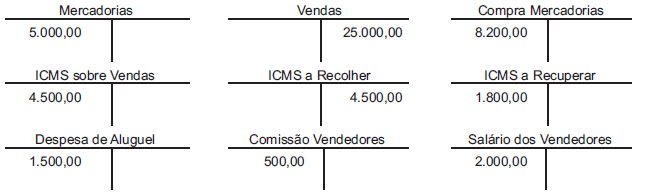
Admitindo-se exclusivamente as informações recebidas e que o estoque final de mercadorias estava zerado, afirma-se que o resultado com mercadorias apurado pela empresa Flores, em agosto/09, em reais, é
Provas
Questão presente nas seguintes provas
313802
Ano: 2010
Disciplina: Engenharia de Produção
Banca: CESGRANRIO
Orgão: BR Distribuidora
Disciplina: Engenharia de Produção
Banca: CESGRANRIO
Orgão: BR Distribuidora
Provas:
Considere as seguintes características sobre processo decisório.
I - dados repetitivos;
II - imprevisibilidade;
III - condições estáticas;
IV - condições dinâmicas.
São características de decisões não programadas APENAS
Provas
Questão presente nas seguintes provas
Analise o croqui da estrutura a seguir.
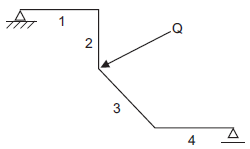
Está(ão) sujeita(s) a esforço(s) normal(is) APENAS a(s) barra(s)
Provas
Questão presente nas seguintes provas
Cadernos
Caderno Container