Foram encontradas 70 questões.
Hércules pratica exatamente um esporte a cada dia da semana.
Às segundas-feiras ele joga vôlei e dois dias depois ele joga
basquete. Hércules corre três vezes por semana, mas nunca dois
dias consecutivos. Ele também pratica natação e joga tênis, mas
nunca pratica natação no dia seguinte ao jogo de tênis ou à
corrida.
O dia da semana em que Hércules joga tênis é:
O dia da semana em que Hércules joga tênis é:
Provas
Questão presente nas seguintes provas

Em uma urna há duas bolas pretas e duas bolas brancas. Ana
retira, aleatoriamente e sem reposição, duas bolas da urna, e
Beatriz retira as duas bolas que sobraram.
A probabilidade de Beatriz retirar duas bolas da mesma cor é:
A probabilidade de Beatriz retirar duas bolas da mesma cor é:
Provas
Questão presente nas seguintes provas
Beralda comprou uma caixa contendo 15 dúzias de comprimidos
de complementos vitamínicos e tomou um por dia, todos os dias,
sem interrupção.
Se Beralda tomou o primeiro comprimido em uma segunda-feira, o último comprimido da caixa foi tomado em:
Se Beralda tomou o primeiro comprimido em uma segunda-feira, o último comprimido da caixa foi tomado em:
Provas
Questão presente nas seguintes provas
Joana foi à loja de roupas para comprar peças novas do uniforme
da escola do seu filho. Uma bermuda custava R$ 35,00 e uma
camiseta com o logotipo do colégio custava R$ 20,00. Joana
comprou uma bermuda e duas camisetas e, por ter comprado as
três peças juntas, ganhou um desconto e pagou o total de
R$ 66,00 pelas três peças.
O desconto que Joana ganhou foi de:
O desconto que Joana ganhou foi de:
Provas
Questão presente nas seguintes provas
Romeu foi a uma loja de flores para comprar um buquê de rosas
vermelhas e cravos brancos. Cada rosa custava R$ 5,00 e cada
cravo R$ 3,00. Romeu queria gastar exatamente R$ 50,00 com o
buquê, que deveria ter pelo menos uma flor de cada um dos dois
tipos.
O número de escolhas que Romeu teve para comprar seu buquê foi:
O número de escolhas que Romeu teve para comprar seu buquê foi:
Provas
Questão presente nas seguintes provas
Abel, Bruno, Caio, Diogo e Elias ocupam, respectivamente, os
bancos 1, 2, 3, 4 e 5, em volta da mesa redonda representada
abaixo.
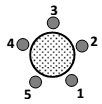
São feitas então três trocas de lugares: Abel e Bruno trocam de lugar entre si, em seguida Caio e Elias trocam de lugar entre si e, finalmente, Diogo e Abel trocam de lugar entre si.
Considere as afirmativas ao final dessas trocas:
• Diogo é o vizinho à direita de Bruno.
• Abel e Bruno permaneceram vizinhos.
• Caio é o vizinho à esquerda de Abel.
• Elias e Abel não são vizinhos.
É/são verdadeira(s):
São feitas então três trocas de lugares: Abel e Bruno trocam de lugar entre si, em seguida Caio e Elias trocam de lugar entre si e, finalmente, Diogo e Abel trocam de lugar entre si.
Considere as afirmativas ao final dessas trocas:
• Diogo é o vizinho à direita de Bruno.
• Abel e Bruno permaneceram vizinhos.
• Caio é o vizinho à esquerda de Abel.
• Elias e Abel não são vizinhos.
É/são verdadeira(s):
Provas
Questão presente nas seguintes provas
A região sombreada na figura é conhecida como “barbatana de
tubarão" e foi construída a partir de um quadrante de círculo de
raio 4 e de um semicírculo.

A área dessa “barbatana de tubarão" é:
A área dessa “barbatana de tubarão" é:
Provas
Questão presente nas seguintes provas
Pela falta de energia, no dia 01 de junho todos os geradores de
energia elétrica de uma fábrica foram ligados e o estoque de
combustível que a fábrica possuía permitiria manter os geradores
funcionando por 30 dias. Entretanto, depois de 10 dias de
funcionamento de todos os geradores, a metade deles foi
desligada.
O combustível restante permitiu que os outros geradores continuassem a funcionar até o dia:
O combustível restante permitiu que os outros geradores continuassem a funcionar até o dia:
Provas
Questão presente nas seguintes provas
- Lógica ProposicionalEquivalências Lógicas
- Lógica ProposicionalNegação de Proposições CompostasLeis de De Morgan
Em uma empresa, o diretor de um departamento percebeu que
Pedro, um dos funcionários, tinha cometido alguns erros em seu
trabalho e comentou:
“Pedro está cansado ou desatento."
A negação lógica dessa afirmação é:
“Pedro está cansado ou desatento."
A negação lógica dessa afirmação é:
Provas
Questão presente nas seguintes provas
TEXT 3
Sustainable mining – oxymoron or a way of the future?
Mining is an activity that has persisted since the start of humans using tools. However, one might argue that digging a big hole in the ground and selling the finite resources that come out of that hole is not sustainable, especially when the digging involves the use of other finite resources (i.e. fuels) and produces a lot of greenhouse gases.
The counter argument could go along the lines that minerals are not being lost or destroyed through mining and mineral processing – the elements are being shifted around, and converted into new forms. Metals can even be extracted from waste, seawater or even sewage, and recycled. But a more simple argument is possible: a mine can be sustainable if it is economically, socially and environmentally beneficial in the short and long term. To be sustainable, the positive benefits of mining should outweigh any negative impacts. […]
Social positives are often associated with mines in regional areas, such as providing better amenities in a nearby town, or providing employment (an economic and social positive). Social negatives can also occur, such as dust, noise, traffic and visual amenity. These are commonly debated and, whilst sometimes controversial, can be managed with sufficient corporate commitment, stakeholder engagement, and enough time to work through the issues. Time is the key parameter - it may take several years for a respectful process of community input, but as long as it is possible for social negatives to be outweighed by social positives, then the project will be socially sustainable.
It is most likely that a mine development will have some environmental negatives, such as direct impacts on flora and fauna through clearing of vegetation and habitat within the mine footprint. Some mines will have impacts which extend beyond the mine site, such as disruption to groundwater, production of silt and disposal of waste. Certainly these impacts will need to be managed throughout the mine life, along with robust rehabilitation and closure planning. […]
The real turning point will come when mining companies go beyond environmental compliance to create 'heritage projects' that can enhance the environmental or social benefits in a substantial way – by more than the environmental offsets needed just to make up for the negatives created by the mine. In order to foster these innovative mining heritage projects we need to promote 'sustainability assessments' - not just 'environmental assessments'. This will lead to a more mature appreciation of the whole system whereby the economic and social factors, as well as environmental factors, are considered in a holistic manner.
(adapted from https://www.engineersaustralia.org.au/western-australia-division/sustainable-mining-oxymoron-or-way-future. Retrieved on August 10, 2015)
As regards the content of Text 3, analyse the assertions below:
Sustainable mining – oxymoron or a way of the future?
Mining is an activity that has persisted since the start of humans using tools. However, one might argue that digging a big hole in the ground and selling the finite resources that come out of that hole is not sustainable, especially when the digging involves the use of other finite resources (i.e. fuels) and produces a lot of greenhouse gases.
The counter argument could go along the lines that minerals are not being lost or destroyed through mining and mineral processing – the elements are being shifted around, and converted into new forms. Metals can even be extracted from waste, seawater or even sewage, and recycled. But a more simple argument is possible: a mine can be sustainable if it is economically, socially and environmentally beneficial in the short and long term. To be sustainable, the positive benefits of mining should outweigh any negative impacts. […]
Social positives are often associated with mines in regional areas, such as providing better amenities in a nearby town, or providing employment (an economic and social positive). Social negatives can also occur, such as dust, noise, traffic and visual amenity. These are commonly debated and, whilst sometimes controversial, can be managed with sufficient corporate commitment, stakeholder engagement, and enough time to work through the issues. Time is the key parameter - it may take several years for a respectful process of community input, but as long as it is possible for social negatives to be outweighed by social positives, then the project will be socially sustainable.
It is most likely that a mine development will have some environmental negatives, such as direct impacts on flora and fauna through clearing of vegetation and habitat within the mine footprint. Some mines will have impacts which extend beyond the mine site, such as disruption to groundwater, production of silt and disposal of waste. Certainly these impacts will need to be managed throughout the mine life, along with robust rehabilitation and closure planning. […]
The real turning point will come when mining companies go beyond environmental compliance to create 'heritage projects' that can enhance the environmental or social benefits in a substantial way – by more than the environmental offsets needed just to make up for the negatives created by the mine. In order to foster these innovative mining heritage projects we need to promote 'sustainability assessments' - not just 'environmental assessments'. This will lead to a more mature appreciation of the whole system whereby the economic and social factors, as well as environmental factors, are considered in a holistic manner.
(adapted from https://www.engineersaustralia.org.au/western-australia-division/sustainable-mining-oxymoron-or-way-future. Retrieved on August 10, 2015)
I - It is well-known that the resources extracted from mines are endless.
II - The social negative impacts of mining may be minimized as time goes by.
III - Sustainable assessment has a wider field of action than environmental assessment.
IV - There is agreement that negative impacts of mining are restricted to the site.
The correct sentences are only:
Provas
Questão presente nas seguintes provas
Cadernos
Caderno Container