Foram encontradas 200 questões.
Sobre o Sistema Operacional Ubutu Linux, considere as afirmativas abaixo:
i. upstart é um substituto para o daemon /sbin/init e é baseado em eventos como inicialização de tarefas e serviços durante o boot, parada destes durante o shutdown e supervisão durante a execução do sistema.
ii. /etc/init é o diretório das configurações de inicialização do upstart. Já o diretório /etc/init.d é usado para scripts tradicionais do sysvinit e para scripts de compatibilidade.
iii. /etc/default possui apenas scripts que permitem controlar o comportamento do sysvinit.
É CORRETO afirmar que
Provas
Questão presente nas seguintes provas

Quanto aos comandos ou utilitários Linux e suas funções, é CORRETO afirmar que o comando
Provas
Questão presente nas seguintes provas
Assinale a alternativa que descreve os nomes das camadas do modelo OSI que controlam o endereçamento e a detecção de erros no nível físico, respectivamente.
Provas
Questão presente nas seguintes provas
Electronic junk will create pollution problem around world, U.N. study warns
BALI, Indonesia — Sales of household electrical gadgets will boom across the developing world in the next decade, wreaking environmental havoc if there are no new strategies to deal with the discarded TVs, cell phones and computers, a U.N. report said today.
The environmental and health hazards posed by the globe's mounting electronic waste are particularly urgent in developing countries, which are already dumping grounds for rich nations' high-tech trash, the U.N. Environment Program study said.
Electronic waste is piling up around the world at a rate estimated at 40 million U.S. tons a year, the report said, noting that data remain insufficient.
China produces 2.6 million tons of electronic waste a year, second only to the United States with 3.3 million tons, it said.
UNEP Executive Director Achim Steiner said the globe was ill-prepared to deal with the explosion of electronic gadgets over the past decade.
"The world is now confronted with a massive wave of electronic waste that is going to come back and hit us, particularly for least-developed countries, that may become a dumping ground," Steiner told The Associated Press ahead of a UNEP executive meeting in Bali.
He said some Americans and Europeans have sent broken computers to African countries falsely declared as donations. The computers were dumped outside slums as toxic waste and became potential hazards to people, he said.
The report predicts that China's waste rate from old computers will quadruple from 2007 levels by 2020. Meanwhile, in India, waste from old refrigerators — which contain hazardous chlorofluorocarbons and hydrochlorofluorocarbon gases — could triple by 2020.
It said the fastest growth in electronic waste in recent years has been in communications devices such as cell phones, pagers and smart phones.
Most of the recycling of electronic waste in developing countries such as China and India is done by inefficient and unregulated backyard operators. The environmentally harmful practice of heating electronic circuit boards over coal-fired grills to leach out gold is widespread in both countries.
The report called for regulations for collecting and managing electronic waste, and urged that technologies be transferred to the industrializing world to cope with such waste.
While electrical products such refrigerators, air conditioners, printers, DVD players and digital music players account for only a small part of the world's garbage, their components make them particularly hazardous.
Prof. Eric Williams, an Arizona State University expert on industrial ecology who did not participate in the UNEP study, said it was difficult to comment on the credibility of the electronic waste growth forecasts because the report gives little explanation of how they were calculated.
"It is the environmental intensity of e-waste rather than its total mass that is the main concern," Williams told the AP via e-mail.
"If e-waste is recycled informally in the developing world, it causes far worse pollution than the much larger mass of regular waste in landfills," he said.
http://www.cleveland.com/world/index.ssf/2010/02/electronic_junk_will_create_po.html (06/06/12)
What does e-waste mean in Portuguese?
Provas
Questão presente nas seguintes provas
CANDIDATO SOFRE E COMO...
Autor desconhecido
Pontualmente, às 7h, o portão se abre. No corre-corre, corpos se batem, atropelam-se, quase tombam. Cada um procura a sua sala, a maioria com passos acelerados, e poucos, a passos de tartaruga. Esquecimento de caneta, de identidade, de alguma documentação exigida pelo processo gera tumulto em algumas salas. Os responsáveis agilizam providências pertinentes. Para muitos, é momento de tensão, de expectativa. É momento de na “pena” e no papel demonstrarem suas “aprendizagens”. O candidato pena na “pena”, sobretudo aqueles desprovidos de conteúdo. Estes apelam para os neurônios, mas nada têm o que dizer. Sala silenciosa, alguns tentam espichar o pescoço em busca de respostas, outros se fixam de tal forma nas questões que o mundo parece “morrer”. Suor para alguns. Dor de cabeça para outros. Poucos são os que mantêm a calma. E ainda dizem que vida de candidato é moleza.
Candidato sofre e como...
Analise os itens abaixo e assinale V para os Verdadeiros e F para os Falsos.
( ) “Os responsáveis agilizam providências pertinentes.” – se os termos sublinhados estivessem no singular, estaria correto o trecho: O responsável agiliza providência pertinente.
( ) “Estes apelam para os neurônios, mas nada têm o que dizer” – se o termo sublinhado estivesse no singular, seria correto dizer: Este apela para os neurônios, mas nada tem o que dizer.
( ) “No corre-corre, corpos se batem, atropelam-se, quase tombam” – imaginando que a ação já tivesse acontecido, estaria correto o trecho: No corre-corre, corpos se batiam, atropelavam-se, tombariam.
( ) “Os responsáveis agilizam providências pertinentes” – no caso de a ação ainda vir a acontecer, estaria correto o trecho: Os responsáveis agilizaram providências pertinentes.
Assinale a alternativa que contém a sequência CORRETA.
Provas
Questão presente nas seguintes provas
Um Data Warehouse é uma importante ferramenta para Business Inteligence. Sobre esse tema, analise as afirmações:
i. Um Data Warehouse armazena os dados de modo dimensional ou normalizado.
ii. Um sistema de Data Warehouse é tipicamente atualizado em lotes (batches) que consolidam dados, periodicamente, de outras fontes de dados.
iii. Num sistema de Data Warehouse, não há verificação de qualidade dos dados, quando o sistema ETL (extract, transform and load system) carrega informações numa DDS (dimentional data store).
Assinale a alternativa CORRETA.
Provas
Questão presente nas seguintes provas
Os sistemas abertos das organizações têm uma variedade enorme de entradas e saídas com relação ao ambiente externo. Essas entradas e saídas não são bem conhecidas, e suas relações de causa e efeito são indeterminadas. Sobre sistemas abertos, também podemos entender como
Provas
Questão presente nas seguintes provas
- Read the text below and answer the questions.
The Five Generations of Computers
Each generation of computer is characterized by a major technological development that fundamentally changed the way computers operate, resulting in increasingly smaller, cheaper, more powerful and more efficient and reliable devices.
The history of computer development is often referred to in reference to the different generations of computing devices. Each generation of computer is characterized by a major technological development that fundamentally changed the way computers operate, resulting in increasingly smaller, cheaper, more powerful and more efficient and reliable devices. Read about each generation and the developments that led to the current devices that we use today.
First Generation (1940-1956) Vacuum Tubes
The first computers used vacuum tubes for circuitry and magnetic drums for memory, and were often enormous, taking up entire rooms. They were very expensive to operate and in addition to using a great deal of electricity, generated a lot of heat, which was often the cause of malfunctions.
First generation computers relied on machine language, the lowest-level programming language understood by computers, to perform operations, and they could only solve one problem at a time. Input was based on punched cards and paper tape, and output was displayed on printouts.
The UNIVAC and ENIAC computers are examples of first-generation computing devices. The UNIVAC was the first commercial computer delivered to a business client, the U.S. Census Bureau in 1951.
Second Generation (1956-1963) Transistors
Transistors replaced vacuum tubes and ushered in the second generation of computers. The transistor was invented in 1947 but did not see widespread use in computers until the late 1950s. The transistor was far superior to the vacuum tube, allowing computers to become smaller, faster, cheaper, more energy-efficient and more reliable than their firstgeneration predecessors. Though the transistor still generated a great deal of heat that subjected the computer to damage, it was a vast improvement over the vacuum tube. Second-generation computers still relied on punched cards for input and printouts for output.
Second-generation computers moved from cryptic binary machine language to symbolic, or assembly, languages, which allowed programmers to specify instructions in words. High-level programming languages were also being developed at this time, such as early versions of COBOL and FORTRAN. These were also the first computers that stored their instructions in their memory, which moved from a magnetic drum to magnetic core technology.The first computers of this generation were developed for the atomic energy industry.
Third Generation (1964-1971) Integrated Circuits
The development of the integrated circuit was the hallmark of the third generation of computers. Transistors were miniaturized and placed on silicon chips, called semiconductors, which drastically increased the speed and efficiency of computers.
Instead of punched cards and printouts, users interacted with third generation computers through keyboards and monitors and interfaced with an operating system, which allowed the device to run many different applications at one time with a central program that monitored the memory. Computers for the first time became accessible to a mass audience because they were smaller and cheaper than their predecessors.
Fourth Generation (1971-Present) Microprocessors
The microprocessor brought the fourth generation of computers, as thousands of integrated circuits were built onto a single silicon chip. What in the first generation filled an entire room could now fit in the palm of the hand. The Intel 4004 chip, developed in 1971, located all the components of the computer—from the central processing unit and memory to input/output controls—on a single chip.
In 1981 IBM introduced its first computer for the home user, and in 1984 Apple introduced the Macintosh. Microprocessors also moved out of the realm of desktop computers and into many areas of life as more and more everyday products began to use microprocessors.
As these small computers became more powerful, they could be linked together to form networks, which eventually led to the development of the Internet. Fourth generation computers also saw the development of GUIs, the mouse and handheld devices.
Fifth Generation (Present and Beyond) Artificial Intelligence
Fifth generation computing devices, based on artificial intelligence, are still in development, though there are some applications, such as voice recognition, that are being used today. The use of parallel processing and superconductors is helping to make artificial intelligence a reality. Quantum computation and molecular and nanotechnology will radically change the face of computers in years to come. The goal of fifth-generation computing is to develop devices that respond to natural language input and are capable of learning and self-organization.
http://www.webopedia.com/DidYouKnow/Hardware_Software/2002/FiveGenerations.asp (consultado em 11/04/12)
Important things happened during the fourth generation. For example:
Provas
Questão presente nas seguintes provas
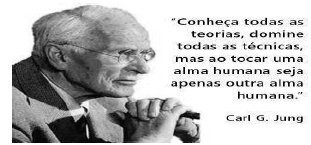
Disponível em: www.carl-jung.page.org. Acesso em: 16.04.2012.
é CORRETO afirmar que
Provas
Questão presente nas seguintes provas
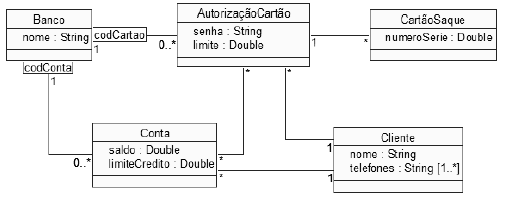
A quantas tabelas no modelo relacional dará origem o modelo conceitual de informação apresentado abaixo?
Provas
Questão presente nas seguintes provas
Cadernos
Caderno Container