Foram encontradas 70 questões.
- Vocabulário | Vocabulary
- Sinônimos | Synonyms
- Gramática - Língua InglesaAdjetivos | AdjectivesOposto | Opposite
Yesterday started with the best of intentions. I walked
into my office in the morning with a vague sense of
what I wanted to accomplish. Then I sat down, turned
on my computer, and checked my email. Two hours
later, after fighting several fires, solving other people’s
problems, and dealing with whatever happened to be
thrown at me through my computer and phone, I could
hardly remember what I had set out to accomplish when
I first turned on my computer. I’d been ambushed. And
I know better.
That means we start every day knowing we’re not going
to get it all done. So how we spend our time is a key
strategic decision. That’s why it’s a good idea to create
a to do list and an ignore list. The hardest attention to
focus is our own.
But even with those lists, the challenge, as always, is
execution. How can you stick to a plan when so many
things threaten to derail it?
Managing our time needs to become a ritual too. Not
simply a list or a vague sense of our priorities. That’s
not consistent or deliberate. It needs to be an ongoing
process we follow no matter what to keep us focused
on our priorities throughout the day.
I think we can do it in three steps that take less than
minutes over an eight-hour workday.
STEP 1 (5 Minutes) Before turning on your computer,
sit down with a blank piece of paper and decide what
will make this day highly successful. What can you
realistically carry out that will further your goals and
allow you to leave at the end of the day feeling like
you’ve been productive and successful? Write those
things down.
Now, most importantly, take your calendar and schedule
those things into time slots, placing the hardest and
most important items at the beginning of the day. And
by the beginning of the day I mean, if possible, before
even checking your email. There is tremendous power
in deciding when and where you are going to do
something.
If you want to get something done, decide when and
where you’re going to do it. Otherwise, take it off your
list.
STEP 2 (1 minute every hour) Set your watch, phone,
or computer to ring every hour. When it rings, take a
deep breath, look at your list and ask yourself if you
spent your last hour productively. Then look at your
calendar and deliberately recommit to how you are
going to use the next hour.
STEP 3 (5 minutes) Shut off your computer and review
your day. What worked? Where did you focus? Where
did you get distracted?
The power of rituals is their predictability. You do the
same thing in the same way over and over again. And
so the outcome of a ritual is predictable too. If you
choose your focus deliberately and wisely, and
consistently remind yourself of that focus, you will stay
focused. It’s simple.
This particular ritual may not help you swim the English
Channel. But it may just help you leave the office feeling
productive and successful.
And, at the end of the day, isn’t that a higher priority?
Extracted from: http://blogs.harvardbusiness.org/bregman/2009/07/an-18minute-plan-for-managing.html
Provas

Yesterday started with the best of intentions. I walked
into my office in the morning with a vague sense of
what I wanted to accomplish. Then I sat down, turned
on my computer, and checked my email. Two hours
later, after fighting several fires, solving other people’s
problems, and dealing with whatever happened to be
thrown at me through my computer and phone, I could
hardly remember what I had set out to accomplish when
I first turned on my computer. I’d been ambushed. And
I know better.
That means we start every day knowing we’re not going
to get it all done. So how we spend our time is a key
strategic decision. That’s why it’s a good idea to create
a to do list and an ignore list. The hardest attention to
focus is our own.
But even with those lists, the challenge, as always, is
execution. How can you stick to a plan when so many
things threaten to derail it?
Managing our time needs to become a ritual too. Not
simply a list or a vague sense of our priorities. That’s
not consistent or deliberate. It needs to be an ongoing
process we follow no matter what to keep us focused
on our priorities throughout the day.
I think we can do it in three steps that take less than
minutes over an eight-hour workday.
STEP 1 (5 Minutes) Before turning on your computer,
sit down with a blank piece of paper and decide what
will make this day highly successful. What can you
realistically carry out that will further your goals and
allow you to leave at the end of the day feeling like
you’ve been productive and successful? Write those
things down.
Now, most importantly, take your calendar and schedule
those things into time slots, placing the hardest and
most important items at the beginning of the day. And
by the beginning of the day I mean, if possible, before
even checking your email. There is tremendous power
in deciding when and where you are going to do
something.
If you want to get something done, decide when and
where you’re going to do it. Otherwise, take it off your
list.
STEP 2 (1 minute every hour) Set your watch, phone,
or computer to ring every hour. When it rings, take a
deep breath, look at your list and ask yourself if you
spent your last hour productively. Then look at your
calendar and deliberately recommit to how you are
going to use the next hour.
STEP 3 (5 minutes) Shut off your computer and review
your day. What worked? Where did you focus? Where
did you get distracted?
The power of rituals is their predictability. You do the
same thing in the same way over and over again. And
so the outcome of a ritual is predictable too. If you
choose your focus deliberately and wisely, and
consistently remind yourself of that focus, you will stay
focused. It’s simple.
This particular ritual may not help you swim the English
Channel. But it may just help you leave the office feeling
productive and successful.
And, at the end of the day, isn’t that a higher priority?
Extracted from: http://blogs.harvardbusiness.org/bregman/2009/07/an-18minute-plan-for-managing.html
Provas
Yesterday started with the best of intentions. I walked
into my office in the morning with a vague sense of
what I wanted to accomplish. Then I sat down, turned
on my computer, and checked my email. Two hours
later, after fighting several fires, solving other people’s
problems, and dealing with whatever happened to be
thrown at me through my computer and phone, I could
hardly remember what I had set out to accomplish when
I first turned on my computer. I’d been ambushed. And
I know better.
That means we start every day knowing we’re not going
to get it all done. So how we spend our time is a key
strategic decision. That’s why it’s a good idea to create
a to do list and an ignore list. The hardest attention to
focus is our own.
But even with those lists, the challenge, as always, is
execution. How can you stick to a plan when so many
things threaten to derail it?
Managing our time needs to become a ritual too. Not
simply a list or a vague sense of our priorities. That’s
not consistent or deliberate. It needs to be an ongoing
process we follow no matter what to keep us focused
on our priorities throughout the day.
I think we can do it in three steps that take less than
minutes over an eight-hour workday.
STEP 1 (5 Minutes) Before turning on your computer,
sit down with a blank piece of paper and decide what
will make this day highly successful. What can you
realistically carry out that will further your goals and
allow you to leave at the end of the day feeling like
you’ve been productive and successful? Write those
things down.
Now, most importantly, take your calendar and schedule
those things into time slots, placing the hardest and
most important items at the beginning of the day. And
by the beginning of the day I mean, if possible, before
even checking your email. There is tremendous power
in deciding when and where you are going to do
something.
If you want to get something done, decide when and
where you’re going to do it. Otherwise, take it off your
list.
STEP 2 (1 minute every hour) Set your watch, phone,
or computer to ring every hour. When it rings, take a
deep breath, look at your list and ask yourself if you
spent your last hour productively. Then look at your
calendar and deliberately recommit to how you are
going to use the next hour.
STEP 3 (5 minutes) Shut off your computer and review
your day. What worked? Where did you focus? Where
did you get distracted?
The power of rituals is their predictability. You do the
same thing in the same way over and over again. And
so the outcome of a ritual is predictable too. If you
choose your focus deliberately and wisely, and
consistently remind yourself of that focus, you will stay
focused. It’s simple.
This particular ritual may not help you swim the English
Channel. But it may just help you leave the office feeling
productive and successful.
And, at the end of the day, isn’t that a higher priority?
Extracted from: http://blogs.harvardbusiness.org/bregman/2009/07/an-18minute-plan-for-managing.html
Provas
Provas
Yesterday started with the best of intentions. I walked
into my office in the morning with a vague sense of
what I wanted to accomplish. Then I sat down, turned
on my computer, and checked my email. Two hours
later, after fighting several fires, solving other people’s
problems, and dealing with whatever happened to be
thrown at me through my computer and phone, I could
hardly remember what I had set out to accomplish when
I first turned on my computer. I’d been ambushed. And
I know better.
That means we start every day knowing we’re not going
to get it all done. So how we spend our time is a key
strategic decision. That’s why it’s a good idea to create
a to do list and an ignore list. The hardest attention to
focus is our own.
But even with those lists, the challenge, as always, is
execution. How can you stick to a plan when so many
things threaten to derail it?
Managing our time needs to become a ritual too. Not
simply a list or a vague sense of our priorities. That’s
not consistent or deliberate. It needs to be an ongoing
process we follow no matter what to keep us focused
on our priorities throughout the day.
I think we can do it in three steps that take less than
minutes over an eight-hour workday.
STEP 1 (5 Minutes) Before turning on your computer,
sit down with a blank piece of paper and decide what
will make this day highly successful. What can you
realistically carry out that will further your goals and
allow you to leave at the end of the day feeling like
you’ve been productive and successful? Write those
things down.
Now, most importantly, take your calendar and schedule
those things into time slots, placing the hardest and
most important items at the beginning of the day. And
by the beginning of the day I mean, if possible, before
even checking your email. There is tremendous power
in deciding when and where you are going to do
something.
If you want to get something done, decide when and
where you’re going to do it. Otherwise, take it off your
list.
STEP 2 (1 minute every hour) Set your watch, phone,
or computer to ring every hour. When it rings, take a
deep breath, look at your list and ask yourself if you
spent your last hour productively. Then look at your
calendar and deliberately recommit to how you are
going to use the next hour.
STEP 3 (5 minutes) Shut off your computer and review
your day. What worked? Where did you focus? Where
did you get distracted?
The power of rituals is their predictability. You do the
same thing in the same way over and over again. And
so the outcome of a ritual is predictable too. If you
choose your focus deliberately and wisely, and
consistently remind yourself of that focus, you will stay
focused. It’s simple.
This particular ritual may not help you swim the English
Channel. But it may just help you leave the office feeling
productive and successful.
And, at the end of the day, isn’t that a higher priority?
Extracted from: http://blogs.harvardbusiness.org/bregman/2009/07/an-18minute-plan-for-managing.html
Provas
Yesterday started with the best of intentions. I walked
into my office in the morning with a vague sense of
what I wanted to accomplish. Then I sat down, turned
on my computer, and checked my email. Two hours
later, after fighting several fires, solving other people’s
problems, and dealing with whatever happened to be
thrown at me through my computer and phone, I could
hardly remember what I had set out to accomplish when
I first turned on my computer. I’d been ambushed. And
I know better.
That means we start every day knowing we’re not going
to get it all done. So how we spend our time is a key
strategic decision. That’s why it’s a good idea to create
a to do list and an ignore list. The hardest attention to
focus is our own.
But even with those lists, the challenge, as always, is
execution. How can you stick to a plan when so many
things threaten to derail it?
Managing our time needs to become a ritual too. Not
simply a list or a vague sense of our priorities. That’s
not consistent or deliberate. It needs to be an ongoing
process we follow no matter what to keep us focused
on our priorities throughout the day.
I think we can do it in three steps that take less than
minutes over an eight-hour workday.
STEP 1 (5 Minutes) Before turning on your computer,
sit down with a blank piece of paper and decide what
will make this day highly successful. What can you
realistically carry out that will further your goals and
allow you to leave at the end of the day feeling like
you’ve been productive and successful? Write those
things down.
Now, most importantly, take your calendar and schedule
those things into time slots, placing the hardest and
most important items at the beginning of the day. And
by the beginning of the day I mean, if possible, before
even checking your email. There is tremendous power
in deciding when and where you are going to do
something.
If you want to get something done, decide when and
where you’re going to do it. Otherwise, take it off your
list.
STEP 2 (1 minute every hour) Set your watch, phone,
or computer to ring every hour. When it rings, take a
deep breath, look at your list and ask yourself if you
spent your last hour productively. Then look at your
calendar and deliberately recommit to how you are
going to use the next hour.
STEP 3 (5 minutes) Shut off your computer and review
your day. What worked? Where did you focus? Where
did you get distracted?
The power of rituals is their predictability. You do the
same thing in the same way over and over again. And
so the outcome of a ritual is predictable too. If you
choose your focus deliberately and wisely, and
consistently remind yourself of that focus, you will stay
focused. It’s simple.
This particular ritual may not help you swim the English
Channel. But it may just help you leave the office feeling
productive and successful.
And, at the end of the day, isn’t that a higher priority?
Extracted from: http://blogs.harvardbusiness.org/bregman/2009/07/an-18minute-plan-for-managing.html
Provas
Yesterday started with the best of intentions. I walked
into my office in the morning with a vague sense of
what I wanted to accomplish. Then I sat down, turned
on my computer, and checked my email. Two hours
later, after fighting several fires, solving other people’s
problems, and dealing with whatever happened to be
thrown at me through my computer and phone, I could
hardly remember what I had set out to accomplish when
I first turned on my computer. I’d been ambushed. And
I know better.
That means we start every day knowing we’re not going
to get it all done. So how we spend our time is a key
strategic decision. That’s why it’s a good idea to create
a to do list and an ignore list. The hardest attention to
focus is our own.
But even with those lists, the challenge, as always, is
execution. How can you stick to a plan when so many
things threaten to derail it?
Managing our time needs to become a ritual too. Not
simply a list or a vague sense of our priorities. That’s
not consistent or deliberate. It needs to be an ongoing
process we follow no matter what to keep us focused
on our priorities throughout the day.
I think we can do it in three steps that take less than
minutes over an eight-hour workday.
STEP 1 (5 Minutes) Before turning on your computer,
sit down with a blank piece of paper and decide what
will make this day highly successful. What can you
realistically carry out that will further your goals and
allow you to leave at the end of the day feeling like
you’ve been productive and successful? Write those
things down.
Now, most importantly, take your calendar and schedule
those things into time slots, placing the hardest and
most important items at the beginning of the day. And
by the beginning of the day I mean, if possible, before
even checking your email. There is tremendous power
in deciding when and where you are going to do
something.
If you want to get something done, decide when and
where you’re going to do it. Otherwise, take it off your
list.
STEP 2 (1 minute every hour) Set your watch, phone,
or computer to ring every hour. When it rings, take a
deep breath, look at your list and ask yourself if you
spent your last hour productively. Then look at your
calendar and deliberately recommit to how you are
going to use the next hour.
STEP 3 (5 minutes) Shut off your computer and review
your day. What worked? Where did you focus? Where
did you get distracted?
The power of rituals is their predictability. You do the
same thing in the same way over and over again. And
so the outcome of a ritual is predictable too. If you
choose your focus deliberately and wisely, and
consistently remind yourself of that focus, you will stay
focused. It’s simple.
This particular ritual may not help you swim the English
Channel. But it may just help you leave the office feeling
productive and successful.
And, at the end of the day, isn’t that a higher priority?
Extracted from: http://blogs.harvardbusiness.org/bregman/2009/07/an-18minute-plan-for-managing.html
Provas
O esquema abaixo corresponde a parte de uma planta topográfica com as curvas de níveis.
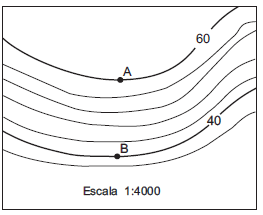
Na planta topográfica, a distância entre os pontos A e B é de 2,5 cm e a escala é 1:4.000. Nestas condições, a declividade do terreno, entre estes pontos é
Provas
TITANIC NEGREIRO
O Brasil é um navio negreiro em direção ao futuro.
Um negreiro, com milhões de pobres excluídos nos
porões – sem comida, educação, saúde – e uma elite
no convés, usufruindo de elevado padrão de consumo
em direção a um futuro desastroso. O Brasil é um Titanic
negreiro: insensível aos porões e aos icebergs. Porque
nossa economia tem sido baseada na exclusão social
e no curto prazo.
[...]
Durante toda nossa história, o convés jogou restos
para os porões, na tentativa de manter uma mão de obra
viva e evitar a violência. Fizemos uma economia para
poucos e uma assistência para enganar os outros. [...]
O sistema escravocrata acabou, mas continuamos
nos tempos da assistência, no lugar da abolição. A eco-
nomia brasileira, ao longo de nossa história, desde 18
e sobretudo nas últimas duas décadas, em plena de-
mocracia, não é comprometida com a abolição. No
máximo incentiva a assistência. Assistimos meninos de
rua, mas não nos propomos a abolir a infância abando-
nada; assistimos prostitutas infantis, mas nem ao me-
nos acreditamos ser possível abolir a prostituição de
crianças; anunciamos com orgulho que diminuímos o
número de meninos trabalhando, mas não fazemos o
esforço necessário para abolir o trabalho infantil; dize-
mos ter 95% das crianças matriculadas, esquecendo
de pedir desculpas às 5% abandonadas, tanto quanto
se dizia, em 1870, que apenas 70% dos negros eram
escravos.
[...]Na época da escravidão, muitos eram a favor da
abolição, mas diziam que não havia recursos para aten-
der o direito adquirido do dono, comprando os escra-
vos antes de liberá-los. Outros diziam que a abolição
desorganizaria o processo produtivo. Hoje dizemos o
mesmo em relação aos gastos com educação, saúde,
alimentação do nosso povo. Os compromissos do setor
público com direitos adquiridos não permitem atender
às necessidades de recursos para educação e saúde
nos orçamentos do setor público.
Uma economia da abolição tem a obrigação de ze-
lar pela estabilidade monetária, porque a inflação pesa
sobretudo nos porões do barco Brasil; não é possível
tampouco aumentar a enorme carga fiscal que já pesa
sobre todo o país; nem podemos ignorar a força dos
credores. Mas uma nação com a nossa renda nacional,
com o poder de arrecadação do nosso setor público,
tem os recursos necessários para implementar uma
economia da abolição, a serviço do povo, garantindo
educação, saúde, alimentação para todos. [...]
BUARQUE, Cristovam. O Globo. 03 abr.
A relação de sentido que os dois pontos estabelecem, ligando as duas partes, visa a introduzir uma
Provas
TITANIC NEGREIRO
O Brasil é um navio negreiro em direção ao futuro.
Um negreiro, com milhões de pobres excluídos nos
porões – sem comida, educação, saúde – e uma elite
no convés, usufruindo de elevado padrão de consumo
em direção a um futuro desastroso. O Brasil é um Titanic
negreiro: insensível aos porões e aos icebergs. Porque
nossa economia tem sido baseada na exclusão social
e no curto prazo.
[...]
Durante toda nossa história, o convés jogou restos
para os porões, na tentativa de manter uma mão de obra
viva e evitar a violência. Fizemos uma economia para
poucos e uma assistência para enganar os outros. [...]
O sistema escravocrata acabou, mas continuamos
nos tempos da assistência, no lugar da abolição. A eco-
nomia brasileira, ao longo de nossa história, desde 18
e sobretudo nas últimas duas décadas, em plena de-
mocracia, não é comprometida com a abolição. No
máximo incentiva a assistência. Assistimos meninos de
rua, mas não nos propomos a abolir a infância abando-
nada; assistimos prostitutas infantis, mas nem ao me-
nos acreditamos ser possível abolir a prostituição de
crianças; anunciamos com orgulho que diminuímos o
número de meninos trabalhando, mas não fazemos o
esforço necessário para abolir o trabalho infantil; dize-
mos ter 95% das crianças matriculadas, esquecendo
de pedir desculpas às 5% abandonadas, tanto quanto
se dizia, em 1870, que apenas 70% dos negros eram
escravos.
[...]Na época da escravidão, muitos eram a favor da
abolição, mas diziam que não havia recursos para aten-
der o direito adquirido do dono, comprando os escra-
vos antes de liberá-los. Outros diziam que a abolição
desorganizaria o processo produtivo. Hoje dizemos o
mesmo em relação aos gastos com educação, saúde,
alimentação do nosso povo. Os compromissos do setor
público com direitos adquiridos não permitem atender
às necessidades de recursos para educação e saúde
nos orçamentos do setor público.
Uma economia da abolição tem a obrigação de ze-
lar pela estabilidade monetária, porque a inflação pesa
sobretudo nos porões do barco Brasil; não é possível
tampouco aumentar a enorme carga fiscal que já pesa
sobre todo o país; nem podemos ignorar a força dos
credores. Mas uma nação com a nossa renda nacional,
com o poder de arrecadação do nosso setor público,
tem os recursos necessários para implementar uma
economia da abolição, a serviço do povo, garantindo
educação, saúde, alimentação para todos. [...]
BUARQUE, Cristovam. O Globo. 03 abr.
Provas
Caderno Container