Foram encontradas 360 questões.
Impact of Point-of-Care Technologies on Healthcare
by Impelsys Admin | Apr 25, 2019
Point-of-Care Technologies is a set of technologies used at the location of patient care helping improve healthcare outcomes. Blood glucose monitors, urine dipsticks, pregnancy tests, rapid strep tests, rapid HIV tests, hemoglobin level tests are common examples of PoCT. In the past few years PoCT have advanced and the field is showing strong growth, as evidenced by new clinical or consumer products research and development directions. The widespread use of this set of technologies is driven by healthcare emphasis shifting towards greater healthcare awareness, precision treatment, optimization of patient management process, and chronic disease management − combined with advances in electronic devices and information technology.
Point-of-care technologies add to the effectiveness and efficiency in healthcare delivery. PoC devices provide critical information to clinicians assisting in the management of patient care. Point-of-care technology enables diagnosis at home, in the hospital, in an ambulance, or in the field; it effectively delivers high quality of life care at the patient’s bedside, or in the corner of a consulting room, doing away with procedures that require an entire laboratory and long hours to arrive at a proper diagnosis.
Point-of-Care procedures involve faster and leaner processes as testing is done on bedside and fewer steps are necessary to produce the result.
These are some of the advantages of PoCT:
− They eliminate the need for processing and aliquoting, transporting the specimen to the laboratory, and communicating results back to the clinical staff.
− Faster access to test results allows for rapid clinical decision making, enabling more appropriate treatments and interventions.
− They require smaller sample volumes than those needed for traditional laboratory testing.
− They can also help reduce the frequency of testing errors like inappropriate sampling errors, errors during preparation or packaging of samples, and patient misidentification.
− The fact that PoCT is often performed by the individual providing care to the patient may help decrease post analytical errors due to incorrect transmission of test results.
(Adapted from: www.impelsys.com)
De acordo com o texto, os aplicativos PoCT
Provas

Impact of Point-of-Care Technologies on Healthcare
by Impelsys Admin | Apr 25, 2019
Point-of-Care Technologies is a set of technologies used at the location of patient care helping improve healthcare outcomes. Blood glucose monitors, urine dipsticks, pregnancy tests, rapid strep tests, rapid HIV tests, hemoglobin level tests are common examples of PoCT. In the past few years PoCT have advanced and the field is showing strong growth, as evidenced by new clinical or consumer products research and development directions. The widespread use of this set of technologies is driven by healthcare emphasis shifting towards greater healthcare awareness, precision treatment, optimization of patient management process, and chronic disease management − combined with advances in electronic devices and information technology.
Point-of-care technologies add to the effectiveness and efficiency in healthcare delivery. PoC devices provide critical information to clinicians assisting in the management of patient care. Point-of-care technology enables diagnosis at home, in the hospital, in an ambulance, or in the field; it effectively delivers high quality of life care at the patient’s bedside, or in the corner of a consulting room, doing away with procedures that require an entire laboratory and long hours to arrive at a proper diagnosis.
Point-of-Care procedures involve faster and leaner processes as testing is done on bedside and fewer steps are necessary to produce the result.
These are some of the advantages of PoCT:
− They eliminate the need for processing and aliquoting, transporting the specimen to the laboratory, and communicating results back to the clinical staff.
− Faster access to test results allows for rapid clinical decision making, enabling more appropriate treatments and interventions.
− They require smaller sample volumes than those needed for traditional laboratory testing.
− They can also help reduce the frequency of testing errors like inappropriate sampling errors, errors during preparation or packaging of samples, and patient misidentification.
− The fact that PoCT is often performed by the individual providing care to the patient may help decrease post analytical errors due to incorrect transmission of test results.
(Adapted from: www.impelsys.com)
Segundo o texto, os aplicativos PoCT
Provas
Mobile Devices and Apps for Health Care Professionals: Uses and Benefits
C. Lee Ventola
The use of mobile devices by health care professionals (HCPs) has transformed many aspects of clinical practice. Mobile devices have become commonplace in health care settings, leading to rapid growth in the development of medical software applications (apps) for these platforms. Numerous apps are now available to assist HCPs with many important tasks, such as: information and time management; health record maintenance and access; communications and consulting; reference and information gathering; patient management and monitoring; clinical decision-making; and medical education and training.
Mobile devices and apps provide many benefits for health care professionals (HCPs), perhaps most significantly increased access to point-of-care tools, which has been shown to support better clinical decision-making and improved patient outcomes. However, some HCPs remain reluctant to adopt their use. Despite the benefits they offer, better standards and validation practices regarding mobile medical apps need to be established to ensure the proper use and integration of these increasingly sophisticated tools into medical practice. These measures will raise the barrier for entry into the medical app market, increasing the quality and safety of the apps currently available for use by HCPs.
(Adapted from: www.ncbi.nlm.nih.gov)
Segundo o texto,
Provas
Mobile Devices and Apps for Health Care Professionals: Uses and Benefits
C. Lee Ventola
The use of mobile devices by health care professionals (HCPs) has transformed many aspects of clinical practice. Mobile devices have become commonplace in health care settings, leading to rapid growth in the development of medical software applications (apps) for these platforms. Numerous apps are now available to assist HCPs with many important tasks, such as: information and time management; health record maintenance and access; communications and consulting; reference and information gathering; patient management and monitoring; clinical decision-making; and medical education and training.
Mobile devices and apps provide many benefits for health care professionals (HCPs), perhaps most significantly increased access to point-of-care tools, which has been shown to support better clinical decision-making and improved patient outcomes. However, some HCPs remain reluctant to adopt their use. Despite the benefits they offer, better standards and validation practices regarding mobile medical apps need to be established to ensure the proper use and integration of these increasingly sophisticated tools into medical practice. These measures will raise the barrier for entry into the medical app market, increasing the quality and safety of the apps currently available for use by HCPs.
(Adapted from: www.ncbi.nlm.nih.gov)
No trecho However, some HCPs remain reluctant to adopt their use, a conjunção However pode ser substituída, sem alteração de sentido, por
Provas
- Contratações de TIFases da Contratação de Soluções de TI
- Governança de TIPrincípios de Governança de TI
- LegislaçãoIN SLTI/MP 4/2014: Processo de Contratação de Soluções de TI
De acordo com a Instrução Normativa para Contratação de Soluções de Tecnologia da Informação MPOG/SLTI IN 04/2010, o modelo de contratação de TI se baseia, entre outras coisas,
Provas
Durante a instalação do Windows Server 2008, o analista executou três etapas nas quais inseriu, definiu ou adicionou os dados:
I. Endereço IP e time zone.
II. Papéis (roles) que o servidor suportará.
III. Product key.
Esses dados foram, correta e respectivamente, adicionados nas etapas
Provas
Considere o diagrama BPMN a seguir.
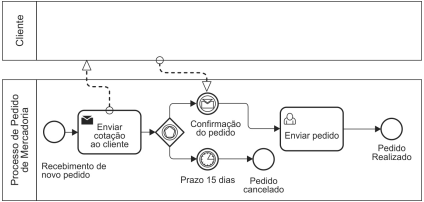
O diagrama BPMN utiliza um gateway
Provas
Considere o diagrama de sequência da UML 2.5 a seguir.
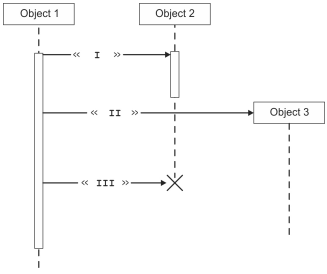
I, II e III significam, correta e respectivamente,
Provas
Considere as seguintes atividades:
I. Identificar os maiores riscos do projeto e, no final da fase, apresentar um modelo de requisitos para o sistema, que pode ser um conjunto de casos de uso da UML, uma descrição da arquitetura ou um plano de desenvolvimento do software.
II. Elaborar o projeto do sistema e o desenvolvimento, em paralelo, das partes do sistema e sua integração.
III. Com base em informações originadas de business cases estabelecidos para o sistema, identificar todas as entidades externas (pessoas e sistemas) que vão interagir com o sistema e definir as interações.Essas informações são usadas para avaliar a contribuição do sistema para o negócio.
Essas atividades são, correta e respectivamente, abordadas nas fases do Rational Unified Process (RUP):
Provas
Considere a figura a seguir.
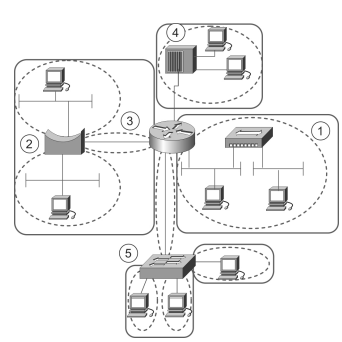
Na rede apresentada na figura, os dispositivos numerados de 1 a 5 são corretamente identificados como:
Provas
Caderno Container