Foram encontradas 50 questões.
Disciplina: Inglês (Língua Inglesa)
Banca: FUNDATEC
Orgão: Pref. Esteio-RS
Instruction: answer question based on the following text.
It’s time to stop measuring productivity
Output over time is a good way to measure the impact of machines, not knowledge workers. Productivity is just a mathematical equation: output divided by time. This has two implications:
1. When we talk about productivity, we are inherently and inescapably talking about output – not outcomes;
2. When we talk about increasing productivity, we’re really talking about increasing output.
Trouble is, more output doesn’t necessarily mean better results. As best-selling author Dan Pink told me recently, he could write two mediocre books in the same time it takes to write one really good book. Two books is twice the output! Hallelujah! But mediocre books don’t sell. Productivity has always been a good way to measure the impact of machines and capital. It’s just never been a good way to measure the impact of humans. So what metric should we use instead? How do we shift from focusing on efficiency to focusing on effectiveness?
At a high level, we need to emphasize outcomes for our customers and/or business and de-emphasize our output of effort. Instead of telling IT admins to set up 10 new load balancers this quarter, we should tell them to improve site performance by 10 points. Instead of telling a marketer to publish five blog posts, tell them to increase web traffic by five percent.
One beauty of shifting to an outcomes mindset is that it not only does keep us focused on results, it also frees us up to innovate in the pursuit of those results. There are loads of ways to improve system performance or drive more traffic to a website. But once we say “write five blogs,” we’ve significantly reduced the opportunity for creativity. So it’s critical to articulate goals as the results we’re after, not as to-do lists, then let the people doing the work decide the best way to go about it.
You can also determine what signals will indicate that you’re on the right path and what measures will confirm that the goal has been met. Here are a few ideas: map out (and celebrate) milestones, build feedback loops, look for continuous improvement, and value employee wellbeing. As leaders seeking to create better ways of working, if we took on the task of retiring productivity, what would you add to this list of replacements? It’s not that we need to get rid of calculatable metrics. We just need more meaningful ones.
(Avaliable in: https://www.atlassian.com/blog/productivity/the-problem-with-productivity-metrics – text adapted specially for this test).
Consider the structure “will confirm” as 1, and “has been met” as 2, then mark the correct statement about the sentence “(…) what measures will confirm that the goal has been met.”.
Provas

Disciplina: Inglês (Língua Inglesa)
Banca: FUNDATEC
Orgão: Pref. Esteio-RS
Instruction: answer question based on the following text.
It’s time to stop measuring productivity
Output over time is a good way to measure the impact of machines, not knowledge workers. Productivity is just a mathematical equation: output divided by time. This has two implications:
1. When we talk about productivity, we are inherently and inescapably talking about output – not outcomes;
2. When we talk about increasing productivity, we’re really talking about increasing output.
Trouble is, more output doesn’t necessarily mean better results. As best-selling author Dan Pink told me recently, he could write two mediocre books in the same time it takes to write one really good book. Two books is twice the output! Hallelujah! But mediocre books don’t sell. Productivity has always been a good way to measure the impact of machines and capital. It’s just never been a good way to measure the impact of humans. So what metric should we use instead? How do we shift from focusing on efficiency to focusing on effectiveness?
At a high level, we need to emphasize outcomes for our customers and/or business and de-emphasize our output of effort. Instead of telling IT admins to set up 10 new load balancers this quarter, we should tell them to improve site performance by 10 points. Instead of telling a marketer to publish five blog posts, tell them to increase web traffic by five percent.
One beauty of shifting to an outcomes mindset is that it not only does keep us focused on results, it also frees us up to innovate in the pursuit of those results. There are loads of ways to improve system performance or drive more traffic to a website. But once we say “write five blogs,” we’ve significantly reduced the opportunity for creativity. So it’s critical to articulate goals as the results we’re after, not as to-do lists, then let the people doing the work decide the best way to go about it.
You can also determine what signals will indicate that you’re on the right path and what measures will confirm that the goal has been met. Here are a few ideas: map out (and celebrate) milestones, build feedback loops, look for continuous improvement, and value employee wellbeing. As leaders seeking to create better ways of working, if we took on the task of retiring productivity, what would you add to this list of replacements? It’s not that we need to get rid of calculatable metrics. We just need more meaningful ones.
(Avaliable in: https://www.atlassian.com/blog/productivity/the-problem-with-productivity-metrics – text adapted specially for this test).
In the sentence “Trouble is, more output doesn’t necessarily mean better results”, the word “necessarily” could be replaced by, with no significative changes in meaning:
Provas
Disciplina: Inglês (Língua Inglesa)
Banca: FUNDATEC
Orgão: Pref. Esteio-RS
Instruction: answer question based on the following text.
It’s time to stop measuring productivity
Output over time is a good way to measure the impact of machines, not knowledge workers. Productivity is just a mathematical equation: output divided by time. This has two implications:
1. When we talk about productivity, we are inherently and inescapably talking about output – not outcomes;
2. When we talk about increasing productivity, we’re really talking about increasing output.
Trouble is, more output doesn’t necessarily mean better results. As best-selling author Dan Pink told me recently, he could write two mediocre books in the same time it takes to write one really good book. Two books is twice the output! Hallelujah! But mediocre books don’t sell. Productivity has always been a good way to measure the impact of machines and capital. It’s just never been a good way to measure the impact of humans. So what metric should we use instead? How do we shift from focusing on efficiency to focusing on effectiveness?
At a high level, we need to emphasize outcomes for our customers and/or business and de-emphasize our output of effort. Instead of telling IT admins to set up 10 new load balancers this quarter, we should tell them to improve site performance by 10 points. Instead of telling a marketer to publish five blog posts, tell them to increase web traffic by five percent.
One beauty of shifting to an outcomes mindset is that it not only does keep us focused on results, it also frees us up to innovate in the pursuit of those results. There are loads of ways to improve system performance or drive more traffic to a website. But once we say “write five blogs,” we’ve significantly reduced the opportunity for creativity. So it’s critical to articulate goals as the results we’re after, not as to-do lists, then let the people doing the work decide the best way to go about it.
You can also determine what signals will indicate that you’re on the right path and what measures will confirm that the goal has been met. Here are a few ideas: map out (and celebrate) milestones, build feedback loops, look for continuous improvement, and value employee wellbeing. As leaders seeking to create better ways of working, if we took on the task of retiring productivity, what would you add to this list of replacements? It’s not that we need to get rid of calculatable metrics. We just need more meaningful ones.
(Avaliable in: https://www.atlassian.com/blog/productivity/the-problem-with-productivity-metrics – text adapted specially for this test).
The sentence “Two books is twice the output!” is presented here as written by the author. Consider the following statements about it:
I. The sentence is incorrect, it should be “Two books ARE twice the outputS”.
II. The sentence can be used this way, because the author considered “two books” as “the result”, not as two units.
III. “Twice” could be replaced by “double” with no significative changes in meaning.
Which statements are correct?
Provas
Disciplina: Inglês (Língua Inglesa)
Banca: FUNDATEC
Orgão: Pref. Esteio-RS
Instruction: answer question based on the following text.
It’s time to stop measuring productivity
Output over time is a good way to measure the impact of machines, not knowledge workers. Productivity is just a mathematical equation: output divided by time. This has two implications:
1. When we talk about productivity, we are inherently and inescapably talking about output – not outcomes;
2. When we talk about increasing productivity, we’re really talking about increasing output.
Trouble is, more output doesn’t necessarily mean better results. As best-selling author Dan Pink told me recently, he could write two mediocre books in the same time it takes to write one really good book. Two books is twice the output! Hallelujah! But mediocre books don’t sell. Productivity has always been a good way to measure the impact of machines and capital. It’s just never been a good way to measure the impact of humans. So what metric should we use instead? How do we shift from focusing on efficiency to focusing on effectiveness?
At a high level, we need to emphasize outcomes for our customers and/or business and de-emphasize our output of effort. Instead of telling IT admins to set up 10 new load balancers this quarter, we should tell them to improve site performance by 10 points. Instead of telling a marketer to publish five blog posts, tell them to increase web traffic by five percent.
One beauty of shifting to an outcomes mindset is that it not only does keep us focused on results, it also frees us up to innovate in the pursuit of those results. There are loads of ways to improve system performance or drive more traffic to a website. But once we say “write five blogs,” we’ve significantly reduced the opportunity for creativity. So it’s critical to articulate goals as the results we’re after, not as to-do lists, then let the people doing the work decide the best way to go about it.
You can also determine what signals will indicate that you’re on the right path and what measures will confirm that the goal has been met. Here are a few ideas: map out (and celebrate) milestones, build feedback loops, look for continuous improvement, and value employee wellbeing. As leaders seeking to create better ways of working, if we took on the task of retiring productivity, what would you add to this list of replacements? It’s not that we need to get rid of calculatable metrics. We just need more meaningful ones.
(Avaliable in: https://www.atlassian.com/blog/productivity/the-problem-with-productivity-metrics – text adapted specially for this test).
Consider the following statements, according to the author, and mark T, if true, or F, if false.
( ) Doing more in less time is not always the best result.
( ) “Output” means job done, and it is not the same as goal achieved.
( ) Focusing on “goals” instead of “jobs done” makes workers feel lost due to the lack of instructions.
The correct order of filling the parentheses, from top to bottom, is:
Provas
Disciplina: Inglês (Língua Inglesa)
Banca: FUNDATEC
Orgão: Pref. Esteio-RS
Instruction: answer question based on the following text.
It’s time to stop measuring productivity
Output over time is a good way to measure the impact of machines, not knowledge workers. Productivity is just a mathematical equation: output divided by time. This has two implications:
1. When we talk about productivity, we are inherently and inescapably talking about output – not outcomes;
2. When we talk about increasing productivity, we’re really talking about increasing output.
Trouble is, more output doesn’t necessarily mean better results. As best-selling author Dan Pink told me recently, he could write two mediocre books in the same time it takes to write one really good book. Two books is twice the output! Hallelujah! But mediocre books don’t sell. Productivity has always been a good way to measure the impact of machines and capital. It’s just never been a good way to measure the impact of humans. So what metric should we use instead? How do we shift from focusing on efficiency to focusing on effectiveness?
At a high level, we need to emphasize outcomes for our customers and/or business and de-emphasize our output of effort. Instead of telling IT admins to set up 10 new load balancers this quarter, we should tell them to improve site performance by 10 points. Instead of telling a marketer to publish five blog posts, tell them to increase web traffic by five percent.
One beauty of shifting to an outcomes mindset is that it not only does keep us focused on results, it also frees us up to innovate in the pursuit of those results. There are loads of ways to improve system performance or drive more traffic to a website. But once we say “write five blogs,” we’ve significantly reduced the opportunity for creativity. So it’s critical to articulate goals as the results we’re after, not as to-do lists, then let the people doing the work decide the best way to go about it.
You can also determine what signals will indicate that you’re on the right path and what measures will confirm that the goal has been met. Here are a few ideas: map out (and celebrate) milestones, build feedback loops, look for continuous improvement, and value employee wellbeing. As leaders seeking to create better ways of working, if we took on the task of retiring productivity, what would you add to this list of replacements? It’s not that we need to get rid of calculatable metrics. We just need more meaningful ones.
(Avaliable in: https://www.atlassian.com/blog/productivity/the-problem-with-productivity-metrics – text adapted specially for this test).
Which of the following ideas is NOT discussed in the text?
Provas
No Gmail, qual a funcionalidade do botão  ?
?
Provas
Analise a Figura 5 abaixo, que mostra uma pesquisa realizada no Google Chrome:

Figura 5 – Tela do Google Chrome
Com base na figura acima, analise as seguintes assertivas:
I. Ao clicar na opção apontada pela seta nº 1, a página será atualizada.
II. Ao clicar na opção apontada pela seta nº 2, uma nova página da Fundatec será aberta.
III. A seta nº 3 indica que a página está inserida aos favoritos.
Quais estão corretas?
Provas
Na guia é possível encontrar as seguintes funcionalidades: configurar as margens, orientação da página (retrato ou paisagem), o tamanho da página, colunas e muitas outras opções de configurações de página.
Assinale a alternativa que preenche corretamente a lacuna do trecho acima.
Provas
Qual funcionalidade NÃO é encontrada no grupo fonte do Word 2016?
Provas
Analise a Figura 4 abaixo, que mostra uma tela do Word 2016:
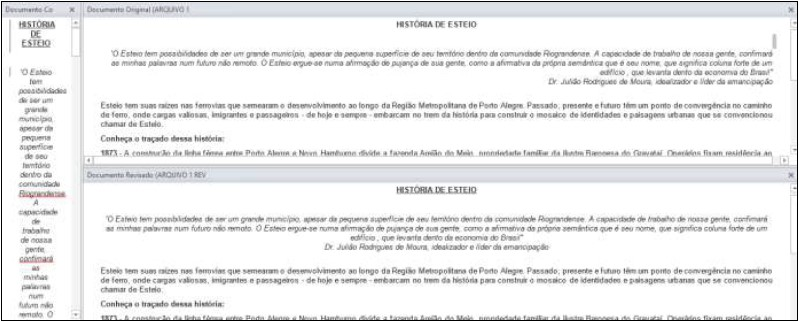
Figura 4 – Tela do Word 2016
Após análise, é correto afirmar que foi utilizada a funcionalidade:
Provas
Caderno Container