Foram encontradas 45.388 questões.
Climate change poses significant challenges to cattle farming, a sector vital to global food security. Among the most pressing concerns is the increasing frequency and intensity of droughts. Reduced rainfall diminishes pasture quality and availability, limiting feed for livestock and increasing water scarcity. This can lead to decreased animal growth rates, reduced milk production, and increased mortality rates. Moreover, prolonged droughts can contribute to desertification, shrinking available grazing land and forcing farmers to adopt costly alternative feeding strategies.
Beyond drought, other climate-related impacts include heat stress, which can significantly impact animal health and productivity. Rising temperatures can exacerbate heat stress, leading to decreased feed intake, reduced fertility, and increased mortality in livestock. Furthermore, extreme weather events, such as heavy rainfall and flooding, can cause infrastructure damage, contaminate water sources, and lead to the loss of livestock.
The cattle farming sector itself contributes to climate change through greenhouse gas emissions, primarily methane produced during animal digestion and nitrous oxide from manure management. Deforestation for pasture expansion also releases significant amounts of carbon dioxide.
To address these challenges, a multi-pronged approach is crucial.
• Genetic selection: Breeding programs focused on developing drought-resistant and heat-tolerant livestock breeds are vital.
• Sustainable feeding strategies: Implementing precision feeding techniques, improving feed efficiency, and exploring alternative feed sources, such as drought-resistant forage varieties, can enhance livestock resilience.
• Integrated farming systems: Integrating crop and livestock production, such as through agroforestry systems, can improve soil health, enhance water retention, and reduce greenhouse gas emissions.
• Technological innovations: Utilizing technologies such as precision livestock farming, remote sensing for pasture monitoring, and renewable energy sources can improve resource efficiency and reduce the environmental footprint of cattle production.
Furthermore, strong policy support, including incentives for sustainable farming practices, investments in research and development, and improved access to climate information services, are essential for the long-term sustainability of the cattle farming sector.
Addressing the challenges posed by climate change requires a collaborative effort involving farmers, researchers, policymakers, and consumers. By embracing innovative solutions, prioritizing sustainable practices, and fostering a collective understanding of the importance of climate-resilient livestock production, we can ensure a future when this vital sector continues to thrive while minimizing its environmental impact.
Internet:<conafer.org.br> (adapted).
Judge the following items based on the text above.
Heat stress has become one of the important issues in cattle farming, especially in those areas where temperature has started to increase steadily.
Provas

Climate change poses significant challenges to cattle farming, a sector vital to global food security. Among the most pressing concerns is the increasing frequency and intensity of droughts. Reduced rainfall diminishes pasture quality and availability, limiting feed for livestock and increasing water scarcity. This can lead to decreased animal growth rates, reduced milk production, and increased mortality rates. Moreover, prolonged droughts can contribute to desertification, shrinking available grazing land and forcing farmers to adopt costly alternative feeding strategies.
Beyond drought, other climate-related impacts include heat stress, which can significantly impact animal health and productivity. Rising temperatures can exacerbate heat stress, leading to decreased feed intake, reduced fertility, and increased mortality in livestock. Furthermore, extreme weather events, such as heavy rainfall and flooding, can cause infrastructure damage, contaminate water sources, and lead to the loss of livestock.
The cattle farming sector itself contributes to climate change through greenhouse gas emissions, primarily methane produced during animal digestion and nitrous oxide from manure management. Deforestation for pasture expansion also releases significant amounts of carbon dioxide.
To address these challenges, a multi-pronged approach is crucial.
• Genetic selection: Breeding programs focused on developing drought-resistant and heat-tolerant livestock breeds are vital.
• Sustainable feeding strategies: Implementing precision feeding techniques, improving feed efficiency, and exploring alternative feed sources, such as drought-resistant forage varieties, can enhance livestock resilience.
• Integrated farming systems: Integrating crop and livestock production, such as through agroforestry systems, can improve soil health, enhance water retention, and reduce greenhouse gas emissions.
• Technological innovations: Utilizing technologies such as precision livestock farming, remote sensing for pasture monitoring, and renewable energy sources can improve resource efficiency and reduce the environmental footprint of cattle production.
Furthermore, strong policy support, including incentives for sustainable farming practices, investments in research and development, and improved access to climate information services, are essential for the long-term sustainability of the cattle farming sector.
Addressing the challenges posed by climate change requires a collaborative effort involving farmers, researchers, policymakers, and consumers. By embracing innovative solutions, prioritizing sustainable practices, and fostering a collective understanding of the importance of climate-resilient livestock production, we can ensure a future when this vital sector continues to thrive while minimizing its environmental impact.
Internet:<conafer.org.br> (adapted).
Judge the following items based on the text above.
In relation to cattle farming practices, carbon dioxide is the most important greenhouse gas emitter, originating from the transportation of animals.
Provas
Climate change poses significant challenges to cattle farming, a sector vital to global food security. Among the most pressing concerns is the increasing frequency and intensity of droughts. Reduced rainfall diminishes pasture quality and availability, limiting feed for livestock and increasing water scarcity. This can lead to decreased animal growth rates, reduced milk production, and increased mortality rates. Moreover, prolonged droughts can contribute to desertification, shrinking available grazing land and forcing farmers to adopt costly alternative feeding strategies.
Beyond drought, other climate-related impacts include heat stress, which can significantly impact animal health and productivity. Rising temperatures can exacerbate heat stress, leading to decreased feed intake, reduced fertility, and increased mortality in livestock. Furthermore, extreme weather events, such as heavy rainfall and flooding, can cause infrastructure damage, contaminate water sources, and lead to the loss of livestock.
The cattle farming sector itself contributes to climate change through greenhouse gas emissions, primarily methane produced during animal digestion and nitrous oxide from manure management. Deforestation for pasture expansion also releases significant amounts of carbon dioxide.
To address these challenges, a multi-pronged approach is crucial.
• Genetic selection: Breeding programs focused on developing drought-resistant and heat-tolerant livestock breeds are vital.
• Sustainable feeding strategies: Implementing precision feeding techniques, improving feed efficiency, and exploring alternative feed sources, such as drought-resistant forage varieties, can enhance livestock resilience.
• Integrated farming systems: Integrating crop and livestock production, such as through agroforestry systems, can improve soil health, enhance water retention, and reduce greenhouse gas emissions.
• Technological innovations: Utilizing technologies such as precision livestock farming, remote sensing for pasture monitoring, and renewable energy sources can improve resource efficiency and reduce the environmental footprint of cattle production.
Furthermore, strong policy support, including incentives for sustainable farming practices, investments in research and development, and improved access to climate information services, are essential for the long-term sustainability of the cattle farming sector.
Addressing the challenges posed by climate change requires a collaborative effort involving farmers, researchers, policymakers, and consumers. By embracing innovative solutions, prioritizing sustainable practices, and fostering a collective understanding of the importance of climate-resilient livestock production, we can ensure a future when this vital sector continues to thrive while minimizing its environmental impact.
Internet:<conafer.org.br> (adapted).
Judge the following items based on the text above.
The sentence: “If we don’t have conscious of the impact of climate change in our agriculture, we will soon have irreversible consequences.” is the correct English version for the following information in Portuguese: Se não tivermos consciência do impacto das mudanças climáticas em nossa agricultura, logo teremos consequências irreversíveis.
Provas
Climate change poses significant challenges to cattle farming, a sector vital to global food security. Among the most pressing concerns is the increasing frequency and intensity of droughts. Reduced rainfall diminishes pasture quality and availability, limiting feed for livestock and increasing water scarcity. This can lead to decreased animal growth rates, reduced milk production, and increased mortality rates. Moreover, prolonged droughts can contribute to desertification, shrinking available grazing land and forcing farmers to adopt costly alternative feeding strategies.
Beyond drought, other climate-related impacts include heat stress, which can significantly impact animal health and productivity. Rising temperatures can exacerbate heat stress, leading to decreased feed intake, reduced fertility, and increased mortality in livestock. Furthermore, extreme weather events, such as heavy rainfall and flooding, can cause infrastructure damage, contaminate water sources, and lead to the loss of livestock.
The cattle farming sector itself contributes to climate change through greenhouse gas emissions, primarily methane produced during animal digestion and nitrous oxide from manure management. Deforestation for pasture expansion also releases significant amounts of carbon dioxide.
To address these challenges, a multi-pronged approach is crucial.
• Genetic selection: Breeding programs focused on developing drought-resistant and heat-tolerant livestock breeds are vital.
• Sustainable feeding strategies: Implementing precision feeding techniques, improving feed efficiency, and exploring alternative feed sources, such as drought-resistant forage varieties, can enhance livestock resilience.
• Integrated farming systems: Integrating crop and livestock production, such as through agroforestry systems, can improve soil health, enhance water retention, and reduce greenhouse gas emissions.
• Technological innovations: Utilizing technologies such as precision livestock farming, remote sensing for pasture monitoring, and renewable energy sources can improve resource efficiency and reduce the environmental footprint of cattle production.
Furthermore, strong policy support, including incentives for sustainable farming practices, investments in research and development, and improved access to climate information services, are essential for the long-term sustainability of the cattle farming sector.
Addressing the challenges posed by climate change requires a collaborative effort involving farmers, researchers, policymakers, and consumers. By embracing innovative solutions, prioritizing sustainable practices, and fostering a collective understanding of the importance of climate-resilient livestock production, we can ensure a future when this vital sector continues to thrive while minimizing its environmental impact.
Internet:<conafer.org.br> (adapted).
Judge the following items based on the text above.
The word “Furthermore” (in the second paragraph) can be correctly replaced with the term Besides that without changing the meaning of the tex.
Provas
Climate change poses significant challenges to cattle farming, a sector vital to global food security. Among the most pressing concerns is the increasing frequency and intensity of droughts. Reduced rainfall diminishes pasture quality and availability, limiting feed for livestock and increasing water scarcity. This can lead to decreased animal growth rates, reduced milk production, and increased mortality rates. Moreover, prolonged droughts can contribute to desertification, shrinking available grazing land and forcing farmers to adopt costly alternative feeding strategies.
Beyond drought, other climate-related impacts include heat stress, which can significantly impact animal health and productivity. Rising temperatures can exacerbate heat stress, leading to decreased feed intake, reduced fertility, and increased mortality in livestock. Furthermore, extreme weather events, such as heavy rainfall and flooding, can cause infrastructure damage, contaminate water sources, and lead to the loss of livestock.
The cattle farming sector itself contributes to climate change through greenhouse gas emissions, primarily methane produced during animal digestion and nitrous oxide from manure management. Deforestation for pasture expansion also releases significant amounts of carbon dioxide.
To address these challenges, a multi-pronged approach is crucial.
• Genetic selection: Breeding programs focused on developing drought-resistant and heat-tolerant livestock breeds are vital.
• Sustainable feeding strategies: Implementing precision feeding techniques, improving feed efficiency, and exploring alternative feed sources, such as drought-resistant forage varieties, can enhance livestock resilience.
• Integrated farming systems: Integrating crop and livestock production, such as through agroforestry systems, can improve soil health, enhance water retention, and reduce greenhouse gas emissions.
• Technological innovations: Utilizing technologies such as precision livestock farming, remote sensing for pasture monitoring, and renewable energy sources can improve resource efficiency and reduce the environmental footprint of cattle production.
Furthermore, strong policy support, including incentives for sustainable farming practices, investments in research and development, and improved access to climate information services, are essential for the long-term sustainability of the cattle farming sector.
Addressing the challenges posed by climate change requires a collaborative effort involving farmers, researchers, policymakers, and consumers. By embracing innovative solutions, prioritizing sustainable practices, and fostering a collective understanding of the importance of climate-resilient livestock production, we can ensure a future when this vital sector continues to thrive while minimizing its environmental impact.
Internet:<conafer.org.br> (adapted).
Judge the following items based on the text above.
Crop-livestock-forest integration systems do not influence water conservation.
Provas
Climate change poses significant challenges to cattle farming, a sector vital to global food security. Among the most pressing concerns is the increasing frequency and intensity of droughts. Reduced rainfall diminishes pasture quality and availability, limiting feed for livestock and increasing water scarcity. This can lead to decreased animal growth rates, reduced milk production, and increased mortality rates. Moreover, prolonged droughts can contribute to desertification, shrinking available grazing land and forcing farmers to adopt costly alternative feeding strategies.
Beyond drought, other climate-related impacts include heat stress, which can significantly impact animal health and productivity. Rising temperatures can exacerbate heat stress, leading to decreased feed intake, reduced fertility, and increased mortality in livestock. Furthermore, extreme weather events, such as heavy rainfall and flooding, can cause infrastructure damage, contaminate water sources, and lead to the loss of livestock.
The cattle farming sector itself contributes to climate change through greenhouse gas emissions, primarily methane produced during animal digestion and nitrous oxide from manure management. Deforestation for pasture expansion also releases significant amounts of carbon dioxide.
To address these challenges, a multi-pronged approach is crucial.
• Genetic selection: Breeding programs focused on developing drought-resistant and heat-tolerant livestock breeds are vital.
• Sustainable feeding strategies: Implementing precision feeding techniques, improving feed efficiency, and exploring alternative feed sources, such as drought-resistant forage varieties, can enhance livestock resilience.
• Integrated farming systems: Integrating crop and livestock production, such as through agroforestry systems, can improve soil health, enhance water retention, and reduce greenhouse gas emissions.
• Technological innovations: Utilizing technologies such as precision livestock farming, remote sensing for pasture monitoring, and renewable energy sources can improve resource efficiency and reduce the environmental footprint of cattle production.
Furthermore, strong policy support, including incentives for sustainable farming practices, investments in research and development, and improved access to climate information services, are essential for the long-term sustainability of the cattle farming sector.
Addressing the challenges posed by climate change requires a collaborative effort involving farmers, researchers, policymakers, and consumers. By embracing innovative solutions, prioritizing sustainable practices, and fostering a collective understanding of the importance of climate-resilient livestock production, we can ensure a future when this vital sector continues to thrive while minimizing its environmental impact.
Internet:<conafer.org.br> (adapted).
Judge the following items based on the text above.
One of the strategies proposed focuses on specific systems for both soil health and water retention improvement.
Provas
Climate change poses significant challenges to cattle farming, a sector vital to global food security. Among the most pressing concerns is the increasing frequency and intensity of droughts. Reduced rainfall diminishes pasture quality and availability, limiting feed for livestock and increasing water scarcity. This can lead to decreased animal growth rates, reduced milk production, and increased mortality rates. Moreover, prolonged droughts can contribute to desertification, shrinking available grazing land and forcing farmers to adopt costly alternative feeding strategies.
Beyond drought, other climate-related impacts include heat stress, which can significantly impact animal health and productivity. Rising temperatures can exacerbate heat stress, leading to decreased feed intake, reduced fertility, and increased mortality in livestock. Furthermore, extreme weather events, such as heavy rainfall and flooding, can cause infrastructure damage, contaminate water sources, and lead to the loss of livestock.
The cattle farming sector itself contributes to climate change through greenhouse gas emissions, primarily methane produced during animal digestion and nitrous oxide from manure management. Deforestation for pasture expansion also releases significant amounts of carbon dioxide.
To address these challenges, a multi-pronged approach is crucial.
• Genetic selection: Breeding programs focused on developing drought-resistant and heat-tolerant livestock breeds are vital.
• Sustainable feeding strategies: Implementing precision feeding techniques, improving feed efficiency, and exploring alternative feed sources, such as drought-resistant forage varieties, can enhance livestock resilience.
• Integrated farming systems: Integrating crop and livestock production, such as through agroforestry systems, can improve soil health, enhance water retention, and reduce greenhouse gas emissions.
• Technological innovations: Utilizing technologies such as precision livestock farming, remote sensing for pasture monitoring, and renewable energy sources can improve resource efficiency and reduce the environmental footprint of cattle production.
Furthermore, strong policy support, including incentives for sustainable farming practices, investments in research and development, and improved access to climate information services, are essential for the long-term sustainability of the cattle farming sector.
Addressing the challenges posed by climate change requires a collaborative effort involving farmers, researchers, policymakers, and consumers. By embracing innovative solutions, prioritizing sustainable practices, and fostering a collective understanding of the importance of climate-resilient livestock production, we can ensure a future when this vital sector continues to thrive while minimizing its environmental impact.
Internet:<conafer.org.br> (adapted).
Judge the following items based on the text above.
The excerpt: “prolonged droughts can contribute to desertification, shrinking available grazing land and forcing farmers to adopt costly alternative feeding strategies” (in the first paragraph) can be correctly translated as: secas prolongadas podem contribuir para a desertificação, diminuindo as terras de pastagem disponíveis e forçando os agricultores a adotarem estratégias alimentares alternativas dispendiosas.
Provas
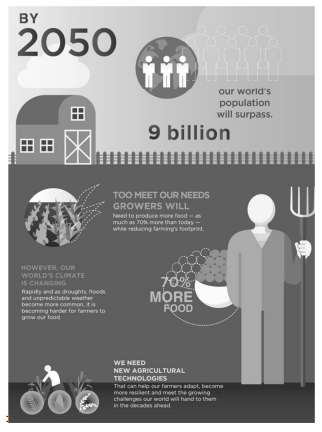
Internet:<croplifela.org>.
Judge the following information based on the infographic above.
It can be concluded form the infographic that, at present, farmers only produce 30% of the expected food for the population.
Provas
Com relação à tradução técnica, julgue os itens seguintes.
O trecho “From a weedy plant called teosinte with an ‘ear’ barely an inch long has come our foot-long (0.3-meter-long) ears of sweet white and yellow corn”, adaptado do texto Food: how altered?, pode ser adequada e corretamente traduzido para o português da seguinte forma: De um arbusto chamado teosino, cuja espiga mal chegava a uma polegada veio o milho branco e o amarelo, com espigas de um pé (0.3 metro) de comprimento.
Provas
Internet:<croplifela.org>.
Judge the following information based on the infographic above.
Due to climate change, droughts are happening as fast as floods.
Provas
Caderno Container