Foram encontradas 580 questões.
Sustainable mining – oxymoron or a way of the future?
Mining is an activity that has persisted since the start of humans using tools. However, one might argue that digging a big hole in the ground and selling the finite resources that come out of that hole is not sustainable, especially when the digging involves the use of other finite resources (i.e. fuels) and produces a lot of greenhouse gases.
The counter argument could go along the lines that minerals are not being lost or destroyed through mining and mineral processing – the elements are being shifted around, and converted into new forms. Metals can even be extracted from waste, seawater or even sewage, and recycled. But a more simple argument is possible: a mine can be sustainable if it is economically, socially and environmentally beneficial in the short and long term. To be sustainable, the positive benefits of mining should outweigh any negative impacts. […]
Social positives are often associated with mines in regional areas, such as providing better amenities in a nearby town, or providing employment (an economic and social positive). Social negatives can also occur, such as dust, noise, traffic and visual amenity. These are commonly debated and, whilst sometimes controversial, can be managed with sufficient corporate commitment, stakeholder engagement, and enough time to work through the issues. Time is the key parameter - it may take several years for a respectful process of community input, but as long as it is possible for social negatives to be outweighed by social positives, then the project will be socially sustainable.
It is most likely that a mine development will have some environmental negatives, such as direct impacts on flora and fauna through clearing of vegetation and habitat within the mine footprint. Some mines will have impacts which extend beyond the mine site, such as disruption to groundwater, production of silt and disposal of waste. Certainly these impacts will need to be managed throughout the mine life, along with robust rehabilitation and closure planning. […]
The real turning point will come when mining companies go beyond environmental compliance to create 'heritage projects' that can enhance the environmental or social benefits in a substantial way – by more than the environmental offsets needed just to make up for the negatives created by the mine. In order to foster these innovative mining heritage projects we need to promote 'sustainability assessments' - not just 'environmental assessments'. This will lead to a more mature appreciation of the whole system whereby the economic and social factors, as well as environmental factors, are considered in a holistic manner.
(adapted from https://www.engineersaustralia.org.au/western-australia-division/sustainable-mining-oxymoron-or-way-future. Retrieved on August 10, 2015)
Provas

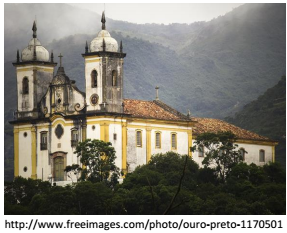
Mining tourism in Ouro Preto
Ouro Preto is surrounded by a rich and varied natural environment with waterfalls, hiking trails and native vegetation partially protected as state parks. Parts of these resources are used for tourism. Paradoxically, this ecosystem contrasts with the human occupation of the region that produced, after centuries, a rich history and a cultural connection to mining, its oldest economic activity which triggered occupation. The region has an unlimited potential for tourism, especially in specific segments such as mining heritage tourism, in association or not with the existing ecotourism market. In fact, in Ouro Preto, tourism, history, geology and mining are often hard to distinguish; such is the inter-relationship between these segments.
For centuries, a major problem of mining has been the reuse of the affected areas. Modern mining projects proposed solutions to this problem right from the initial stages of operation, which did not happen until recently. As a result, most quarries and other old mining areas that do not have an appropriate destination represent serious environmental problems. Mining tourism utilizing exhausted mines is a source of employment and income. Tourism activities may even contribute to the recovery of degraded areas in various ways, such as reforestation for leisure purposes, or their transformation into history museums where aspects of local mining are interpreted.
Minas Gerais, and particularly Ouro Preto, provides the strong and rich cultural and historical content needed for the transformation of mining remnants into attractive tourism products, especially when combined with the existing cultural tourism of the region. Although mining tourism is explored in various parts of the world in extremely different social, economic, cultural and natural contexts, in Brazil it is still not a strategy readily adopted as an alternative for areas affected by mining activities.
(Lohmann, G. M.; Flecha, A. C.; Knupp, M. E. C. G.; Liccardo, A. (2011). Mining tourism in Ouro Preto, Brazil: opportunities and challenges. In: M. V. Conlin; L. Jolliffe (eds).Mining heritage and tourism: a global synthesis. New York: Routledge, pp. 194-202.)
Provas
Mining tourism in Ouro Preto
Ouro Preto is surrounded by a rich and varied natural environment with waterfalls, hiking trails and native vegetation partially protected as state parks. Parts of these resources are used for tourism. Paradoxically, this ecosystem contrasts with the human occupation of the region that produced, after centuries, a rich history and a cultural connection to mining, its oldest economic activity which triggered occupation. The region has an unlimited potential for tourism, especially in specific segments such as mining heritage tourism, in association or not with the existing ecotourism market. In fact, in Ouro Preto, tourism, history, geology and mining are often hard to distinguish; such is the inter-relationship between these segments.
For centuries, a major problem of mining has been the reuse of the affected areas. Modern mining projects proposed solutions to this problem right from the initial stages of operation, which did not happen until recently. As a result, most quarries and other old mining areas that do not have an appropriate destination represent serious environmental problems. Mining tourism utilizing exhausted mines is a source of employment and income. Tourism activities may even contribute to the recovery of degraded areas in various ways, such as reforestation for leisure purposes, or their transformation into history museums where aspects of local mining are interpreted.
Minas Gerais, and particularly Ouro Preto, provides the strong and rich cultural and historical content needed for the transformation of mining remnants into attractive tourism products, especially when combined with the existing cultural tourism of the region. Although mining tourism is explored in various parts of the world in extremely different social, economic, cultural and natural contexts, in Brazil it is still not a strategy readily adopted as an alternative for areas affected by mining activities.
(Lohmann, G. M.; Flecha, A. C.; Knupp, M. E. C. G.; Liccardo, A. (2011). Mining tourism in Ouro Preto, Brazil: opportunities and challenges. In: M. V. Conlin; L. Jolliffe (eds).Mining heritage and tourism: a global synthesis. New York: Routledge, pp. 194-202.)
Provas
Mining tourism in Ouro Preto
Ouro Preto is surrounded by a rich and varied natural environment with waterfalls, hiking trails and native vegetation partially protected as state parks. Parts of these resources are used for tourism. Paradoxically, this ecosystem contrasts with the human occupation of the region that produced, after centuries, a rich history and a cultural connection to mining, its oldest economic activity which triggered occupation. The region has an unlimited potential for tourism, especially in specific segments such as mining heritage tourism, in association or not with the existing ecotourism market. In fact, in Ouro Preto, tourism, history, geology and mining are often hard to distinguish; such is the inter-relationship between these segments.
For centuries, a major problem of mining has been the reuse of the affected areas. Modern mining projects proposed solutions to this problem right from the initial stages of operation, which did not happen until recently. As a result, most quarries and other old mining areas that do not have an appropriate destination represent serious environmental problems. Mining tourism utilizing exhausted mines is a source of employment and income. Tourism activities may even contribute to the recovery of degraded areas in various ways, such as reforestation for leisure purposes, or their transformation into history museums where aspects of local mining are interpreted.
Minas Gerais, and particularly Ouro Preto, provides the strong and rich cultural and historical content needed for the transformation of mining remnants into attractive tourism products, especially when combined with the existing cultural tourism of the region. Although mining tourism is explored in various parts of the world in extremely different social, economic, cultural and natural contexts, in Brazil it is still not a strategy readily adopted as an alternative for areas affected by mining activities.
(Lohmann, G. M.; Flecha, A. C.; Knupp, M. E. C. G.; Liccardo, A. (2011). Mining tourism in Ouro Preto, Brazil: opportunities and challenges. In: M. V. Conlin; L. Jolliffe (eds).Mining heritage and tourism: a global synthesis. New York: Routledge, pp. 194-202.)
Provas
- Sinônimos | Synonyms
- Gramática - Língua InglesaAdjetivos | AdjectivesOposto | Opposite
- Gramática - Língua InglesaAdvérbios e conjunções | Adverbs and conjunctionsAdvérbios de: lugar, modo, tempo e freqüência | Adverbs of: place, manner, time and frequency
Mining tourism in Ouro Preto
Ouro Preto is surrounded by a rich and varied natural environment with waterfalls, hiking trails and native vegetation partially protected as state parks. Parts of these resources are used for tourism. Paradoxically, this ecosystem contrasts with the human occupation of the region that produced, after centuries, a rich history and a cultural connection to mining, its oldest economic activity which triggered occupation. The region has an unlimited potential for tourism, especially in specific segments such as mining heritage tourism, in association or not with the existing ecotourism market. In fact, in Ouro Preto, tourism, history, geology and mining are often hard to distinguish; such is the inter-relationship between these segments.
For centuries, a major problem of mining has been the reuse of the affected areas. Modern mining projects proposed solutions to this problem right from the initial stages of operation, which did not happen until recently. As a result, most quarries and other old mining areas that do not have an appropriate destination represent serious environmental problems. Mining tourism utilizing exhausted mines is a source of employment and income. Tourism activities may even contribute to the recovery of degraded areas in various ways, such as reforestation for leisure purposes, or their transformation into history museums where aspects of local mining are interpreted.
Minas Gerais, and particularly Ouro Preto, provides the strong and rich cultural and historical content needed for the transformation of mining remnants into attractive tourism products, especially when combined with the existing cultural tourism of the region. Although mining tourism is explored in various parts of the world in extremely different social, economic, cultural and natural contexts, in Brazil it is still not a strategy readily adopted as an alternative for areas affected by mining activities.
(Lohmann, G. M.; Flecha, A. C.; Knupp, M. E. C. G.; Liccardo, A. (2011). Mining tourism in Ouro Preto, Brazil: opportunities and challenges. In: M. V. Conlin; L. Jolliffe (eds).Mining heritage and tourism: a global synthesis. New York: Routledge, pp. 194-202.)
Provas
Mining tourism in Ouro Preto
Ouro Preto is surrounded by a rich and varied natural environment with waterfalls, hiking trails and native vegetation partially protected as state parks. Parts of these resources are used for tourism. Paradoxically, this ecosystem contrasts with the human occupation of the region that produced, after centuries, a rich history and a cultural connection to mining, its oldest economic activity which triggered occupation. The region has an unlimited potential for tourism, especially in specific segments such as mining heritage tourism, in association or not with the existing ecotourism market. In fact, in Ouro Preto, tourism, history, geology and mining are often hard to distinguish; such is the inter-relationship between these segments.
For centuries, a major problem of mining has been the reuse of the affected areas. Modern mining projects proposed solutions to this problem right from the initial stages of operation, which did not happen until recently. As a result, most quarries and other old mining areas that do not have an appropriate destination represent serious environmental problems. Mining tourism utilizing exhausted mines is a source of employment and income. Tourism activities may even contribute to the recovery of degraded areas in various ways, such as reforestation for leisure purposes, or their transformation into history museums where aspects of local mining are interpreted.
Minas Gerais, and particularly Ouro Preto, provides the strong and rich cultural and historical content needed for the transformation of mining remnants into attractive tourism products, especially when combined with the existing cultural tourism of the region. Although mining tourism is explored in various parts of the world in extremely different social, economic, cultural and natural contexts, in Brazil it is still not a strategy readily adopted as an alternative for areas affected by mining activities.
(Lohmann, G. M.; Flecha, A. C.; Knupp, M. E. C. G.; Liccardo, A. (2011). Mining tourism in Ouro Preto, Brazil: opportunities and challenges. In: M. V. Conlin; L. Jolliffe (eds).Mining heritage and tourism: a global synthesis. New York: Routledge, pp. 194-202.)
Provas
Mining tourism in Ouro Preto
Ouro Preto is surrounded by a rich and varied natural environment with waterfalls, hiking trails and native vegetation partially protected as state parks. Parts of these resources are used for tourism. Paradoxically, this ecosystem contrasts with the human occupation of the region that produced, after centuries, a rich history and a cultural connection to mining, its oldest economic activity which triggered occupation. The region has an unlimited potential for tourism, especially in specific segments such as mining heritage tourism, in association or not with the existing ecotourism market. In fact, in Ouro Preto, tourism, history, geology and mining are often hard to distinguish; such is the inter-relationship between these segments.
For centuries, a major problem of mining has been the reuse of the affected areas. Modern mining projects proposed solutions to this problem right from the initial stages of operation, which did not happen until recently. As a result, most quarries and other old mining areas that do not have an appropriate destination represent serious environmental problems. Mining tourism utilizing exhausted mines is a source of employment and income. Tourism activities may even contribute to the recovery of degraded areas in various ways, such as reforestation for leisure purposes, or their transformation into history museums where aspects of local mining are interpreted.
Minas Gerais, and particularly Ouro Preto, provides the strong and rich cultural and historical content needed for the transformation of mining remnants into attractive tourism products, especially when combined with the existing cultural tourism of the region. Although mining tourism is explored in various parts of the world in extremely different social, economic, cultural and natural contexts, in Brazil it is still not a strategy readily adopted as an alternative for areas affected by mining activities.
(Lohmann, G. M.; Flecha, A. C.; Knupp, M. E. C. G.; Liccardo, A. (2011). Mining tourism in Ouro Preto, Brazil: opportunities and challenges. In: M. V. Conlin; L. Jolliffe (eds).Mining heritage and tourism: a global synthesis. New York: Routledge, pp. 194-202.)
( ) Tourism may actually be quite beneficial to some degraded mining areas.
( ) Mining tourism has recently been promptly embraced by Brazilian regions.
( ) Ouro Preto is attracting people because mining is one of its most recent activities.
The correct sequence is:
Provas

Provas
- SemânticaSinônimos e Antônimos
- Interpretação de TextosTipologia e Gênero Textual
- Interpretação de TextosVariação Linguística
O comentário adequado aos termos presentes na fala da charge de Newton Silva é:
Provas
Do grego demo = povo e cracia = governo, ou seja, governo do povo. Democracia é um sistema em que as pessoas de um país podem participar da vida política. Essa participação pode ocorrer através de eleições, plebiscitos e referendos. Dentro de uma democracia, as pessoas possuem liberdade de expressão e manifestações de suas opiniões. A maior parte das nações do mundo atual seguem o sistema democrático.
Embora tenha surgido na Grécia Antiga, a democracia foi pouco usada pelos países até o século XIX. Até este século, grande parte dos países do mundo usavam sistemas políticos que colocavam o poder de decisão nas mãos dos governantes. Já no século XX, a democracia passou a ser predominante no mundo.
http://suapesquisa.com
Provas
Caderno Container