Foram encontradas 1.750 questões.
O Parecer CNE/CEB nº 20/2009, Diretrizes Curriculares Nacionais para a Educação Infantil, prevê que as propostas curriculares da Educação Infantil devem garantir que as crianças tenham experiências variadas com
Provas

Disciplina: TI - Organização e Arquitetura dos Computadores
Banca: VUNESP
Orgão: Pref. Aparecida-SP
Um técnico de informática recebeu a atribuição de instalar uma nova placa de vídeo em um microcomputador. Por medidas de segurança, deve-se, em primeiro lugar, desligar o microcomputador da rede elétrica. Em segundo lugar, é importante tomar cuidado com a energia eletrostática, problema este que pode ser equacionado
Provas
Disciplina: Inglês (Língua Inglesa)
Banca: VUNESP
Orgão: Pref. Aparecida-SP
Leia o bilhete do aluno e o texto de Celce-Murcia, a seguir, para responder às questões de 42 a 48.
Dear teacher,
I am writing this in the intermission between classes to tell you of my extolment for your class. Your group work rouses a deep sense of admiration and joy within me. I enjoy every step of the work in your class. It comes without speaking that your class is the best. I don’t know how to give vent to my feelings. You help me with the difficultness of English. I know other guys and I suggest them to take your class. I’m so much happy to be student of a sagely teacher such as you and getting your advices. Your help is beyond valuability.
Bye for now,
Teo
What is it about the word use in Teo’s expressive letter that does not sound quite right, even though we understand the message? It appears that he knows enough about the words to communicate, but there are gaps in his word knowledge. For example, to know a word means to know a considerable amount about its meaning; Teo uses the word intermission (a short period of time between the parts of a play, film, concert, etc.) to apply to the break between classes. He knows the literal meaning of to give vent to his feelings but misses the subtle distinction that vent is usually used with negative feelings (I vented my anger). In addition, to know a word or phrase means to know its collocations, or how it is used in combination with other words; for example, every step of the way is a recognizable collocation, every step of the work is not. Knowing your word also means to know its grammatical function (e.g., suggest is a transitive verb; advice is an uncountable noun) and its word parts (e.g., difficulty rather than *difficultness, and value rather than *valuability). Finally, knowing your word means to know its register, or a level of formality. Extolment is a noun (meaning “enthusiastic praise and admiration”), but it is very formal and infrequently used.
This letter demonstrates the enormity of the word learning task. There are many words to know and many details to be known about each word.
(Celce-Murcia, M. 2001)
The expression “it comes without speaking”, used by the student, would be a recognizable collocation if it were
Provas
De acordo com o “Referencial curricular nacional para a educação infantil” (1998. v. 3), a respeito do desenvolvimento da linguagem oral nas crianças, é correto afirmar que
Provas
A literatura aponta a equipe multidisciplinar como uma possibilidade de se prover apoio à inclusão escolar. Um modelo de prestação de serviços desse tipo que pode ser aplicado e analisado no contexto brasileiro é o da Consultoria Colaborativa Escolar – CCE. Sendo multidisciplinar, esse modelo defende
Provas
Dentre os diversos tipos de licenças de software existentes no mercado, três delas são:
Provas
Um professor apresentou a seguinte representação da reta real, com alguns de seus números.
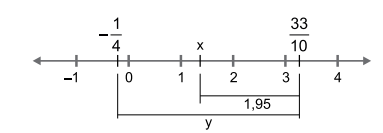
De acordo com a representação fornecida pelo professor, x e y são, respectivamente, iguais a
Provas
Disciplina: TI - Sistemas Operacionais
Banca: VUNESP
Orgão: Pref. Aparecida-SP
Grep é um comando utilizado em sistemas operacionais Linux para encontrar strings em um arquivo.
O parâmetro -i neste comando tem como função:
Provas
O processo de naturalização, um efeito característico do movimento institucional na escola, se revela, por exemplo, na noção de que
Provas
Disciplina: Inglês (Língua Inglesa)
Banca: VUNESP
Orgão: Pref. Aparecida-SP
- Gramática - Língua InglesaSubstantivos e compostos | Nouns and compoundsSubstantivos contáveis e incontáveis | Countable and uncountable
Leia o bilhete do aluno e o texto de Celce-Murcia, a seguir, para responder às questões de 42 a 48.
Dear teacher,
I am writing this in the intermission between classes to tell you of my extolment for your class. Your group work rouses a deep sense of admiration and joy within me. I enjoy every step of the work in your class. It comes without speaking that your class is the best. I don’t know how to give vent to my feelings. You help me with the difficultness of English. I know other guys and I suggest them to take your class. I’m so much happy to be student of a sagely teacher such as you and getting your advices. Your help is beyond valuability.
Bye for now,
Teo
What is it about the word use in Teo’s expressive letter that does not sound quite right, even though we understand the message? It appears that he knows enough about the words to communicate, but there are gaps in his word knowledge. For example, to know a word means to know a considerable amount about its meaning; Teo uses the word intermission (a short period of time between the parts of a play, film, concert, etc.) to apply to the break between classes. He knows the literal meaning of to give vent to his feelings but misses the subtle distinction that vent is usually used with negative feelings (I vented my anger). In addition, to know a word or phrase means to know its collocations, or how it is used in combination with other words; for example, every step of the way is a recognizable collocation, every step of the work is not. Knowing your word also means to know its grammatical function (e.g., suggest is a transitive verb; advice is an uncountable noun) and its word parts (e.g., difficulty rather than *difficultness, and value rather than *valuability). Finally, knowing your word means to know its register, or a level of formality. Extolment is a noun (meaning “enthusiastic praise and admiration”), but it is very formal and infrequently used.
This letter demonstrates the enormity of the word learning task. There are many words to know and many details to be known about each word.
(Celce-Murcia, M. 2001)
The word advice was indicated by the author as an uncountable noun and, as such, not supposed to be used in the plural form, as it was in the student’s note.
Among the words below, the one that is countable and accepts a plural form is
Provas
Caderno Container