Foram encontradas 1.750 questões.
Disciplina: TI - Sistemas Operacionais
Banca: VUNESP
Orgão: Pref. Aparecida-SP
Um técnico deseja escolher que aplicativos devem ser configurados para iniciar durante o logon de um computador com o sistema operacional Windows 10, em sua configuração padrão. Uma maneira de realizar essa ação é acessar:
Provas

Uma escola municipal de Aparecida recebeu do Fundo Nacional de Desenvolvimento da Educação (FNDE) recursos relativos ao Programa Dinheiro Direto na Escola (PDDE). A direção da escola solicitou ao secretário escolar auxílio na organização das demandas apresentadas pelos diferentes segmentos que compõem a escola para elaborar o planejamento de uso da verba.
De acordo com o Caderno 14 – Contabilidade na Escola do documento Profuncionário, é correto afirmar que o PDDE
Provas
Leia a tira para responder às questões de números 33 e 34.
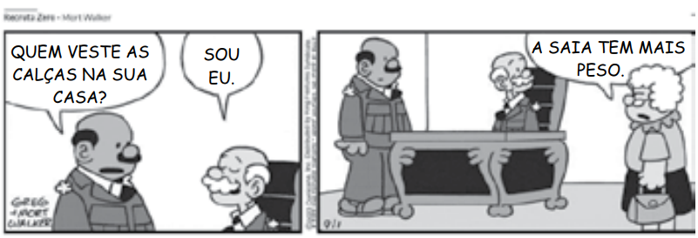
(Mort Walker, “Recruta Zero”. https://cultura.estadao.com.br/quadrinhos, 11.09.2023)
A habilidade “(EF67LP8) Analisar, em diferentes textos, os efeitos de sentido decorrentes do uso de figuras de linguagem.” do Currículo Paulista poderia subsidiar o trabalho com leitura e interpretação da tira, enfatizando-se o uso da
Provas
Disciplina: Inglês (Língua Inglesa)
Banca: VUNESP
Orgão: Pref. Aparecida-SP
Leia o bilhete do aluno e o texto de Celce-Murcia, a seguir, para responder às questões de 42 a 48.
Dear teacher,
I am writing this in the intermission between classes to tell you of my extolment for your class. Your group work rouses a deep sense of admiration and joy within me. I enjoy every step of the work in your class. It comes without speaking that your class is the best. I don’t know how to give vent to my feelings. You help me with the difficultness of English. I know other guys and I suggest them to take your class. I’m so much happy to be student of a sagely teacher such as you and getting your advices. Your help is beyond valuability.
Bye for now,
Teo
What is it about the word use in Teo’s expressive letter that does not sound quite right, even though we understand the message? It appears that he knows enough about the words to communicate, but there are gaps in his word knowledge. For example, to know a word means to know a considerable amount about its meaning; Teo uses the word intermission (a short period of time between the parts of a play, film, concert, etc.) to apply to the break between classes. He knows the literal meaning of to give vent to his feelings but misses the subtle distinction that vent is usually used with negative feelings (I vented my anger). In addition, to know a word or phrase means to know its collocations, or how it is used in combination with other words; for example, every step of the way is a recognizable collocation, every step of the work is not. Knowing your word also means to know its grammatical function (e.g., suggest is a transitive verb; advice is an uncountable noun) and its word parts (e.g., difficulty rather than *difficultness, and value rather than *valuability). Finally, knowing your word means to know its register, or a level of formality. Extolment is a noun (meaning “enthusiastic praise and admiration”), but it is very formal and infrequently used.
This letter demonstrates the enormity of the word learning task. There are many words to know and many details to be known about each word.
(Celce-Murcia, M. 2001)
Celce-Murcia comenta o erro do aluno Teo quanto ao uso do verbo “suggest” – um erro por desconhecimento da estrutura gramatical em que o verbo estaria inserido.
Assinale a alternativa que apresenta uso correto do verbo “suggest” em uma frase.
Provas
Disciplina: Direito da Criança e do Adolescente
Banca: VUNESP
Orgão: Pref. Aparecida-SP
A mãe de Juliana, estudante do 5º ano do ensino fundamental, compareceu à secretaria da escola com um recurso, discordando do resultado final de avaliação do ano corrente, que reprovou sua filha. Tal situação, de acordo com art. 53 do Estatuto da Criança e do Adolescente, é
Provas
Para a Educação Infantil, a Base Nacional Comum Curricular – BNCC (2017) está estruturada por meio de campos de experiências, e certo campo de experiência do referido documento define que: “...na Educação Infantil, é preciso criar oportunidades para que as crianças entrem em contato com outros grupos sociais e culturais, outros modos de vida, diferentes atitudes, técnicas e rituais de cuidados pessoais e do grupo, costumes, celebrações e narrativas. Nessas experiências, elas podem ampliar o modo de perceber a si mesmas e ao outro, valorizar sua identidade, respeitar os outros e reconhecer as diferenças que nos constituem como seres humanos”. De acordo com a BNCC, esse campo de experiência é denominado:
Provas
Leia a tira para responder às questões de números 33 e 34.
(Mort Walker, “Recruta Zero”. https://cultura.estadao.com.br/quadrinhos, 11.09.2023)
Ao tratar do desenvolvimento da Análise do Discurso (AD), Fernanda Mussalim (em Mussalim e Bentes, 2004) explica que “para a AD, os sentidos são historicamente construídos”. Dessa forma, quando se lê a tira, conclui-se corretamente que ela traz o discurso
Provas
Disciplina: Inglês (Língua Inglesa)
Banca: VUNESP
Orgão: Pref. Aparecida-SP
Leia o bilhete do aluno e o texto de Celce-Murcia, a seguir, para responder às questões de 42 a 48.
Dear teacher,
I am writing this in the intermission between classes to tell you of my extolment for your class. Your group work rouses a deep sense of admiration and joy within me. I enjoy every step of the work in your class. It comes without speaking that your class is the best. I don’t know how to give vent to my feelings. You help me with the difficultness of English. I know other guys and I suggest them to take your class. I’m so much happy to be student of a sagely teacher such as you and getting your advices. Your help is beyond valuability.
Bye for now,
Teo
What is it about the word use in Teo’s expressive letter that does not sound quite right, even though we understand the message? It appears that he knows enough about the words to communicate, but there are gaps in his word knowledge. For example, to know a word means to know a considerable amount about its meaning; Teo uses the word intermission (a short period of time between the parts of a play, film, concert, etc.) to apply to the break between classes. He knows the literal meaning of to give vent to his feelings but misses the subtle distinction that vent is usually used with negative feelings (I vented my anger). In addition, to know a word or phrase means to know its collocations, or how it is used in combination with other words; for example, every step of the way is a recognizable collocation, every step of the work is not. Knowing your word also means to know its grammatical function (e.g., suggest is a transitive verb; advice is an uncountable noun) and its word parts (e.g., difficulty rather than *difficultness, and value rather than *valuability). Finally, knowing your word means to know its register, or a level of formality. Extolment is a noun (meaning “enthusiastic praise and admiration”), but it is very formal and infrequently used.
This letter demonstrates the enormity of the word learning task. There are many words to know and many details to be known about each word.
(Celce-Murcia, M. 2001)
A palavra em negrito em “but misses the subtle distinction” é pronunciada /ˈs∧təl/; portanto, com a consoante /b/ muda.
Assinale, entre as palavras a seguir, a única em que a consoante /b/ é pronunciada.
Provas
A disciplina de Psicologia Educacional, por sua natureza, está intimamente relacionada com a
Provas
Ao procurar uma vaga para ingresso na turma de 4 anos de uma escola pública municipal de educação infantil, a mãe de Cássio teve seu pedido negado por falta de vagas. Na oportunidade, a mãe alegou que esse é um direito subjetivo de seu filho. De acordo com as reflexões sobre direito subjetivo apresentadas no Caderno 12 – Legislação Escolar, do documento Profuncionário, é correto afirmar que, no dever ético do exercício de suas funções, agiu corretamente o secretário de escola, que
Provas
Caderno Container