Foram encontradas 70 questões.
Em um projeto de um pilar cilíndrico sob compressão, com as extremidades engastadas, verificou-se a necessidade de multiplicar por quatro sua altura.
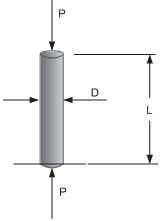
Para ser mantido o valor da carga crítica de flambagem do pilar, seu diâmetro deve ser multiplicado por
Para ser mantido o valor da carga crítica de flambagem do pilar, seu diâmetro deve ser multiplicado por
Provas
Questão presente nas seguintes provas

Duas peças unidas por um pino de seção circular maciça, de diâmetro D, são tracionadas por uma carga de 18,6 kN.
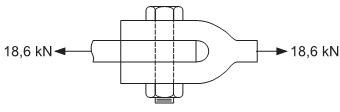
Qual deverá ser o menor diâmetro do pino, em milímetros, para que o valor médio da tensão de cisalhamento, em cada uma de suas seções transversais, não ultrapasse 187,5 MPa?

Qual deverá ser o menor diâmetro do pino, em milímetros, para que o valor médio da tensão de cisalhamento, em cada uma de suas seções transversais, não ultrapasse 187,5 MPa?
Provas
Questão presente nas seguintes provas
Uma barra circular vazada, com diâmetro externo de 200 mm e interno de 120 mm, é submetida a um torque de 80 kN.m. O valor, com precisão de uma casa decimal, da tensão de cisalhamento junto à parede externa, em N/mm², é

Provas
Questão presente nas seguintes provas
Três molas colocadas em série, conforme mostra a figura abaixo, são fixadas ao ponto Z, e, em seguida, é aplicado um deslocamento lateral de 10 mm no ponto X, em direção ao ponto Z.
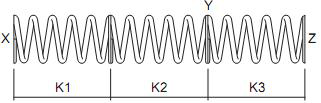
Levando-se em conta que o material das molas obedece à lei de Hooke, o deslocamento lateral apresentado pelo ponto Y, em milímetros, é

Levando-se em conta que o material das molas obedece à lei de Hooke, o deslocamento lateral apresentado pelo ponto Y, em milímetros, é
Provas
Questão presente nas seguintes provas
Um sistema massa-mola-amortecedor é submetido à vibração livre, amortecida com um grau de liberdade. O sistema possui massa igual a 20 kg e rigidez igual a 500 N/m. Se o fator de amortecimento é igual a 0,6, qual é o valor, em rad/s, da frequência de vibração amortecida?
Provas
Questão presente nas seguintes provas
Considerando-se que, em uma viga de seção retangular, as tensões de cisalhamento variam parabolicamente, o máximo valor de cisalhamento no plano da seção transversal de área A, submetido a uma força cortante Q, é
Provas
Questão presente nas seguintes provas
Uma viga de aço é composta de duas seções circulares, com áreas transversais de 250 mm² e 500 mm², com 450 mm e 300 mm de comprimento, respectivamente. Essa barra é engastada em suas extremidades, e uma força de 40N é aplicada no ressalto entre as seções dessa viga.

Após a análise desses dados, conclui-se que os valores absolutos das reações nas extremidades (Ra e Rb) são, respectivamente, em N:
Após a análise desses dados, conclui-se que os valores absolutos das reações nas extremidades (Ra e Rb) são, respectivamente, em N:
Provas
Questão presente nas seguintes provas
A barra da figura abaixo tem seção transversal contínua, momento de inércia da seção transversal I, comprimento L e altura da seção transversal igual a y. Ela é apoiada nas extremidades e carregada com força P a uma distância m da extremidade esquerda e n da extremidade direita.
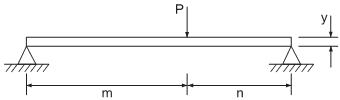
Sabendo-se que a distância da linha neutra à sua extremidade superior é 1/4 da altura da seção transversal, a tensão normal máxima na seção transversal da viga que está equidistante dos pontos de apoio é
Sabendo-se que a distância da linha neutra à sua extremidade superior é 1/4 da altura da seção transversal, a tensão normal máxima na seção transversal da viga que está equidistante dos pontos de apoio é
Provas
Questão presente nas seguintes provas
Uma viga de material elástico sob flexão apresenta módulo de inércia I, em relação à linha neutra.
A tensão normal e o momento fletor atuante na viga são obtidos, respectivamente, por
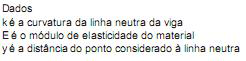
A tensão normal
e o momento fletor atuante na viga são obtidos, respectivamente, porProvas
Questão presente nas seguintes provas
Safety Meeting Presentation
The expressions “Complying with" and “follow through" in the fragments “Complying with OSHA regulations isn't always easy," (lines 10-11) and “Then it's up to you to follow through the task and use the equipment as you were trained." (lines 23-24) may, respectively, be substituted, without change in meaning, by Today's meeting is really about you. I can stand
in front of you and talk about working safely and what
procedures to follow until I'm blue in the face. But until
you understand the need for working safely, until you
are willing to be responsible for your safety, it doesn't
mean a whole lot.
Some of you may be familiar with OSHA - the Occupational Safety & Health Administration. The sole purpose of this agency is to keep American workers safe. Complying with OSHA regulations isn't always easy, but if we work together, we can do it. Yet, complying with regulations is not the real reason for working safely. Our real motive is simple. We care about each and every one of you and will do what is necessary to prevent you from being injured.
However, keeping our workplace safe takes input from everyone. Management, supervisor, and all of you have to come together on this issue, or we're in trouble. For example, upper management has to approve the purchase of safe equipment. Supervisors, including myself, have to ensure that each of you knows how to use that equipment safely. Then it's up to you to follow through the task and use the equipment as you were trained. If any one part of this chain fails, accidents are going to happen and people are going to get hurt.
Responsibility Number One - Recognize Hazards
At the core of your safety responsibilities lies the task of recognizing safety and health hazards. In order to do that, you must first understand what constitutes a hazard. Extreme hazards are often obvious. Our hopes are that you won't find too many of those around here.
There are, however, more subtle hazards that won't jump up and bite you. As a result of your safety training and meetings like these, some things may come to mind. For example, a machine may not be easy to lock out. Common practice may be to use a tag. This is a potential hazard and should be discussed. Maybe something can be changed to make it easier to use a lock. Other subtle hazards include such things as frayed electrical cords, a loose machine guard, a cluttered aisle, or maybe something that just doesn't look right.
Responsibility Number Two - Report Hazards
A big part of recognizing hazards is using your instincts. Nobody knows your job as well as you do, so we're counting on you to let us know about possible problems. Beyond recognizing hazards, you have to correct them or report them to someone who can. This too, is a judgement call. For example, if something spills in your work area you can probably clean it up yourself. However, if there is an unlabeled chemical container and you have no idea what it is, you should report it to your supervisor.
Additional Employee Responsibilities
Good housekeeping is a major part of keeping your work area safe. For example, you should take a few minutes each day to ensure that aisles, hallways, and stairways in your work area are not obstructed. If boxes, equipment, or anything else is left to pile up, you have a tripping hazard on your hands. Those obstructions could keep you from exiting the building quickly and safely should you face an emergency situation.
Also watch out for spills. These can lead to slips and falls. Flammable materials are another thing to be aware of. Make sure they are disposed of properly.
Keep Thinking. Even if you're doing your job safely and you are avoiding hazards, there are often even better ways to work safely. If you have ideas for improving the safety of your job or that of co-workers, share them.
Concluding Remarks
While nothing we do can completely eliminate the threat of an incident, we can work together to improve our odds. As I said, this must be a real team effort and I'm counting on input from all of you. Let's keep communicating and continue to improve safety.
Available at: <http://www.ncsu.edu/ehs/www99/right/training/meeting/emplores.html>.Retrieved on: April 1st, 2012. Adapted.
Some of you may be familiar with OSHA - the Occupational Safety & Health Administration. The sole purpose of this agency is to keep American workers safe. Complying with OSHA regulations isn't always easy, but if we work together, we can do it. Yet, complying with regulations is not the real reason for working safely. Our real motive is simple. We care about each and every one of you and will do what is necessary to prevent you from being injured.
However, keeping our workplace safe takes input from everyone. Management, supervisor, and all of you have to come together on this issue, or we're in trouble. For example, upper management has to approve the purchase of safe equipment. Supervisors, including myself, have to ensure that each of you knows how to use that equipment safely. Then it's up to you to follow through the task and use the equipment as you were trained. If any one part of this chain fails, accidents are going to happen and people are going to get hurt.
Responsibility Number One - Recognize Hazards
At the core of your safety responsibilities lies the task of recognizing safety and health hazards. In order to do that, you must first understand what constitutes a hazard. Extreme hazards are often obvious. Our hopes are that you won't find too many of those around here.
There are, however, more subtle hazards that won't jump up and bite you. As a result of your safety training and meetings like these, some things may come to mind. For example, a machine may not be easy to lock out. Common practice may be to use a tag. This is a potential hazard and should be discussed. Maybe something can be changed to make it easier to use a lock. Other subtle hazards include such things as frayed electrical cords, a loose machine guard, a cluttered aisle, or maybe something that just doesn't look right.
Responsibility Number Two - Report Hazards
A big part of recognizing hazards is using your instincts. Nobody knows your job as well as you do, so we're counting on you to let us know about possible problems. Beyond recognizing hazards, you have to correct them or report them to someone who can. This too, is a judgement call. For example, if something spills in your work area you can probably clean it up yourself. However, if there is an unlabeled chemical container and you have no idea what it is, you should report it to your supervisor.
Additional Employee Responsibilities
Good housekeeping is a major part of keeping your work area safe. For example, you should take a few minutes each day to ensure that aisles, hallways, and stairways in your work area are not obstructed. If boxes, equipment, or anything else is left to pile up, you have a tripping hazard on your hands. Those obstructions could keep you from exiting the building quickly and safely should you face an emergency situation.
Also watch out for spills. These can lead to slips and falls. Flammable materials are another thing to be aware of. Make sure they are disposed of properly.
Keep Thinking. Even if you're doing your job safely and you are avoiding hazards, there are often even better ways to work safely. If you have ideas for improving the safety of your job or that of co-workers, share them.
Concluding Remarks
While nothing we do can completely eliminate the threat of an incident, we can work together to improve our odds. As I said, this must be a real team effort and I'm counting on input from all of you. Let's keep communicating and continue to improve safety.
Available at: <http://www.ncsu.edu/ehs/www99/right/training/meeting/emplores.html>.Retrieved on: April 1st, 2012. Adapted.
Provas
Questão presente nas seguintes provas
Cadernos
Caderno Container