Foram encontradas 60 questões.
Numa visão global, percebe-se que os seguintes segmentos da Biotecnologia Marinha apresentam promissores campos de atuação:
Busca de fármacos – o potencial é tão promissor que apenas quatro produtos naturais marinhos em fase de ensaios clínicos apresentam um valor de mercado superior a um bilhão de dólares.
Caracterização do Estado da Arte em Biotecnologia Marinha no Brasil” / Ministério da Saúde, Organização Pan-Americana da Saúde, Ministério da Ciência e Tecnologia. – Brasília: Ministério da Saúde, 2010. ISBN 978-85-334-1707-6 Ministério da Saúde. Adaptado.
No texto, explica-se o enorme potencial dos produtos naturais marinhos, em particular, os relacionados à(a)
Provas

Dia 5 de novembro de 2015. Brasil. Minas Gerais. Mariana. Bento Rodrigues. Barragem de Fundão. Samarco. Às 15h ocorre um tsunami de lama. Cerca de 32 milhões de m3 de rejeitos são lançados ao meio ambiente. O primeiro local atingido foi o córrego de Santarém. Em seguida, o tsunami chegou ao Rio Gualaxo do Norte, percorrendo 55 quilômetros até seu afluente, o Rio do Carmo. Depois, mais 22 quilômetros, e a lama encontra o Rio Doce. Pelo curso da Bacia Hidrográfica do Rio Doce, os rejeitos foram carreados até sua foz, no município de Linhares, Espírito Santo, atingindo o Oceano Atlântico.
Ao impactar um total de 663,2 quilômetros de recursos hídricos de dois estados – Minas Gerais e Espírito Santo, passando por 40 municípios -, a lama foi deixando um rastro de destruição.
Disponível em: https://www.ecodebate.com.br/2018/09/14/desastre-de-mariana-cientistas-analisam-os-impactos-ambientais-entre-os-quais-os-resultantes-da-devastacao-de-ecossistemas/. Acesso em: 07 mar. 2022. Adaptado.
Estão em curso até hoje estudos do impacto desse grave acidente ambiental. Muitos desses estudos são liderados pela Rede Rio Doce Mar, formada por um grande consórcio de instituições de ensino e pesquisa. Dentre os vários parâmetros a serem monitorados no ambiente marinho, estão os estudos microbiológicos das matrizes água, sedimento e biota (coral).
Para preservação e armazenamento dessas amostras microbiológicas, recomendam-se, respectivamente,
Provas
Os saguis da Mata Atlântica, além de impactarem negativamente a vocalização das aves, popularmente chamada de canto, também podem ter impacto negativo na reprodução dessa classe de animais.
Outro problema causado pelos micos é que eles comem ovos, o que é particularmente impactante porque todas as espécies de aves são
Provas
Parece mais uma sequência da animação Rio, do brasileiro Carlos Saldanha, que ganhou as telas ao retratar as aves brasileiras sendo vítimas do ataque de pequenos miquinhos liderados por uma cacatua. Mas, pela primeira vez, cientistas podem ter encontrado indícios de que isso está se tornando realidade. As aves da Mata Atlântica estão sob ameaça, e os responsáveis são os pequenos macaquinhos originários da Caatinga e do Cerrado. Artigo publicado este mês demonstrou o impacto negativo dos saguis na vocalização dos pássaros, o que pode afetar a reprodução das espécies e está tornando as florestas silenciosas. Com modernos métodos de monitoramento, os cientistas se valeram de gravação automatizada para capturar sons do cotidiano de aves na Floresta da Tijuca, no Rio de Janeiro.
Disponível em: https://conexao.ufrj.br/2022/02/primatas-invasores-afetam-aves-da-mata-atlantica/. Acesso em: 06 mar. 2022. Adaptado.
No texto, são apontadas as consequências, sobre a fauna da Mata Atlântica, da presença de uma espécie
Provas
Pesquisadores chineses avaliaram a expressão de proteínas importantes do mexilhão dourado, um organismo que incrusta tubulações de hidroelétricas e de outras usinas com resfriamento de reatores. Os dados da pesquisa estão apresentados no gráfico a seguir.
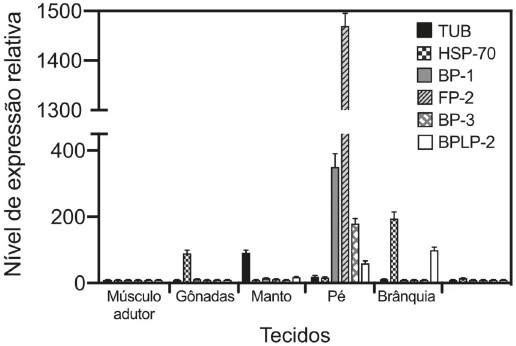
Li S, Xia Z, Chen Y, Gao Y and Zhan A Byssus. Structure and Protein Composition in the Highly Invasive Fouling Mussel Limnoperna fortunei. Front. Physiol. 9:418. doi: 10.3389/fphys.2018.00418. Adaptado.
Utilizando esses dados para escolher uma proteína com potencial para ser alvo de alguma interferência visando diretamente a uma menor capacidade de aderência do animal às tubulações, a proteína escolhida pelo pesquisador e o que poderia ser afetado por essa proteína são, respectivamente,
Provas
Disciplina: Inglês (Língua Inglesa)
Banca: CESGRANRIO
Orgão: Eletronuclear
The controversial future of nuclear power in the U.S.
Lois Parshley
President Joe Biden has set ambitious goals for fighting climate change: To cut U.S. carbon emissions in half by 2030 and to have a net-zero carbon economy by 2050. The plan requires electricity generation – the easiest economic sector to green, analysts say – to be carbon-free by 2035.
A few figures from the U.S. Energy Information Administration (EIA) illustrate the challenge. In 2020 the United States generated about four trillion kilowatt-hours of electricity. Some 60 percent of that came from burning fossil fuels, mostly natural gas, in some 10,000 generators, large and small, around the country. All of that electricity will need to be replaced - and more, because demand for electricity is expected to rise, especially if we power more cars with it.
Renewable energy sources like solar and wind have grown faster than expected; together with hydroelectric, they surpassed coal for the first time ever in 2019 and now produce 20 percent of U.S. electricity. In February the EIA projected that renewables were on track to produce more than 40 percent by 2050 - remarkable growth, perhaps, but still well short of what’s needed to decarbonize the grid by 2035 and forestall the climate crisis.
This daunting challenge has recently led some environmentalists to reconsider an alternative they had long been wary of: nuclear power.
Nuclear power has a lot going for it. Its carbon footprint is equivalent to wind, less than solar, and orders of magnitude less than coal. Nuclear power plants take up far less space on the landscape than solar or wind farms, and they produce power even at night or on calm days. In 2020 they generated as much electricity in the U.S. as renewables did, a fifth of the total.
But debates rage over whether nuclear should be a big part of the climate solution in the U.S. The majority of American nuclear plants today are approaching the end of their design life, and only one has been built in the last 20 years. Nuclear proponents are now banking on next-generation designs, like small, modular versions of conventional light-water reactors, or advanced reactors designed to be safer, cheaper, and more flexible.
“We’ve innovated so little in the past half-century, there’s a lot of ground to gain,” says Ashley Finan, the director of the National Reactor Innovation Center at the Idaho National Laboratory. Yet an expansion of nuclear power faces some serious hurdles, and the perennial concerns about safety and long-lived radioactive waste may not be the biggest: Critics also say nuclear reactors are simply too expensive and take too long to build to be of much help with the climate crisis.
While environmental opposition may have been the primary force hindering nuclear development in the 1980s and 90s, now the biggest challenge may be costs. Few nuclear plants have been built in the U.S. recently because they are very expensive to build here, which makes the price of their energy high.
Jacopo Buongiorno, a professor of nuclear science and engineering at MIT, led a group of scientists who recently completed a two-year study examining the future of nuclear energy in the U.S. and western Europe. They found that “without cost reductions, nuclear energy will not play a significant role” in decarbonizing the power sector.
“In the West, the nuclear industry has substantially lost its ability to build large plants,” Buongiorno says, pointing to Southern Company’s effort to add two new reactors to Plant Vogtle in Waynesboro, Georgia. They have been under construction since 2013, are now billions of dollars over budget - the cost has more than doubled - and years behind schedule. In France, ranked second after the U.S. in nuclear generation, a new reactor in Flamanville is a decade late and more than three times over budget.
“We have clearly lost the know-how to build traditional gigawatt-scale nuclear power plants,” Buongiorno says. Because no new plants were built in the U.S. for decades, he and his colleagues found, the teams working on a project like Vogtle haven’t had the learning experiences needed to do the job efficiently. That leads to construction delays that drive up costs.
Elsewhere, reactors are still being built at lower cost, “largely in places where they build projects on budget, and on schedule,” Finan explains. China and South Korea are the leaders. (To be fair, several of China’s recent large-scale reactors have also had cost overruns and delays.)
“The cost of nuclear power in Asia has been a quarter, or less, of new builds in the West,” Finan says. Much lower labor costs are one reason, according to both Finan and the MIT report, but better project management is another.
Available at: https://www.nationalgeographic.com/environment/ article/nuclear-plants-are-closing-in-the-us-should-we-build-more. Retrieved on: Feb. 3, 2022. Adapted.
In the last paragraph, the author states that “Much lower labor costs are one reason, according to both Finan and the MIT report, but better project management is another.” because he believes that
Provas
Disciplina: Inglês (Língua Inglesa)
Banca: CESGRANRIO
Orgão: Eletronuclear
The controversial future of nuclear power in the U.S.
Lois Parshley
President Joe Biden has set ambitious goals for fighting climate change: To cut U.S. carbon emissions in half by 2030 and to have a net-zero carbon economy by 2050. The plan requires electricity generation – the easiest economic sector to green, analysts say – to be carbon-free by 2035.
A few figures from the U.S. Energy Information Administration (EIA) illustrate the challenge. In 2020 the United States generated about four trillion kilowatt-hours of electricity. Some 60 percent of that came from burning fossil fuels, mostly natural gas, in some 10,000 generators, large and small, around the country. All of that electricity will need to be replaced - and more, because demand for electricity is expected to rise, especially if we power more cars with it.
Renewable energy sources like solar and wind have grown faster than expected; together with hydroelectric, they surpassed coal for the first time ever in 2019 and now produce 20 percent of U.S. electricity. In February the EIA projected that renewables were on track to produce more than 40 percent by 2050 - remarkable growth, perhaps, but still well short of what’s needed to decarbonize the grid by 2035 and forestall the climate crisis.
This daunting challenge has recently led some environmentalists to reconsider an alternative they had long been wary of: nuclear power.
Nuclear power has a lot going for it. Its carbon footprint is equivalent to wind, less than solar, and orders of magnitude less than coal. Nuclear power plants take up far less space on the landscape than solar or wind farms, and they produce power even at night or on calm days. In 2020 they generated as much electricity in the U.S. as renewables did, a fifth of the total.
But debates rage over whether nuclear should be a big part of the climate solution in the U.S. The majority of American nuclear plants today are approaching the end of their design life, and only one has been built in the last 20 years. Nuclear proponents are now banking on next-generation designs, like small, modular versions of conventional light-water reactors, or advanced reactors designed to be safer, cheaper, and more flexible.
“We’ve innovated so little in the past half-century, there’s a lot of ground to gain,” says Ashley Finan, the director of the National Reactor Innovation Center at the Idaho National Laboratory. Yet an expansion of nuclear power faces some serious hurdles, and the perennial concerns about safety and long-lived radioactive waste may not be the biggest: Critics also say nuclear reactors are simply too expensive and take too long to build to be of much help with the climate crisis.
While environmental opposition may have been the primary force hindering nuclear development in the 1980s and 90s, now the biggest challenge may be costs. Few nuclear plants have been built in the U.S. recently because they are very expensive to build here, which makes the price of their energy high.
Jacopo Buongiorno, a professor of nuclear science and engineering at MIT, led a group of scientists who recently completed a two-year study examining the future of nuclear energy in the U.S. and western Europe. They found that “without cost reductions, nuclear energy will not play a significant role” in decarbonizing the power sector.
“In the West, the nuclear industry has substantially lost its ability to build large plants,” Buongiorno says, pointing to Southern Company’s effort to add two new reactors to Plant Vogtle in Waynesboro, Georgia. They have been under construction since 2013, are now billions of dollars over budget - the cost has more than doubled - and years behind schedule. In France, ranked second after the U.S. in nuclear generation, a new reactor in Flamanville is a decade late and more than three times over budget.
“We have clearly lost the know-how to build traditional gigawatt-scale nuclear power plants,” Buongiorno says. Because no new plants were built in the U.S. for decades, he and his colleagues found, the teams working on a project like Vogtle haven’t had the learning experiences needed to do the job efficiently. That leads to construction delays that drive up costs.
Elsewhere, reactors are still being built at lower cost, “largely in places where they build projects on budget, and on schedule,” Finan explains. China and South Korea are the leaders. (To be fair, several of China’s recent large-scale reactors have also had cost overruns and delays.)
“The cost of nuclear power in Asia has been a quarter, or less, of new builds in the West,” Finan says. Much lower labor costs are one reason, according to both Finan and the MIT report, but better project management is another.
Available at: https://www.nationalgeographic.com/environment/ article/nuclear-plants-are-closing-in-the-us-should-we-build-more. Retrieved on: Feb. 3, 2022. Adapted.
In paragraph 12, the author affirms “(To be fair, several of China’s recent large-scale reactors have also had cost overruns and delays)”, in order to
Provas
Disciplina: Inglês (Língua Inglesa)
Banca: CESGRANRIO
Orgão: Eletronuclear
The controversial future of nuclear power in the U.S.
Lois Parshley
President Joe Biden has set ambitious goals for fighting climate change: To cut U.S. carbon emissions in half by 2030 and to have a net-zero carbon economy by 2050. The plan requires electricity generation – the easiest economic sector to green, analysts say – to be carbon-free by 2035.
A few figures from the U.S. Energy Information Administration (EIA) illustrate the challenge. In 2020 the United States generated about four trillion kilowatt-hours of electricity. Some 60 percent of that came from burning fossil fuels, mostly natural gas, in some 10,000 generators, large and small, around the country. All of that electricity will need to be replaced - and more, because demand for electricity is expected to rise, especially if we power more cars with it.
Renewable energy sources like solar and wind have grown faster than expected; together with hydroelectric, they surpassed coal for the first time ever in 2019 and now produce 20 percent of U.S. electricity. In February the EIA projected that renewables were on track to produce more than 40 percent by 2050 - remarkable growth, perhaps, but still well short of what’s needed to decarbonize the grid by 2035 and forestall the climate crisis.
This daunting challenge has recently led some environmentalists to reconsider an alternative they had long been wary of: nuclear power.
Nuclear power has a lot going for it. Its carbon footprint is equivalent to wind, less than solar, and orders of magnitude less than coal. Nuclear power plants take up far less space on the landscape than solar or wind farms, and they produce power even at night or on calm days. In 2020 they generated as much electricity in the U.S. as renewables did, a fifth of the total.
But debates rage over whether nuclear should be a big part of the climate solution in the U.S. The majority of American nuclear plants today are approaching the end of their design life, and only one has been built in the last 20 years. Nuclear proponents are now banking on next-generation designs, like small, modular versions of conventional light-water reactors, or advanced reactors designed to be safer, cheaper, and more flexible.
“We’ve innovated so little in the past half-century, there’s a lot of ground to gain,” says Ashley Finan, the director of the National Reactor Innovation Center at the Idaho National Laboratory. Yet an expansion of nuclear power faces some serious hurdles, and the perennial concerns about safety and long-lived radioactive waste may not be the biggest: Critics also say nuclear reactors are simply too expensive and take too long to build to be of much help with the climate crisis.
While environmental opposition may have been the primary force hindering nuclear development in the 1980s and 90s, now the biggest challenge may be costs. Few nuclear plants have been built in the U.S. recently because they are very expensive to build here, which makes the price of their energy high.
Jacopo Buongiorno, a professor of nuclear science and engineering at MIT, led a group of scientists who recently completed a two-year study examining the future of nuclear energy in the U.S. and western Europe. They found that “without cost reductions, nuclear energy will not play a significant role” in decarbonizing the power sector.
“In the West, the nuclear industry has substantially lost its ability to build large plants,” Buongiorno says, pointing to Southern Company’s effort to add two new reactors to Plant Vogtle in Waynesboro, Georgia. They have been under construction since 2013, are now billions of dollars over budget - the cost has more than doubled - and years behind schedule. In France, ranked second after the U.S. in nuclear generation, a new reactor in Flamanville is a decade late and more than three times over budget.
“We have clearly lost the know-how to build traditional gigawatt-scale nuclear power plants,” Buongiorno says. Because no new plants were built in the U.S. for decades, he and his colleagues found, the teams working on a project like Vogtle haven’t had the learning experiences needed to do the job efficiently. That leads to construction delays that drive up costs.
Elsewhere, reactors are still being built at lower cost, “largely in places where they build projects on budget, and on schedule,” Finan explains. China and South Korea are the leaders. (To be fair, several of China’s recent large-scale reactors have also had cost overruns and delays.)
“The cost of nuclear power in Asia has been a quarter, or less, of new builds in the West,” Finan says. Much lower labor costs are one reason, according to both Finan and the MIT report, but better project management is another.
Available at: https://www.nationalgeographic.com/environment/ article/nuclear-plants-are-closing-in-the-us-should-we-build-more. Retrieved on: Feb. 3, 2022. Adapted.
According to Jacopo Buongiorno, one of the reasons why it is more expensive to build large nuclear plants in the West is that
Provas
Disciplina: Inglês (Língua Inglesa)
Banca: CESGRANRIO
Orgão: Eletronuclear
The controversial future of nuclear power in the U.S.
Lois Parshley
President Joe Biden has set ambitious goals for fighting climate change: To cut U.S. carbon emissions in half by 2030 and to have a net-zero carbon economy by 2050. The plan requires electricity generation – the easiest economic sector to green, analysts say – to be carbon-free by 2035.
A few figures from the U.S. Energy Information Administration (EIA) illustrate the challenge. In 2020 the United States generated about four trillion kilowatt-hours of electricity. Some 60 percent of that came from burning fossil fuels, mostly natural gas, in some 10,000 generators, large and small, around the country. All of that electricity will need to be replaced - and more, because demand for electricity is expected to rise, especially if we power more cars with it.
Renewable energy sources like solar and wind have grown faster than expected; together with hydroelectric, they surpassed coal for the first time ever in 2019 and now produce 20 percent of U.S. electricity. In February the EIA projected that renewables were on track to produce more than 40 percent by 2050 - remarkable growth, perhaps, but still well short of what’s needed to decarbonize the grid by 2035 and forestall the climate crisis.
This daunting challenge has recently led some environmentalists to reconsider an alternative they had long been wary of: nuclear power.
Nuclear power has a lot going for it. Its carbon footprint is equivalent to wind, less than solar, and orders of magnitude less than coal. Nuclear power plants take up far less space on the landscape than solar or wind farms, and they produce power even at night or on calm days. In 2020 they generated as much electricity in the U.S. as renewables did, a fifth of the total.
But debates rage over whether nuclear should be a big part of the climate solution in the U.S. The majority of American nuclear plants today are approaching the end of their design life, and only one has been built in the last 20 years. Nuclear proponents are now banking on next-generation designs, like small, modular versions of conventional light-water reactors, or advanced reactors designed to be safer, cheaper, and more flexible.
“We’ve innovated so little in the past half-century, there’s a lot of ground to gain,” says Ashley Finan, the director of the National Reactor Innovation Center at the Idaho National Laboratory. Yet an expansion of nuclear power faces some serious hurdles, and the perennial concerns about safety and long-lived radioactive waste may not be the biggest: Critics also say nuclear reactors are simply too expensive and take too long to build to be of much help with the climate crisis.
While environmental opposition may have been the primary force hindering nuclear development in the 1980s and 90s, now the biggest challenge may be costs. Few nuclear plants have been built in the U.S. recently because they are very expensive to build here, which makes the price of their energy high.
Jacopo Buongiorno, a professor of nuclear science and engineering at MIT, led a group of scientists who recently completed a two-year study examining the future of nuclear energy in the U.S. and western Europe. They found that “without cost reductions, nuclear energy will not play a significant role” in decarbonizing the power sector.
“In the West, the nuclear industry has substantially lost its ability to build large plants,” Buongiorno says, pointing to Southern Company’s effort to add two new reactors to Plant Vogtle in Waynesboro, Georgia. They have been under construction since 2013, are now billions of dollars over budget - the cost has more than doubled - and years behind schedule. In France, ranked second after the U.S. in nuclear generation, a new reactor in Flamanville is a decade late and more than three times over budget.
“We have clearly lost the know-how to build traditional gigawatt-scale nuclear power plants,” Buongiorno says. Because no new plants were built in the U.S. for decades, he and his colleagues found, the teams working on a project like Vogtle haven’t had the learning experiences needed to do the job efficiently. That leads to construction delays that drive up costs.
Elsewhere, reactors are still being built at lower cost, “largely in places where they build projects on budget, and on schedule,” Finan explains. China and South Korea are the leaders. (To be fair, several of China’s recent large-scale reactors have also had cost overruns and delays.)
“The cost of nuclear power in Asia has been a quarter, or less, of new builds in the West,” Finan says. Much lower labor costs are one reason, according to both Finan and the MIT report, but better project management is another.
Available at: https://www.nationalgeographic.com/environment/ article/nuclear-plants-are-closing-in-the-us-should-we-build-more. Retrieved on: Feb. 3, 2022. Adapted.
In the fragment of paragraph 7 “and the perennial concerns about safety and long-lived radioactive waste may not be the biggest”, may not be expresses a(n)
Provas
Disciplina: Inglês (Língua Inglesa)
Banca: CESGRANRIO
Orgão: Eletronuclear
The controversial future of nuclear power in the U.S.
Lois Parshley
President Joe Biden has set ambitious goals for fighting climate change: To cut U.S. carbon emissions in half by 2030 and to have a net-zero carbon economy by 2050. The plan requires electricity generation – the easiest economic sector to green, analysts say – to be carbon-free by 2035.
A few figures from the U.S. Energy Information Administration (EIA) illustrate the challenge. In 2020 the United States generated about four trillion kilowatt-hours of electricity. Some 60 percent of that came from burning fossil fuels, mostly natural gas, in some 10,000 generators, large and small, around the country. All of that electricity will need to be replaced - and more, because demand for electricity is expected to rise, especially if we power more cars with it.
Renewable energy sources like solar and wind have grown faster than expected; together with hydroelectric, they surpassed coal for the first time ever in 2019 and now produce 20 percent of U.S. electricity. In February the EIA projected that renewables were on track to produce more than 40 percent by 2050 - remarkable growth, perhaps, but still well short of what’s needed to decarbonize the grid by 2035 and forestall the climate crisis.
This daunting challenge has recently led some environmentalists to reconsider an alternative they had long been wary of: nuclear power.
Nuclear power has a lot going for it. Its carbon footprint is equivalent to wind, less than solar, and orders of magnitude less than coal. Nuclear power plants take up far less space on the landscape than solar or wind farms, and they produce power even at night or on calm days. In 2020 they generated as much electricity in the U.S. as renewables did, a fifth of the total.
But debates rage over whether nuclear should be a big part of the climate solution in the U.S. The majority of American nuclear plants today are approaching the end of their design life, and only one has been built in the last 20 years. Nuclear proponents are now banking on next-generation designs, like small, modular versions of conventional light-water reactors, or advanced reactors designed to be safer, cheaper, and more flexible.
“We’ve innovated so little in the past half-century, there’s a lot of ground to gain,” says Ashley Finan, the director of the National Reactor Innovation Center at the Idaho National Laboratory. Yet an expansion of nuclear power faces some serious hurdles, and the perennial concerns about safety and long-lived radioactive waste may not be the biggest: Critics also say nuclear reactors are simply too expensive and take too long to build to be of much help with the climate crisis.
While environmental opposition may have been the primary force hindering nuclear development in the 1980s and 90s, now the biggest challenge may be costs. Few nuclear plants have been built in the U.S. recently because they are very expensive to build here, which makes the price of their energy high.
Jacopo Buongiorno, a professor of nuclear science and engineering at MIT, led a group of scientists who recently completed a two-year study examining the future of nuclear energy in the U.S. and western Europe. They found that “without cost reductions, nuclear energy will not play a significant role” in decarbonizing the power sector.
“In the West, the nuclear industry has substantially lost its ability to build large plants,” Buongiorno says, pointing to Southern Company’s effort to add two new reactors to Plant Vogtle in Waynesboro, Georgia. They have been under construction since 2013, are now billions of dollars over budget - the cost has more than doubled - and years behind schedule. In France, ranked second after the U.S. in nuclear generation, a new reactor in Flamanville is a decade late and more than three times over budget.
“We have clearly lost the know-how to build traditional gigawatt-scale nuclear power plants,” Buongiorno says. Because no new plants were built in the U.S. for decades, he and his colleagues found, the teams working on a project like Vogtle haven’t had the learning experiences needed to do the job efficiently. That leads to construction delays that drive up costs.
Elsewhere, reactors are still being built at lower cost, “largely in places where they build projects on budget, and on schedule,” Finan explains. China and South Korea are the leaders. (To be fair, several of China’s recent large-scale reactors have also had cost overruns and delays.)
“The cost of nuclear power in Asia has been a quarter, or less, of new builds in the West,” Finan says. Much lower labor costs are one reason, according to both Finan and the MIT report, but better project management is another.
Available at: https://www.nationalgeographic.com/environment/ article/nuclear-plants-are-closing-in-the-us-should-we-build-more. Retrieved on: Feb. 3, 2022. Adapted.
Based on the meanings in the text, the two items that express synonymous ideas are
Provas
Caderno Container