Magna Concursos

Foram encontradas 552 questões.

“Eu vi um número que a World Wide Fund for Nature (WWF) publicou em um relatório dizendo que 1,4 bilhão de pessoas no mundo dependem da floresta, no sentido de ter uma economia ligada a ela. Não é a turma das madeireiras, não, é uma economia que supõe que os humanos que vivem ali precisam de floresta para viver.”

Futuro Ancestral. Ailton Krenak.

O texto faz referência a uma economia
 

Provas

Questão presente nas seguintes provas
TEXTO PARA A QUESTÃO
“Como os rolos de papiro petrificados em razão da erupção do Vesúvio em 79 d.C. não podem ser desenrolados sem serem destruídos, uma nova técnica de tomografias computadorizadas de alta resolução escaneou camada por camada. Mesmo assim, a olho nu não é possível reconhecer letras nas imagens das folhas queimadas a milhares de anos. O desafio consistia, então, em treinar uma inteligência artificial capaz de identificar pequenos padrões de rachaduras que indicassem onde haveria tinta. O diferencial da equipe brasileira foi introduzir no programa uma equação usada na biologia para prever a evolução de uma epidemia, o que tornou o reconhecimento mais rápido.
‘Há 30 ou 40 anos atrás, esse era um material dado como perdido’, enfatiza Odemir Bruno, professor do Departamento de Física e Ciência dos Materiais do Instituto de Física de São Carlos, da USP. Como foram carbonizados pelo calor da erupção, os rolos de papiro são extremamente frágeis. Desde a descoberta, há quase três séculos, diversas máquinas e produtos químicos foram testados para abrir fisicamente os rolos, o que destruiu parte do material. Mesmo assim, cerca de 800 papéis conhecidos estão preservados, aguardando o dia de serem desvendados.”
https://jornal.usp.br/ciencias/decifrando-os-papiros-carbonizados-pelovulcao-vesuvio-com-inteligencia-artificial/ (adaptado) 
A frase ‘Há 30 ou 40 anos atrás, esse era um material dado como perdido’ torna explícita a ideia de que a ciência
 

Provas

Questão presente nas seguintes provas

“Como os rolos de papiro petrificados em razão da erupção do Vesúvio em 79 d.C. não podem ser desenrolados sem serem destruídos, uma nova técnica de tomografias computadorizadas de alta resolução escaneou camada por camada. Mesmo assim, a olho nu não é possível reconhecer letras nas imagens das folhas queimadas a milhares de anos. O desafio consistia, então, em treinar uma inteligência artificial capaz de identificar pequenos padrões de rachaduras que indicassem onde haveria tinta. O diferencial da equipe brasileira foi introduzir no programa uma equação usada na biologia para prever a evolução de uma epidemia, o que tornou o reconhecimento mais rápido.

‘Há 30 ou 40 anos atrás, esse era um material dado como perdido’, enfatiza Odemir Bruno, professor do Departamento de Física e Ciência dos Materiais do Instituto de Física de São Carlos, da USP. Como foram carbonizados pelo calor da erupção, os rolos de papiro são extremamente frágeis. Desde a descoberta, há quase três séculos, diversas máquinas e produtos químicos foram testados para abrir fisicamente os rolos, o que destruiu parte do material. Mesmo assim, cerca de 800 papéis conhecidos estão preservados, aguardando o dia de serem desvendados.”

https://jornal.usp.br/ciencias/decifrando-os-papiros-carbonizados-pelovulcao-vesuvio-com-inteligencia-artificial/ (adaptado)

Sobre os rolos de papiro, pode-se afirmar que eles não podem ser fisicamente abertos,

I. pois as circunstâncias físico-químicas da erupção alteraram as fibras originais do material.

II. na medida em que os produtos usados nos últimos 300 anos acabaram inviabilizando o acesso a seu interior.

III. mas as técnicas atualmente existentes permitem acessar seu interior de modo não invasivo e reproduzir seu conteúdo.

Estão corretas as afirmativas


Provas

Questão presente nas seguintes provas
    “Como os rolos de papiro petrificados em razão da erupção do Vesúvio em 79 d.C. não podem ser desenrolados sem serem destruídos, uma nova técnica de tomografias computadorizadas de alta resolução escaneou camada por camada. Mesmo assim, a olho nu não é possível reconhecer letras nas imagens das folhas queimadas a milhares de anos. O desafio consistia, então, em treinar uma inteligência artificial capaz de identificar pequenos padrões de rachaduras que indicassem onde haveria tinta. O diferencial da equipe brasileira foi introduzir no programa uma equação usada na biologia para prever a evolução de uma epidemia, o que tornou o reconhecimento mais rápido.
    ‘Há 30 ou 40 anos atrás, esse era um material dado como perdido’, enfatiza Odemir Bruno, professor do Departamento de Física e Ciência dos Materiais do Instituto de Física de São Carlos, da USP. Como foram carbonizados pelo calor da erupção, os rolos de papiro são extremamente frágeis. Desde a descoberta, há quase três séculos, diversas máquinas e produtos químicos foram testados para abrir fisicamente os rolos, o que destruiu parte do material. Mesmo assim, cerca de 800 papéis conhecidos estão preservados, aguardando o dia de serem desvendados.”
https://jornal.usp.br/ciencias/decifrando-os-papiros-carbonizados-pelo-vulcao-vesuvio-com-inteligencia-artificial/ (adaptado) 
O texto reforça a importância da interdisciplinaridade na medida em que
 

Provas

Questão presente nas seguintes provas
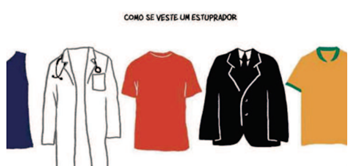
Observe a charge a seguir e analise as afirmações apresentadas: 

Enunciado 4705228-1
Folha de São Paulo

I. Porque médicos e demais profissionais da saúde podem cometer atos de violência sexual, é garantido à mulher que se submete a exames e procedimentos, estar acompanhada por alguém de sua confiança.
II. Têm havido, recentemente, acusações de estupro contra jogadores profissionais que atuaram na seleção brasileira de futebol.
III. Apenas homens com roupas simples, como regatas e camisetas, são potenciais autores de violência sexual contra mulheres.

De acordo com as ideias contidas na charge, estão corretas as afirmações contidas em
 

Provas

Questão presente nas seguintes provas
Have you ever taken the time to craft a detailed email to a colleague, or perhaps a text message to a friend, only to have them shoot back a one-line response that makes it clear they didn’t read past the first sentence?
    The Gazette interviewed Todd Rogers, a behavioural scientist, about his book, “Writing for Busy Readers: Communicate More Effectively in the Real World”. 

Gazette: You make a distinction between “effective writing” and “beautiful writing.” What do you mean by effective writing?
Rogers: Effective writing is practical writing with the goal of getting the reader to understand and potentially respond. The guiding insight for the book is that our readers are not reading what we write carefully.
Gazette: You discuss experiments that support strategies for simplifying writing. Could you summarize a few of those tips?
Rogers: First: Less is more: fewer words, fewer ideas, fewer requests. Omit needless words, so that’s not radical, and it’s costless. Eliminating somewhat-useful-but-not-necessary ideas is harder. It’s a balance between getting the point across and adding too much. Finally, the more actions a message asks of readers, the less likely readers are to do any one of them. Second: Add structure. Most people aren’t reading linearly; they’re jumping around.
Third: Use enough formatting, but no more. We found that people interpret underline, bold, and highlight as the writer saying to the reader, “this is the most important content.” When writers highlight or bold a section in a document or an email, it dramatically increases the likelihood that people read that portion, but it decreases the likelihood that they read the rest of the message.

https://news.harvard.edu/gazette/story/2023/10/tips-on-how-to-connectwith-people-who-dont-have-time-to-read. Acesso em: 23/02/2024. 

Segundo o texto, uma dificuldade apontada por Todd Rogers, no que diz respeito à simplificação da escrita, refere-se a
 

Provas

Questão presente nas seguintes provas
    Ethical codes evolve in response to changing conditions, values, and ideas. A professional code of ethics must, therefore, be periodically updated, and also rest upon widely shared values.
    Although the operating environment of museums grows more complex each year, the root value for museums, the tie that connects all of us together despite our diversity, is the commitment to serving people, both present and future generations.
    Historically, museums have owned and used natural objects, living and non-living, and all manner of human artifacts to advance knowledge and nourish the human spirit.
    Today, the range of their special interests reflects the scope of human vision. Their missions include collecting and preserving, as well as exhibiting and educating with materials not only owned but also borrowed and fabricated for these ends. Their numbers include both governmental and private museums.
    The museum universe in the United States includes both collecting and noncollecting institutions. Although diverse in their missions, they have in common their nonprofit form of organization and a commitment of service to the public. Their collections and/or the objects they borrow or fabricate are the basis for research, exhibits, and programs that invite public participation.
    Taken as a whole, museum collections and exhibition materials represent the world's natural and cultural common wealth. As stewards of that wealth, museums are compelled to advance an understanding of all natural forms and of the human experience. It is incumbent on museums to be resources for humankind and in all their activities to foster an informed appreciation of the rich and diverse world we have inherited. It is also incumbent upon them to preserve that inheritance for posterity.
www.aam-us.org/museumresources/ethics/coe.cfm. Acessado em 22/02/2024. Adaptado. 
Considerado o contexto, o termo “stewards” (6º parágrafo) é empregado para designar museus como
 

Provas

Questão presente nas seguintes provas
    Ethical codes evolve in response to changing conditions, values, and ideas. A professional code of ethics must, therefore, be periodically updated, and also rest upon widely shared values.
    Although the operating environment of museums grows more complex each year, the root value for museums, the tie that connects all of us together despite our diversity, is the commitment to serving people, both present and future generations.
    Historically, museums have owned and used natural objects, living and non-living, and all manner of human artifacts to advance knowledge and nourish the human spirit.
    Today, the range of their special interests reflects the scope of human vision. Their missions include collecting and preserving, as well as exhibiting and educating with materials not only owned but also borrowed and fabricated for these ends. Their numbers include both governmental and private museums.
    The museum universe in the United States includes both collecting and noncollecting institutions. Although diverse in their missions, they have in common their nonprofit form of organization and a commitment of service to the public. Their collections and/or the objects they borrow or fabricate are the basis for research, exhibits, and programs that invite public participation.
    Taken as a whole, museum collections and exhibition materials represent the world's natural and cultural common wealth. As stewards of that wealth, museums are compelled to advance an understanding of all natural forms and of the human experience. It is incumbent on museums to be resources for humankind and in all their activities to foster an informed appreciation of the rich and diverse world we have inherited. It is also incumbent upon them to preserve that inheritance for posterity.
www.aam-us.org/museumresources/ethics/coe.cfm. Acessado em 22/02/2024. Adaptado. 
Conforme o texto, constitui elemento comum entre os vários museus nos EUA, apesar de suas missões diversas,
 

Provas

Questão presente nas seguintes provas
    Ethical codes evolve in response to changing conditions, values, and ideas. A professional code of ethics must, therefore, be periodically updated, and also rest upon widely shared values.
    Although the operating environment of museums grows more complex each year, the root value for museums, the tie that connects all of us together despite our diversity, is the commitment to serving people, both present and future generations.
    Historically, museums have owned and used natural objects, living and non-living, and all manner of human artifacts to advance knowledge and nourish the human spirit.
    Today, the range of their special interests reflects the scope of human vision. Their missions include collecting and preserving, as well as exhibiting and educating with materials not only owned but also borrowed and fabricated for these ends. Their numbers include both governmental and private museums.
    The museum universe in the United States includes both collecting and noncollecting institutions. Although diverse in their missions, they have in common their nonprofit form of organization and a commitment of service to the public. Their collections and/or the objects they borrow or fabricate are the basis for research, exhibits, and programs that invite public participation.
    Taken as a whole, museum collections and exhibition materials represent the world's natural and cultural common wealth. As stewards of that wealth, museums are compelled to advance an understanding of all natural forms and of the human experience. It is incumbent on museums to be resources for humankind and in all their activities to foster an informed appreciation of the rich and diverse world we have inherited. It is also incumbent upon them to preserve that inheritance for posterity.
www.aam-us.org/museumresources/ethics/coe.cfm. Acessado em 22/02/2024. Adaptado. 
De acordo com o texto, em relação à diversidade, a função central dos museus norte-americanos compreende
 

Provas

Questão presente nas seguintes provas

The terrible food in hospitals has long been one of the greatest contradictions in health care. Over the past few years, several doctors have spoken out about the lack of healthy food options and how frustrating it can be to tell their patients to make dietary changes, only to have that guidance undermined by the very hospital treating their patients. But now, some hospitals are taking note.

Across the country, medical centers are hiring executive chefs, working closely with nutritionists and dietitians, and striving to ensure that patients with a wide range of dietary needs and restrictions are getting not only the nourishment they need while in the hospital, but the information they need to keep from coming back.

Hospital malnutrition affects 30-50% of patients worldwide, according to a September 2019 study published in the Journal of Parenteral and Enteral Nutrition.

How to prioritize healthy food is a question that chef Christopher Dickens at Southeast Health in Alabama is also asking as the hospital and the food facilities go through a ground-up renovation that’s putting healthier options at the forefront.

“Our patients can’t choose where they are, how they feel. They just don’t have a lot of choice,” Dickens said. “If we don’t do everything in our power to make sure that’s a great experience, then shame on us.”

He explained that the hospital is trying to move away from processed foods, refined sugars, and excess oil “so that we can produce a product that truly helps our patient, and our community and our staff, with overall health.” Dickens continued. “People have their preconceived notions of what hospital food is, and we want to break those. We know that food is medicine,” said Dickens, “and we need to be ahead of the curve.”

https://www.huffpost.com/entry/bad-hospital-foodhealthy_n_5e5d3de2c5b63aaf8f5b0390.Mar 16, 2020. Adaptado.

No texto, o excerto que explicita a mudança de atitude de alguns hospitais, em relação à comida servida aos pacientes, é


Provas

Questão presente nas seguintes provas